Most people searching for a serp rank tracker free of charge want one thing: to type in twenty keywords and see where they rank, every week, without a card on file. That is a reasonable thing to want and it is mostly possible. The catch is that every free option gives up something different, and the thing it gives up is rarely on the landing page. This post sorts the free options into four kinds, shows where each one caps out, and ends with the free stack we would run for a young SaaS site.
SERP Rank Tracker Free Options Come in Four Kinds
Tool names change every year, and any list of serp rank tracker free tools is out of date within months. The four kinds do not, and once you know which kind you are looking at, you know its limits before you sign up.
1. Search Console
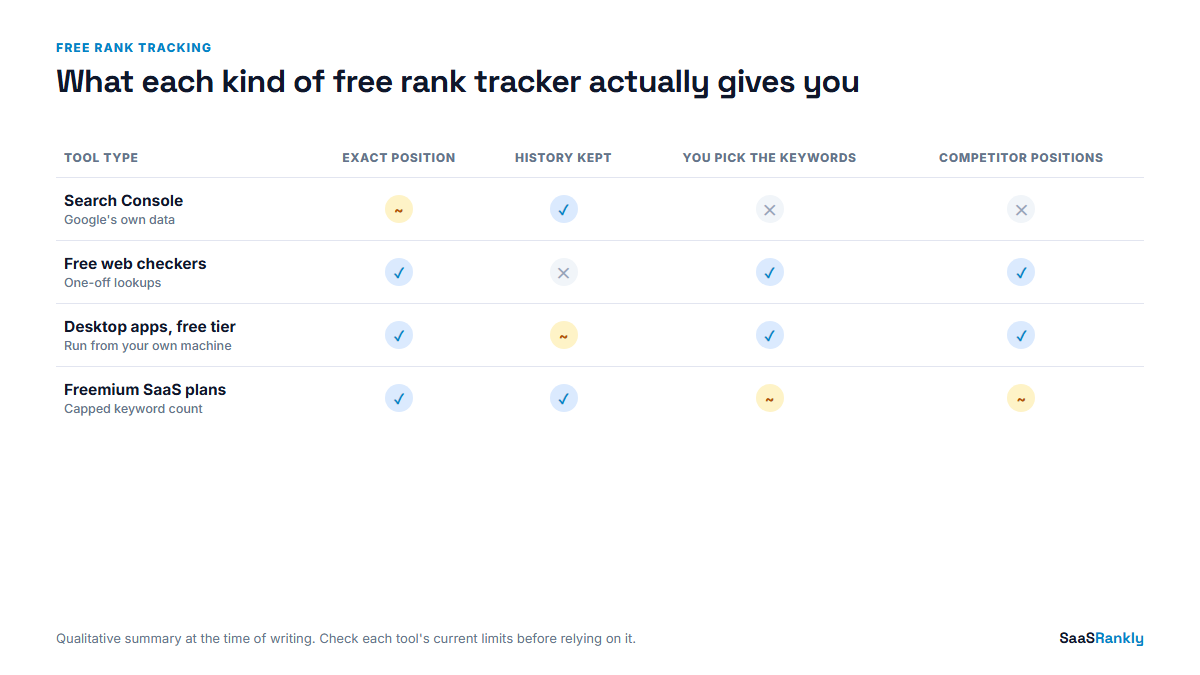
Free, from Google, and the only source that is not scraping anything. It keeps 16 months of data. What it reports is average position across every impression, not the position you would see if you searched right now, and it only covers queries you already appear for. You cannot add a keyword you want to rank for and watch it climb from nowhere. Our walkthrough on getting keyword data out of Search Console covers the filters that make it usable as a tracker.
2. Free web checkers
You paste a keyword and a domain, you get a position. Several of the big SEO vendors run one as a lead magnet. They are accurate enough for a spot check and they work for competitors too. They store nothing. If you want a trend line you are copying numbers into a spreadsheet by hand, and most of them rate-limit you after a handful of lookups a day.
3. Desktop apps with a free tier
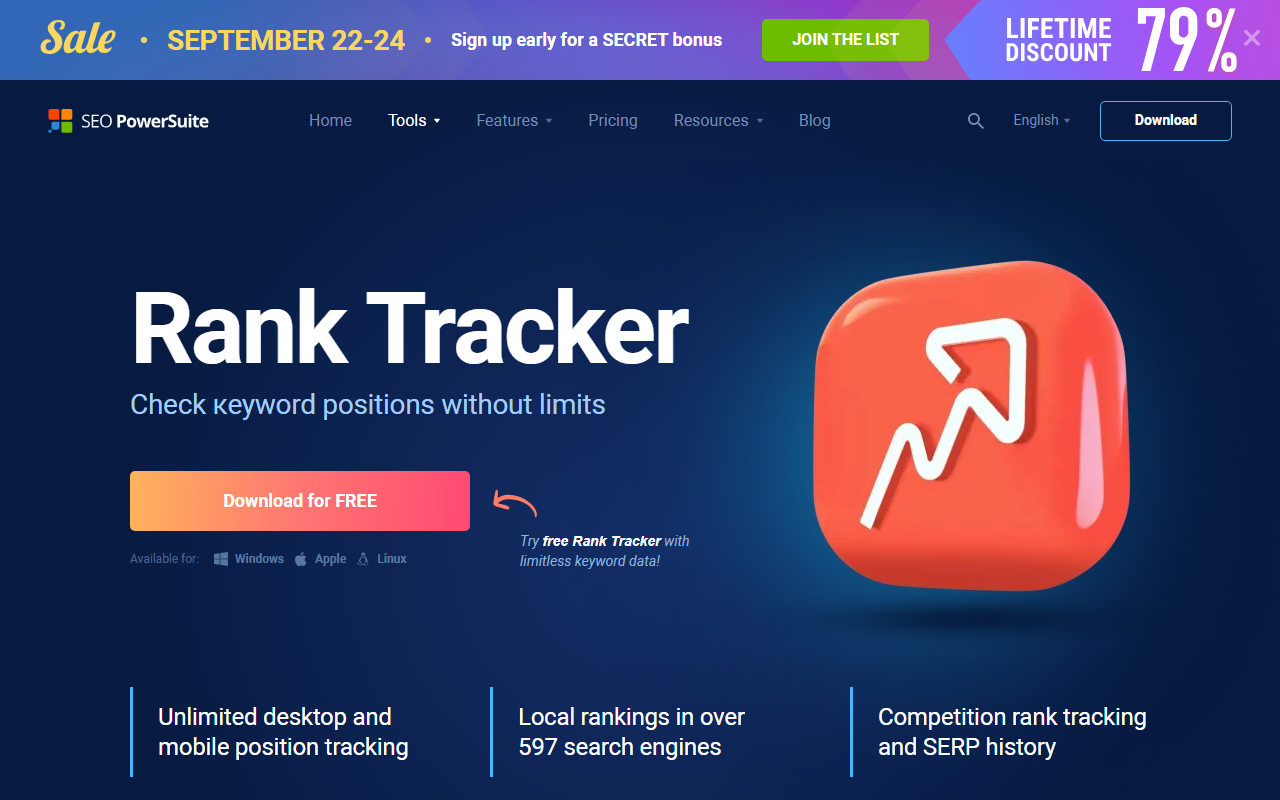
These run the checks from your own computer, so the vendor has no server cost and can afford to be generous with keyword counts. SEO PowerSuite’s Rank Tracker is the long-standing example. At the time of writing its free edition checks rankings but does not save projects, which in practice means no history unless you export by copy and paste. Check the vendor page before relying on that, because free-tier terms move.
4. Freemium SaaS plans
A real cloud tracker with a small free allowance, usually somewhere between 10 and 50 keywords, one project, and weekly rather than daily updates. This is the closest thing to a proper tracker at no cost. The cap is the keyword count, and the second cap, which nobody mentions, is that free plans get cut first when the vendor’s own costs rise.
Where a Free SERP Rank Tracker Caps Out
These are the five walls, in the order most teams hit them.
- History. A position means little without last month’s position next to it. Anything that does not store results is a checker, not a tracker.
- Keyword count. Twenty keywords covers a young site. A SaaS with comparison pages, integration pages and a blog passes 100 tracked terms within a year.
- Location and device. Rankings differ by country, city and phone versus desktop. Free tools usually give you one location and one device. If you sell in the US and check from elsewhere, the number is not the number your buyers see.
- Update frequency. Weekly is fine for reporting. It is not fine during a migration or the week after a core update, when you want daily.
- Reliability. Every tracker except Search Console depends on collecting Google results at scale, and Google has been making that harder. When collection gets expensive, free tiers absorb the damage first. We covered the latest round in Google blocking rank trackers harder.
The mistake we see most with a serp rank tracker free plan is judging it on wall two and ignoring wall one. People pick the tool with the biggest keyword allowance and discover three months later that they have no record of where they started.
The SERP Rank Tracker Free Stack We Would Actually Run
For a site with fewer than about 30 terms worth watching, this costs nothing and takes fifteen minutes a week.
- Search Console as the base layer. Filter Performance by page, note average position for the queries that matter, and treat it as the trend line. It is slow and averaged, and it is the only free history you fully control.
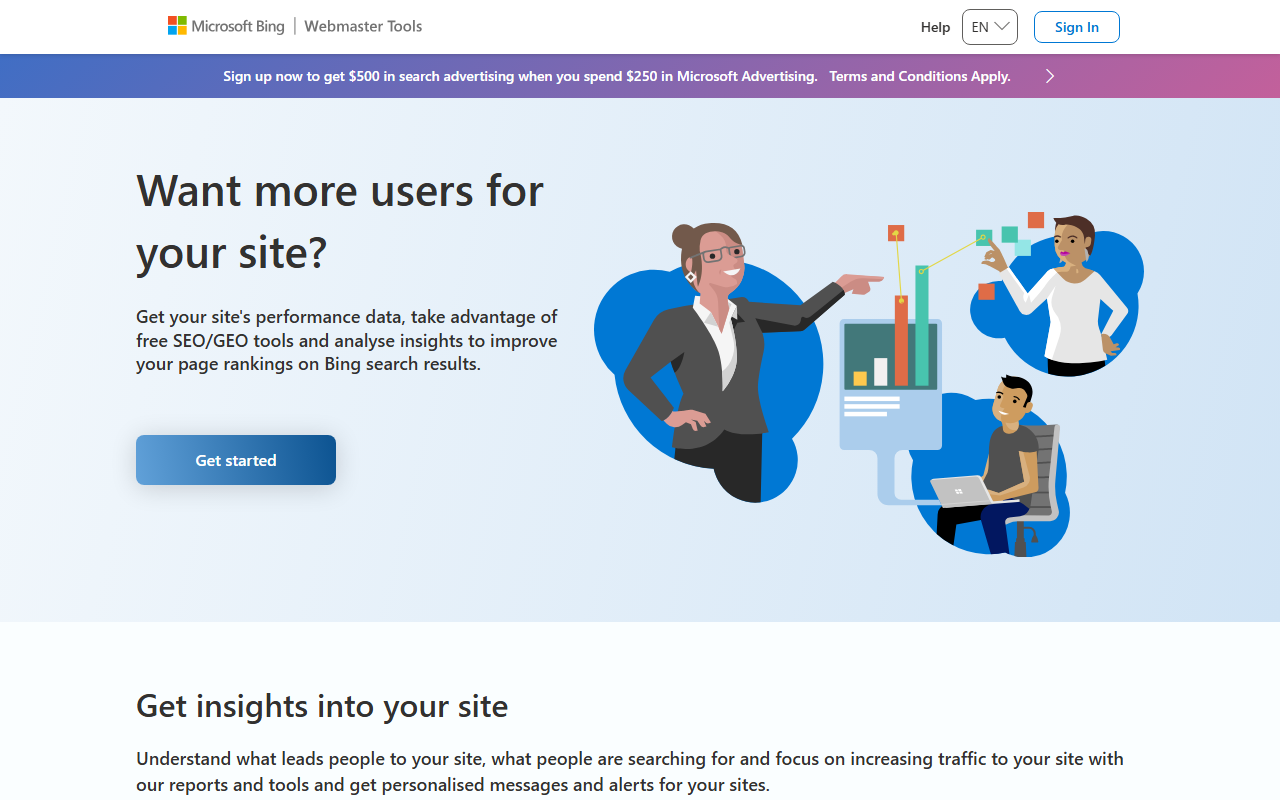
- Bing Webmaster Tools alongside it. Bing’s equivalent is free, takes a one-click import from Search Console, and matters more than it used to because several AI assistants lean on Bing’s index.
- One freemium tracker for exact positions. Load your 10 to 20 most commercial terms, the ones where position 4 versus position 9 changes revenue. Do not waste the allowance on informational terms.
- A web checker for competitors, monthly. Pick five terms, check the two competitors you lose deals to, write the numbers in the same sheet.
- One spreadsheet. Date, keyword, exact position, Search Console average position, notes. The sheet is the tracker. The tools just feed it.
That fifth step sounds primitive. It is also the part that survives when a vendor changes its free plan, which has happened to every free tracker we have used for more than two years.
When to Stop Looking for a SERP Rank Tracker Free of Charge
Paying becomes the cheaper option at a fairly predictable point. Here is the decision as a table.
| Situation | Stay free | Pay |
|---|---|---|
| Fewer than 30 terms that matter | Yes | |
| One country, desktop and mobile similar | Yes | |
| Someone outside the SEO team reads a monthly report | Yes, the time saved on the report pays for it | |
| You sell in more than one country | Yes, location tracking is the feature | |
| Migration or redesign in the next quarter | Yes, for those three months at least | |
| You want AI answer visibility tracked too | Yes, no free tier covers this well yet |
Entry-level paid trackers start at roughly $20 to $50 a month at the time of writing. If the weekly spreadsheet routine costs someone an hour, the paid plan is cheaper than the salary within the first month. When you get there, our paid rank tracker comparison is the next read, and the reporting side is in SEO analytics reports.
Reading the Numbers Without Fooling Yourself
Whatever you settle on from the serp rank tracker free options above, three habits keep the data honest.
- Compare like with like. An exact position from a tracker and an average position from Search Console are different measurements. Put them in different columns and never average them together. The reason is explained in what counts as a click and an impression.
- Ignore single-day moves. A term bouncing between 6 and 9 is noise. A term that sat at 7 for a month and now sits at 12 for a week is a signal.
- Track fewer terms, deliberately. Twenty terms you chose for revenue reasons beat 500 you imported because the tool allowed it. Difficulty scores help with the choosing, with the caveats in our keyword difficulty tool post.
Quick recap: serp rank tracker free
- Free rank tracking comes in four kinds, and each gives up something different.
- Search Console is the only free source with real history, but it reports averages and only known queries.
- Web checkers and desktop free tiers give exact positions and remember nothing.
- History is the wall that matters most, so keep your own spreadsheet from day one.
- A serp rank tracker free stack works well up to about 30 terms in one country.
- Pay when a report, a second country or a migration enters the picture.
FAQ
Is there a serp rank tracker free forever?
Search Console and Bing Webmaster Tools are free with no keyword cap, and that is unlikely to change. Third-party free plans exist but their terms shift, so treat any of them as free for now rather than free forever, and keep your own record of the data.
How accurate are free rank checkers?
For the location and device they check from, accurate enough. The gap is that you often cannot choose the location, and results differ by country and sometimes by city. A position from a free checker is a fair spot reading, not a universal truth.
Can I use Search Console as my only rank tracker?
For a small site, yes. You lose exact positions, competitor data and the ability to watch terms you do not rank for yet. If those three do not matter this quarter, Search Console alone is a legitimate choice.
Why do my free tracker and Search Console disagree?
They measure different things. A tracker checks one search from one place at one moment. Search Console averages every impression across all locations, devices and result types over the period. Both can be right at the same time.
Will checking rankings manually in Google work?
Poorly. Your own search history, location and signed-in state shift what you see. A private window helps a little. It is fine for a sanity check on one term and useless as a tracking method.
How many keywords should a new SaaS site track?
Start with 15 to 25: your brand, your category term, and the comparison and alternatives terms where a buyer is close to a decision. Add more only when a page exists to rank for them.