A cheap rank tracker is not the one with the lowest sticker price. It is the one with the lowest cost per keyword you actually need checked, at the frequency you actually use. We learned that the hard way after paying for daily updates on 400 keywords that we only looked at on Monday mornings.
This guide does the maths. We pulled the public pricing of five trackers on the day of writing, converted each plan into a price per tracked keyword, and then ran the numbers for a typical small SaaS site. If you only need a handful of terms and can live with Search Console data, our list of free SERP rank trackers is the better starting point. This post is for the step after free stops being enough.
What makes a cheap rank tracker actually cheap
Every rank tracker prices on some mix of three things: how many keywords, how often they are checked, and how deep into the results the check goes. The vendors package those differently, which is why comparing plan prices directly tells you almost nothing.
- Keyword count. The number of keyword and location pairs. Tracking one term in the US and the UK counts twice on most tools.
- Update frequency. Daily is the default on most paid plans. Weekly costs a fraction, and for most SaaS blogs it is enough.
- Depth. Some entry plans only check the top 50 results. If a new post sits at position 70, a shallow check shows it as “not ranking”.
Our opinion, after running trackers for clients at very different budgets: frequency is where most teams overpay. A cheap rank tracker that checks weekly will tell you the same story as an expensive one checking daily, unless you are watching a launch or a core update.
Price per keyword: five trackers compared
These are the list prices we saw on each vendor’s public pricing page at the time of writing (October 2026). Prices change and some show annual billing by default, so check before you buy. The cost per keyword is the plan price divided by the daily keyword allowance.
| Tool and plan | Price | Keywords included | Cost per keyword per month |
|---|---|---|---|
| SerpRobot, one SERP Bot | $4.99 a month | 75 keyword updates per 24 hours | about $0.067 |
| Keyword.com, Search Visibility entry tier | $4 a month, or $3 a month billed yearly | 50 keywords | $0.06 to $0.08 |
| Nightwatch, Starter | €79 a month billed yearly | 500 keywords tracked daily | about €0.16 |
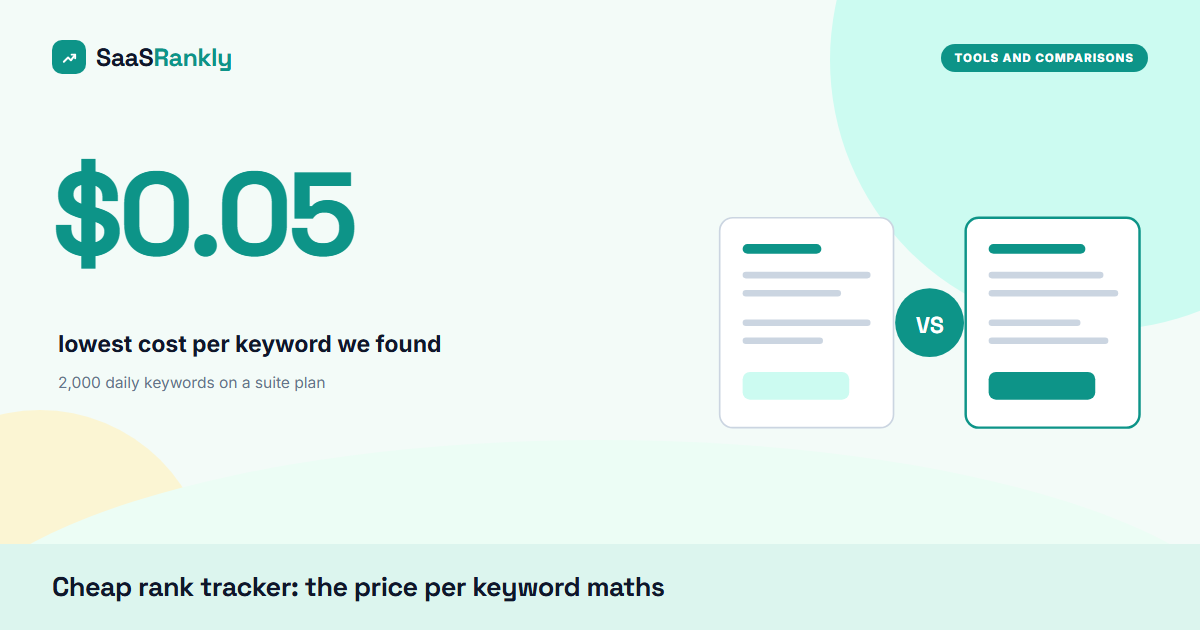
| SE Ranking, Core | $129 a month, or $103.20 billed yearly | 2,000 keywords daily | $0.05 to $0.065 |
| AccuRanker, Professional | $224 a month | 2,000 keywords daily | about $0.11 |
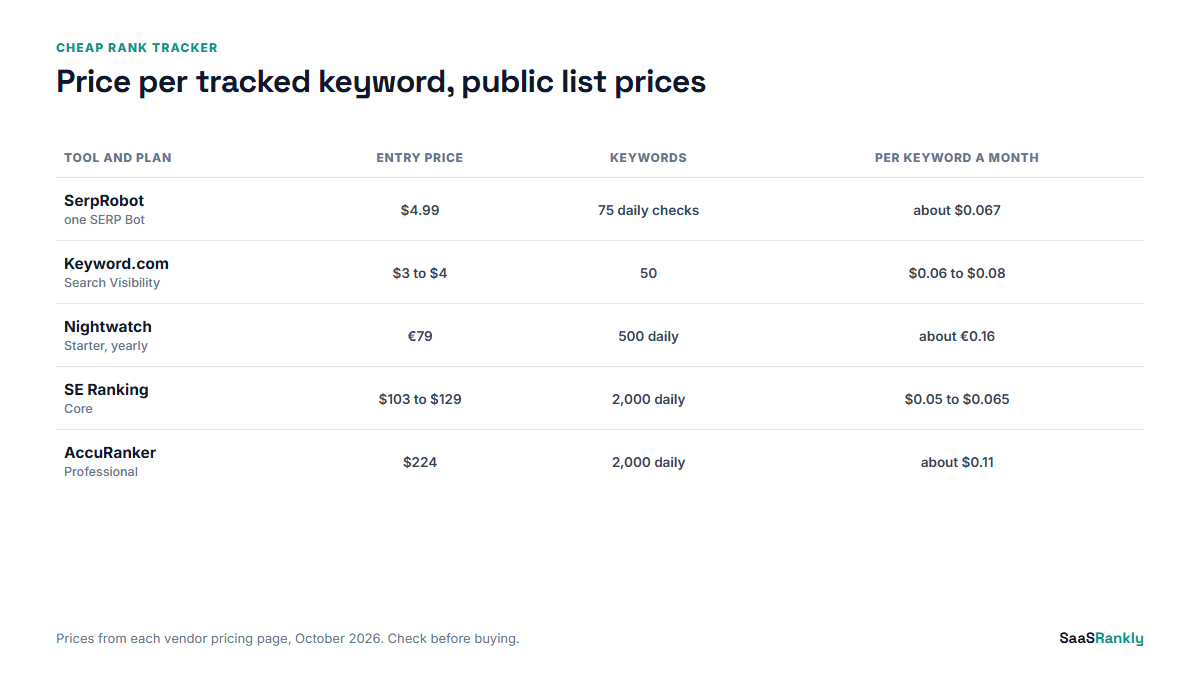
Two things surprised us. First, the full SEO suite (SE Ranking Core) works out cheaper per keyword than the pay-as-you-go bot at 2,000 keywords, because the suite’s allowance is large. Second, the two cheapest entry points, SerpRobot and Keyword.com, are cheap because they are small. Their per-keyword cost is good, but it only stays good while your list stays short.
So the answer to “which is the cheap rank tracker” depends on the size of your list more than on the brand.
The frequency trick most people miss
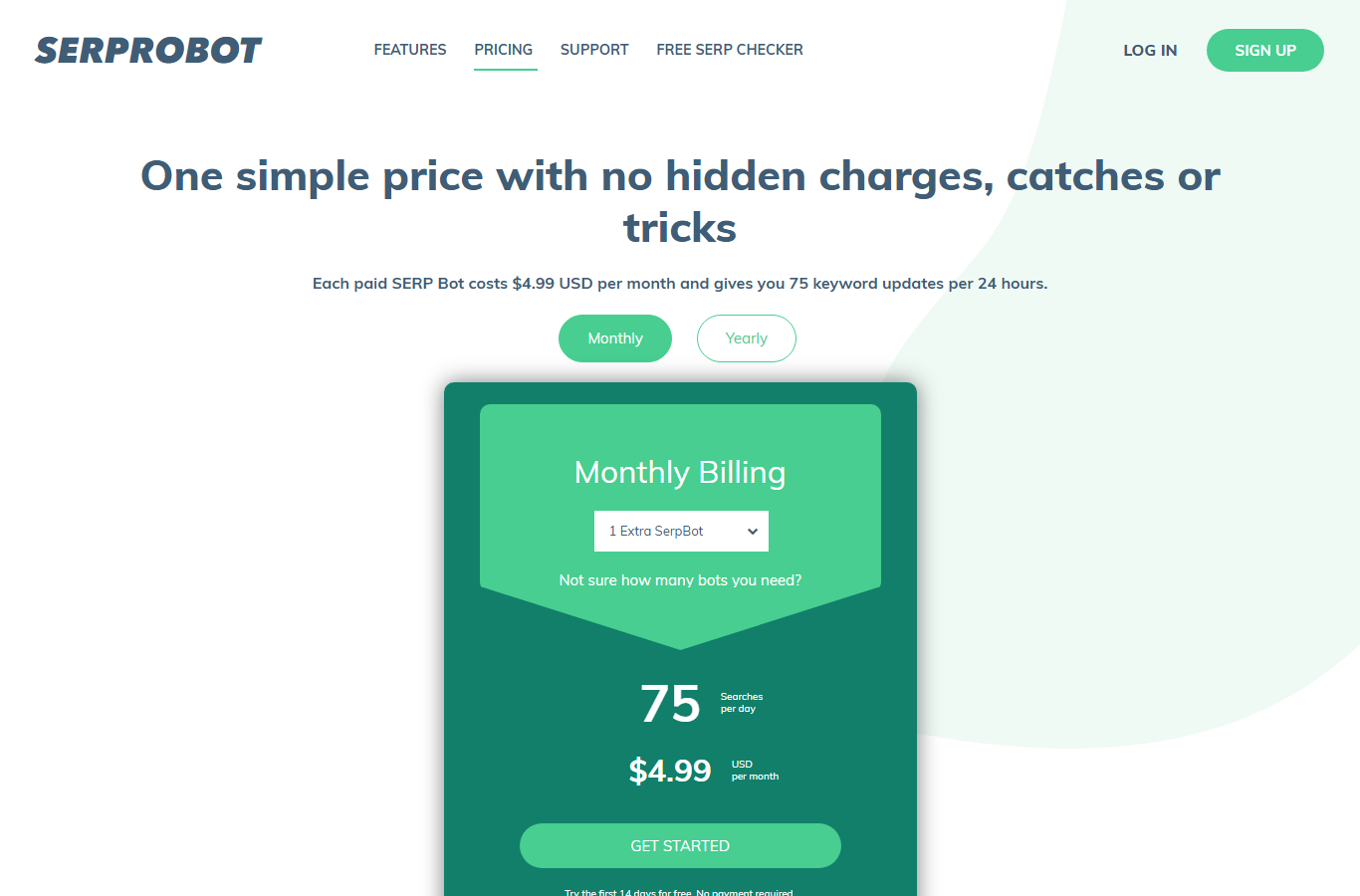
SerpRobot sells capacity as checks per day, and you choose how often each keyword is checked. That changes the maths a lot. One bot gives 75 updates per 24 hours. Checked daily, that is 75 keywords. Checked weekly, the same bot can cover roughly 500 keywords, because each keyword only needs one check every seven days.
That makes weekly tracking of 500 keywords cost about $4.99 a month on that model, against seven bots ($34.93) for the same list checked daily. No feature changed. Only the frequency did.
We use weekly checks for blog content and daily checks only for the 20 to 40 terms where a move matters the same week: the homepage, pricing, the main comparison pages and anything we just republished. A cheap rank tracker setup is usually two lists, not one.
Worked example: a 300-keyword SaaS blog
Here is an illustrative case, not a client. “Ledgerly” is a small invoicing SaaS with 70 blog posts and a short list of money pages. They track 300 keywords: 40 important terms and 260 blog terms. We priced three setups using the public prices above.
| Setup | How it is configured | Approximate cost per year | What they give up |
|---|---|---|---|
| A. Everything daily on a mid-tier tool | Nightwatch Starter, all 300 daily | €948 | Nothing, but they pay for 200 unused keyword slots |
| B. Two lists on a bot model | 1 bot daily for 40 terms, 1 bot weekly for 260 terms | about $120 | Fewer reports, no competitor dashboards |
| C. Search Console plus a small tracker | 40 money terms tracked daily, blog terms read from Search Console | about $60 | Exact positions for the blog terms; Search Console shows averages |
The numbers are illustrative and rounded, but the gap is real: setup C costs about a sixteenth of setup A and answers the same weekly question for this team, which is “did the pages we care about move?” Setup A only wins once they add competitors, local tracking or a client who wants branded reports.
Where a cheap rank tracker cuts corners
Low price usually means one or more of these. None is a deal breaker, but you should know which ones you are accepting.
- Shallow depth. Top 50 only on some entry tiers. New content often starts below that.
- No SERP feature data. You see position 4 but not that an AI Overview and a video carousel sit above it. Our post on SERP metrics explains why that context matters for click forecasts.
- Thin history. Some plans cap how far back you can look. Export monthly if so.
- One location. Fine for a US-only SaaS, a problem if you sell in three markets.
- Fragile data collection. Trackers depend on scraping Google, and Google has made that harder. We covered what happened when Google started blocking rank trackers; cheaper tools sometimes take longer to recover from those changes.
Decision matrix: which cheap rank tracker fits your situation
| Your situation | What we would use | Why |
|---|---|---|
| Under 50 keywords, one site | Search Console plus Keyword.com entry tier or one SerpRobot bot | Under $5 a month and enough for a founder checking weekly |
| 100 to 500 keywords, mostly blog content | A bot model with a daily list and a weekly list | Frequency split keeps cost in single or low double digits |
| 500 to 2,000 keywords, plus competitor tracking | An all-in-one suite plan such as SE Ranking Core | The per-keyword cost drops below most standalone trackers |
| Agency with client reporting | A dedicated tracker such as Nightwatch or AccuRanker | You are paying for reports and seats, not just positions |
If you are still choosing between full suites, our comparison of the best rank tracker tools goes through accuracy and reporting, not just price.
Cut the list before you pay for it
The cheapest keyword to track is the one you delete. Before we set up any cheap rank tracker for a client, we run their list through three filters:
- Remove terms with no commercial or informational fit. Our free keyword intent classifier sorts a pasted list in a minute.
- Remove terms where Search Console already gives you a clear picture. If a query has steady impressions, the Search Console keyword report already tracks its average position for free.
- Merge near-duplicates. Tracking “rank tracker” and “rank tracking tool” separately rarely tells you anything the other does not.
On the last three projects we cleaned up, those filters cut tracked lists by between a third and a half. That is a bigger saving than switching vendors.
Quick recap: cheap rank tracker
- Judge a cheap rank tracker by cost per keyword at your real check frequency, not by plan price.
- Weekly checks cost a fraction of daily checks and are enough for most blog terms.
- Split your list: 20 to 40 money terms daily, everything else weekly.
- Small entry plans are cheap per keyword only while the list stays small.
- Past about 1,000 keywords, a suite plan often beats standalone trackers on price per keyword.
- Use Search Console for averages and pay only for the positions you act on.
FAQ
What is the cheapest rank tracker that still checks daily?
For very small lists, pay-per-capacity tools such as SerpRobot ($4.99 per bot for 75 daily checks at the time of writing) and the entry tier of Keyword.com are the lowest we found. For larger lists, cost per keyword matters more than the entry price.
Is a cheap rank tracker accurate?
In our spot checks, position data from cheaper tools matches the expensive ones within a position or two on most terms. The bigger difference is depth, SERP feature data and how quickly they recover after Google changes something.
Do I need a rank tracker if I have Search Console?
Not always. Search Console gives average position across all searches, which is enough for trends. A tracker adds exact positions from a fixed location, competitor data and terms where you do not rank yet.
How many keywords should a small SaaS track?
We usually start with 50 to 150: the money pages, the top blog posts and a few competitor terms. Grow the list when a page moves into the top 30, not before.
Are lifetime deals a good way to get a cheap rank tracker?
Sometimes, but treat them as a bonus. Rank tracking has real ongoing data costs, and lifetime deals on small tools carry the risk that the product stops being maintained.
Is weekly rank tracking enough?
For blog content, yes in our experience. Use daily tracking during launches, migrations and core updates, then drop back to weekly.
Pricing sources, checked at the time of writing: SerpRobot pricing, Keyword.com pricing, Nightwatch pricing, SE Ranking pricing and AccuRanker pricing.