SaaS marketing advice usually arrives as a list of twenty channels with no way to choose between them. We rank channels by one number instead: CAC payback, the months it takes a new customer’s gross profit to repay what you spent to win them. It is not the only number that matters, but it is the one that decides whether a bootstrapped or early-stage SaaS company can afford to keep growing.
Below is the formula, a worked example across seven channels for a fictional product, and which channels we would fund at each stage of revenue.
Why payback period is the right lens for SaaS marketing
Raw customer acquisition cost hides the thing that hurts: how long your cash is tied up. A $600 CAC is fine for a product at $200 a month and painful at $30 a month. Payback puts price and margin into the same number.
CAC payback (months) = CAC ÷ (monthly revenue per customer × gross margin)
Two rules of thumb we use. Under 12 months is healthy for self-serve SaaS. Over 18 months means the channel only works if churn is very low or you have outside funding to wait. Payback also has to be read next to churn: a 10-month payback is useless if the average customer leaves after 8. Payback period is also the number that decides how much of the budget search should get, which we model in B2B SEO solutions.
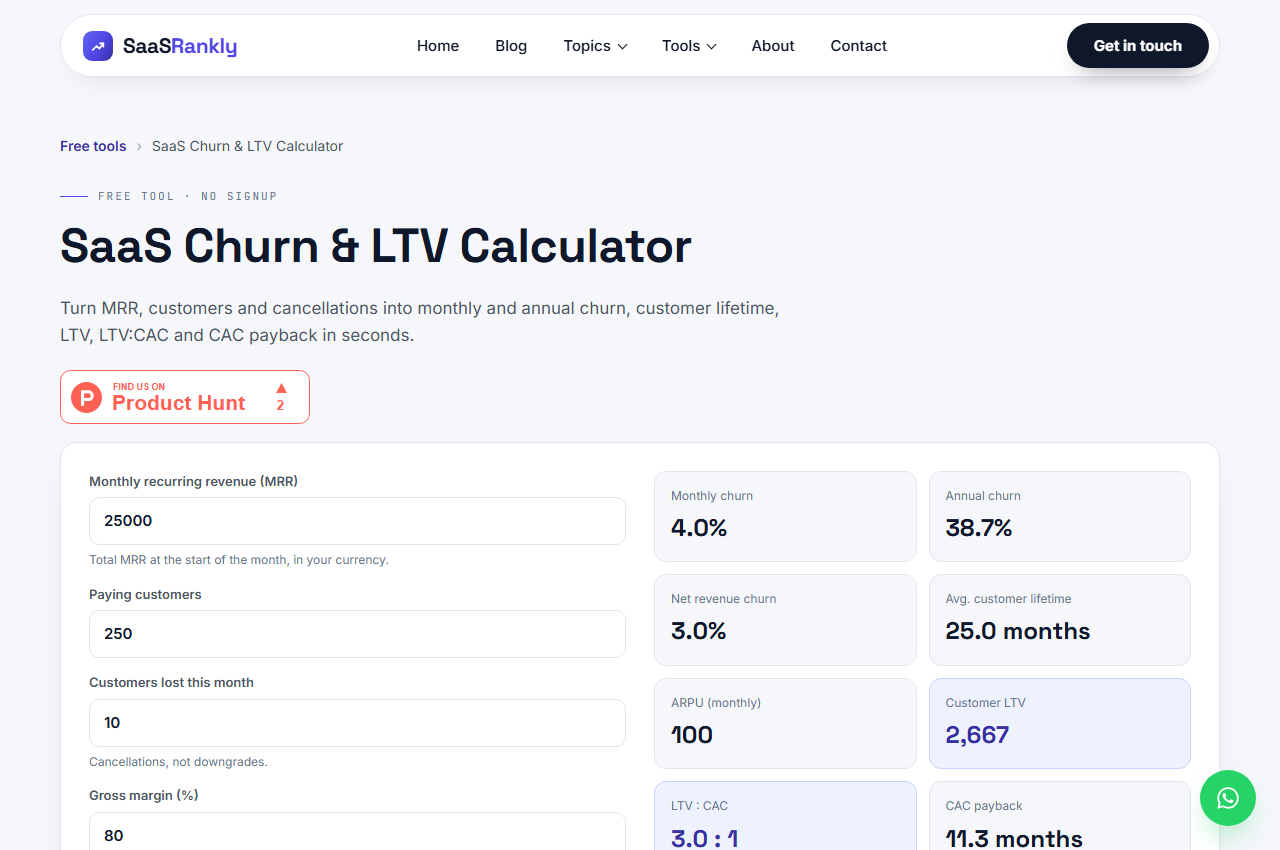
Our free churn calculator does the lifetime side of that check, turning MRR, customer count and cancellations into churn, LTV and CAC payback.
Worked example: seven SaaS marketing channels, one company
Stackwise is a fictional scheduling tool at $79 a month with an 82 percent gross margin, so each customer produces about $64.78 of gross profit a month. These are one steady-state month of spend and new paying customers per channel. The numbers are invented but realistic for a self-serve B2B product.
| Rank | Channel | Monthly spend | New customers | CAC | Payback |
|---|---|---|---|---|---|
| 1 | Referral program (account credits) | $1,200 | 8 | $150 | 2.3 months |
| 2 | Integration marketplaces | $1,500 | 9 | $167 | 2.6 months |
| 3 | SEO content | $5,000 | 20 | $250 | 3.9 months |
| 4 | Paid search | $12,000 | 25 | $480 | 7.4 months |
| 5 | Webinars | $2,500 | 4 | $625 | 9.6 months |
| 6 | LinkedIn ads | $6,000 | 6 | $1,000 | 15.4 months |
| 7 | Cold outbound (one SDR plus tools) | $9,000 | 7 | $1,286 | 19.8 months |
Read the table with three caveats. First, the cheapest channels cap out: referrals and marketplaces depend on how many customers and partners you already have, so you cannot pour $20,000 into them. Second, SEO is shown at steady state. In year one the same $5,000 a month produces almost nothing for the first six months, so the blended first-year payback looks closer to 10 to 12 months. Third, outbound often lands larger accounts, so its real payback can be better than a flat $79 average suggests.
The SaaS marketing channels, one by one
Referral programs
The cheapest customers you will get, because trust arrives with the referral. Give credit on both sides, and ask at the moment a customer gets value, not in a monthly newsletter. The ceiling is your current customer base.
Integration marketplaces
Listings in the app directories of tools your buyers already use, plus a matching page on your own site. The traffic is small but already qualified. Our guide to SaaS integration pages covers how to turn each listing into search traffic as well.
SEO content
Slow to start and the best long-term payback on this list, because a page written once keeps producing signups. The biggest mistake we see is starting with top-of-funnel blog posts. Start with pages close to a purchase decision, as described in our SaaS SEO strategy, and comparison pages in particular.
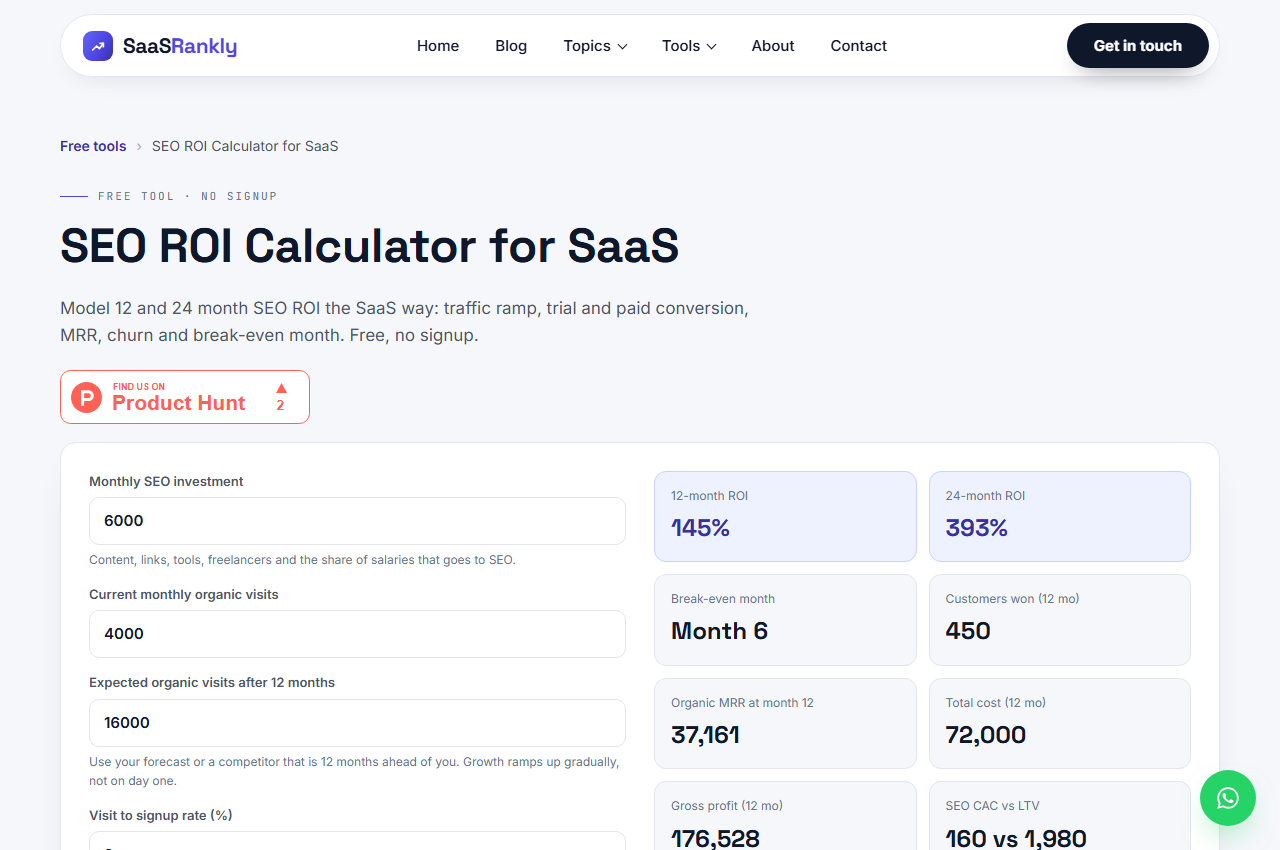
To model when SEO breaks even for your own numbers, use the SEO ROI calculator. It builds in the slow ramp that a simple CAC formula ignores.
Paid search
Fast and measurable, which is why most SaaS teams start here. It works best on high-intent terms: your category plus “software”, competitor alternatives, and pricing searches. It gets expensive quickly in crowded categories, and it stops the day the budget stops.
Webinars
Good for products that need explaining, weak for simple tools. The payback improves a lot if every recording becomes a gated resource, a set of clips and a blog post, rather than a one-off event.
LinkedIn ads
The targeting by job title is excellent and the clicks are expensive. It tends to work for products priced above $300 a month and struggles below $100. Use it for retargeting site visitors before using it for cold audiences.
Cold outbound
Controllable and predictable once it works, and the slowest payback in our example. It makes sense when your average contract is large enough to cover a salary, and rarely makes sense for a $79 self-serve plan.
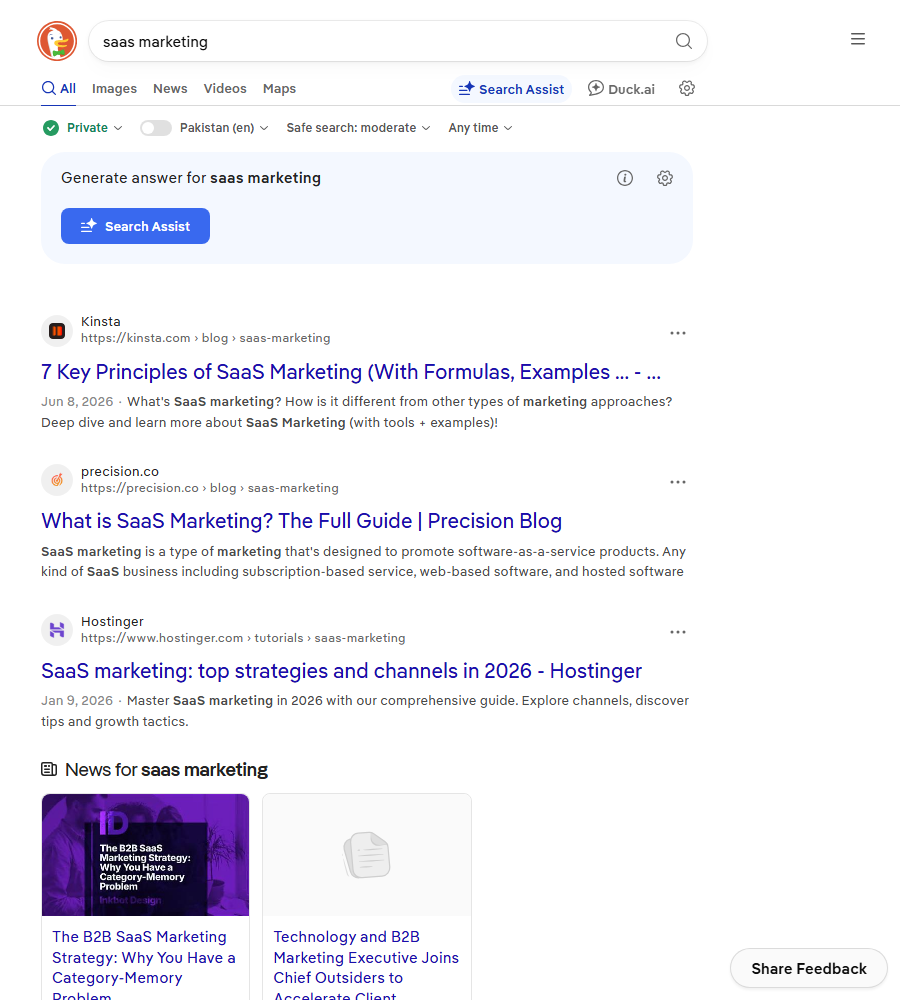
Search “saas marketing” and the top results are principle lists and strategy overviews. Very few put a cost next to each channel, which is the part that decides the budget.
Which SaaS marketing channels to fund at each stage
| Stage | Fund first | Test carefully | Wait on |
|---|---|---|---|
| Before product-market fit | Founder-led sales, communities, direct conversations | Integration marketplaces | Paid ads, outbound team, webinars |
| $0 to $1M ARR | SEO on bottom-of-funnel pages, referrals, marketplaces | Paid search on high-intent terms | LinkedIn ads, large events |
| $1M to $10M ARR | SEO at scale, paid search, partner programs | Webinars, LinkedIn retargeting | Brand campaigns |
| $10M ARR and up | All proven channels, outbound for larger accounts | Brand and category campaigns | Nothing, but measure payback per channel |
For more on building the content side of this plan, including how to work backwards from trials, see our guide to SaaS content marketing.
Mistakes we see in SaaS marketing budgets
- Using blended CAC for the whole company, which hides one great channel paying for two bad ones.
- Judging SEO after three months, before it has had time to produce anything.
- Counting signups instead of paying customers, which flatters channels that bring low-quality trials.
- Ignoring churn by channel. Customers from discounts and giveaways often leave fastest.
- Scaling a channel past its ceiling, then blaming the channel when CAC doubles.
Quick recap: SaaS marketing
- Rank SaaS marketing channels by CAC payback, not raw CAC.
- Payback equals CAC divided by monthly revenue per customer times gross margin.
- Under 12 months is healthy for self-serve SaaS, and over 18 needs low churn or funding.
- Referrals and marketplaces pay back fastest but have a low ceiling.
- SEO has the best long-term payback once the first six months are behind you.
- Fund SaaS marketing channels by stage, and measure payback per channel, not blended.
FAQ
What is SaaS marketing?
SaaS marketing is the work of attracting, converting and keeping customers for subscription software. It differs from one-off product marketing because revenue arrives monthly, so retention and payback period matter as much as the first sale.
What is a good CAC payback period for SaaS?
For self-serve products, under 12 months is healthy and under 6 is excellent. Sales-led products with larger contracts often accept 12 to 24 months, as long as churn is low and cash can cover the gap.
Which SaaS marketing channel is the cheapest?
Referrals and integration marketplaces usually have the lowest CAC, because the buyer arrives with trust or intent already. Both are limited by the size of your customer base and partner network, so they rarely become your largest channel.
How long does SEO take to pay back for a SaaS company?
On a new domain, expect little return for the first 4 to 6 months and a blended first-year payback of roughly 10 to 12 months. After that, pages keep producing signups without new spend, which is why its long-term payback beats most channels.
Should an early-stage SaaS company run paid ads?
Yes, on a small budget and only for high-intent searches such as category plus software, competitor alternatives and pricing terms. Avoid broad awareness campaigns until you know your conversion rate and churn well enough to calculate payback.
How do I calculate CAC for each marketing channel?
Divide the full monthly cost of the channel, including tools, freelancers and the share of salaries spent on it, by the new paying customers it brought that month. Use first-touch or last-touch attribution consistently, and compare channels over the same period.