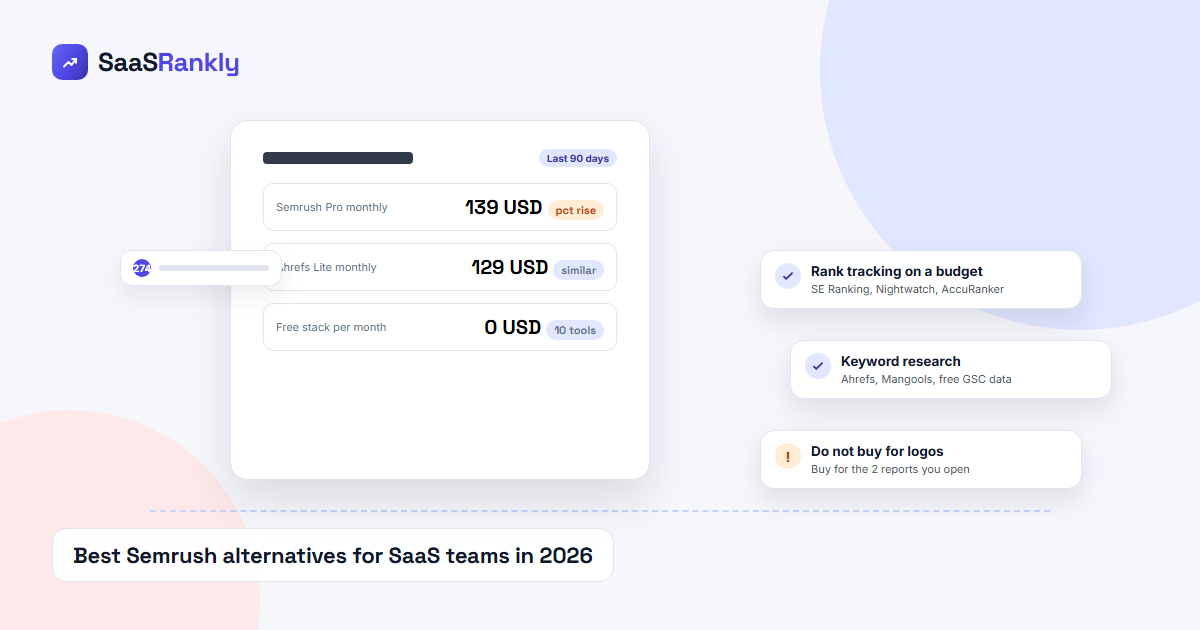
Most SaaS teams looking for Semrush alternatives are not unhappy with Semrush. They are unhappy with paying around 140 to 250 dollars a month for a suite when they open two reports: keyword research and rank tracking. This guide compares the Semrush alternatives that make sense for a SaaS marketing team in 2026, split by what you actually need, with honest notes on where each one falls short. Prices are list prices at the time of writing and change often, so check before you buy.
Why SaaS teams look for Semrush alternatives
Four reasons come up again and again in the conversations we have with founders and heads of growth:
- Price versus usage. Semrush Pro is priced for agencies running many projects. A single SaaS site with 300 tracked keywords uses a fraction of the quota.
- Seat limits. Pro includes one user. Adding a second seat costs almost as much as another tool.
- AI search tracking. Semrush has added AI visibility features, but they sit in a separate, more expensive toolkit. Teams that need ChatGPT and AI Overview tracking often find a specialist tool cheaper.
- Backlink data. Semrush’s link index is good, but for outreach and competitor link analysis most SEOs still prefer Ahrefs.
If none of those apply to you, stay on Semrush. It is still the broadest suite on the market and the one most contractors already know. The rest of this article is for the teams where at least one of them does apply.
The best Semrush alternatives at a glance
| Tool | Best for | Entry price (monthly, approx.) | Weak spot |
|---|---|---|---|
| Ahrefs | Backlinks, keyword research, site audit | 129 USD (Lite) | Rank tracking updates are slower on lower tiers |
| SE Ranking | Rank tracking plus a solid all-round suite | 65 USD | Smaller link index |
| Mangools | Keyword research for small teams | 29 USD | Limited technical audit |
| Moz Pro | Beginners, agencies reporting Domain Authority | 49 USD (Starter) | Dated interface, smaller keyword database |
| Ubersuggest | Cheapest paid keyword tool, lifetime deal | 29 USD | Data accuracy on low-volume terms |
| Nightwatch | Rank tracking with SERP feature logging | 39 USD | No keyword research |
| AccuRanker | Daily rank tracking at scale | 129 USD | Rank tracking only |
| Similarweb | Traffic estimates and competitor benchmarking | Starts around 199 USD | Not an SEO workflow tool |
| Google Search Console + free tools | Zero budget | 0 USD | No competitor data |
Semrush alternatives by job to be done
If you mostly need keyword research: Ahrefs, Mangools or Ubersuggest
Ahrefs Keywords Explorer is the strongest single keyword research database outside Semrush, and its Keyword Difficulty score is calibrated purely on referring domains, which makes it more predictable for a new SaaS domain. The Lite plan at about 129 dollars is close to Semrush Pro on price, so the saving only appears if you were going to buy Semrush Guru. If you are still deciding between full suites and point tools, our comparison of SEO platforms for SaaS teams scores them by job with current prices.
Mangools (KWFinder) is the budget pick. The database is smaller, but for SaaS long tail such as “crm for real estate teams” it returns enough to build a topic cluster. Ubersuggest is cheaper still and offers a lifetime license, which is attractive for a bootstrapped founder, but treat volumes under 100 as a guess. The same caution applies to traffic figures, which we unpack in how to estimate website traffic.
Our full process for turning any of these into a prioritised list is in SaaS keyword research, and you can classify the export by intent for free with our keyword intent classifier.
If you mostly need rank tracking: SE Ranking, Nightwatch or AccuRanker
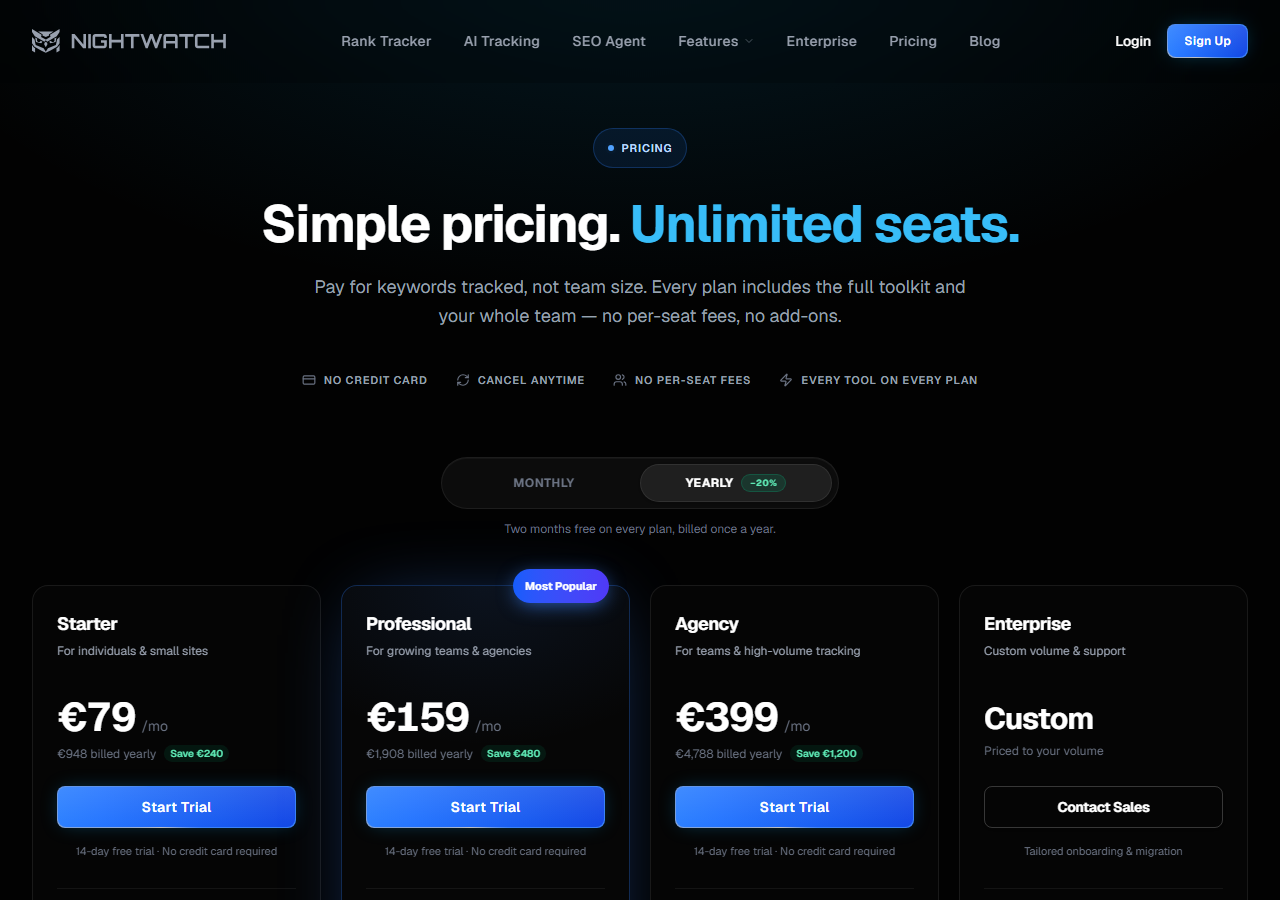
This is where the biggest savings are. Semrush’s Position Tracking is good but you pay for the whole suite to get it. SE Ranking gives you daily tracking plus a competent site audit and keyword tool at roughly half the price. Nightwatch is the pick if you care about which SERP features load for each keyword, because it logs them per query. AccuRanker is the enterprise-grade option for teams tracking thousands of keywords daily with API access. We compared all three, with screenshots, in best rank tracker tools for SaaS.
If you need backlinks and outreach: Ahrefs
There is no real debate here. Ahrefs’ link index is the one most SEOs trust for competitor gap analysis and broken link prospecting. If link building is a core part of your plan (see our SaaS link building guide), Ahrefs is the tool to keep and Semrush is the one to drop. We wrote a detailed head-to-head in Ahrefs vs Semrush for SaaS.
If you need AI search visibility: a specialist tool, not a suite
Semrush’s AI toolkit and Ahrefs’ Brand Radar both exist, but they are add-ons priced above the base plan. Tools like Otterly, Peec AI and Profound do one thing: track how often your brand and pages are cited in ChatGPT, Perplexity, Gemini and Google AI Overviews. For most SaaS teams that is a 30 to 100 dollar a month line item on top of a cheaper SEO suite. Our review of the category is in AI search visibility tools.
If you have no budget: the free stack
You can run a credible SaaS SEO program on free tools for the first six months. Google Search Console gives you real queries, clicks and positions. Google Keyword Planner gives rough volume. Bing Webmaster Tools gives a second crawl report. Add our free tools for the technical side: the schema validator, sitemap checker, SERP snippet preview and the rest of the SaaS Rankly toolset. What you lose is competitor data and historical trends, which you can buy later once you know which reports you actually open.
How to pick between Semrush alternatives in one afternoon
- Export your Semrush usage. Look at which reports you opened in the last 60 days. Most teams find it is two or three.
- Price only those jobs. Keyword research plus rank tracking is the usual pair. Price SE Ranking alone, or Mangools plus Nightwatch, against Semrush Pro.
- Run the same 20 keywords through each trial. Compare volume, difficulty and the top 10 they show for your five most important commercial terms. Consistency matters more than which number is “right”.
- Check the seat and project limits. Semrush alternatives often win on seats, not features.
- Check integrations. Looker Studio connectors and a usable API save more hours than any extra report. Our reporting dashboard guide lists which tools have native connectors.
What you give up when you leave Semrush
Be honest about the trade. Semrush’s advertising research, market explorer and topic research modules have no equivalent in the cheaper tools. If your growth team uses Semrush to reverse engineer competitor paid campaigns, none of the alternatives above replace that. Semrush’s local SEO listings and social tools are also unique to the suite. Most SaaS teams never use them, which is the whole point of this article, but check before you cancel.
One more thing to watch: many of the cheaper Semrush alternatives price by “keyword credits” or daily searches. Mangools, for example, caps lookups per day on lower tiers. If you do heavy programmatic keyword research (see programmatic SEO for SaaS), the credit ceiling can bite.
Recommended stacks by team size
| Team | Stack | Approx. monthly cost |
|---|---|---|
| Solo founder, pre-revenue | Search Console + Keyword Planner + SaaS Rankly free tools | 0 USD |
| One marketer, under 1M ARR | SE Ranking Essential | 65 USD |
| Small growth team, link building active | Ahrefs Lite + Nightwatch | about 170 USD |
| Growth team focused on AI search | SE Ranking + Otterly or Peec | about 130 USD |
| Agency or 10+ projects | Stay on Semrush Guru, or Ahrefs Standard | 250 USD |
Semrush alternatives for specific SaaS workflows
Suites get compared on feature lists, but SaaS teams buy tools for workflows. Here is how the Semrush alternatives above map to the four workflows that take most of a growth team’s week.
Programmatic keyword research
If you are building hundreds of integration or template pages, you need bulk keyword export without a daily cap. Ahrefs handles this best through Keywords Explorer exports and the API on higher tiers. Mangools and Ubersuggest throttle here. Semrush itself is fine but expensive for the volume. For the page-building side, see programmatic SEO for SaaS.
Content briefs and on-page optimisation
Semrush’s SEO Writing Assistant is one of the reasons content teams keep the suite. Surfer, Frase and Clearscope replace it, usually at 60 to 170 dollars a month, and they pair with any of the cheaper Semrush alternatives for keyword data. Our AI SEO tools roundup compares those three with screenshots.
Technical audits
None of the suites, Semrush included, beat a desktop crawler for a serious technical audit. Screaming Frog (free up to 500 URLs, then a flat annual license) and Sitebulb are the standard. Pair one with Search Console and our free sitemap checker and you have replaced Semrush Site Audit for almost nothing.
Reporting
SE Ranking and AccuRanker both have native Looker Studio connectors. Ahrefs has one on Standard and above. Nightwatch has an API and a Google Sheets export. If your monthly report is built in Looker Studio, confirm the connector exists before you switch, because rebuilding a dashboard costs more than a month of any tool on this list.
Migration checklist when switching from Semrush
- Export your Position Tracking keyword lists with tags, and your project settings (location, device, competitors).
- Export historical rank data as CSV. Most Semrush alternatives will not import history, so keep the file for year-over-year comparisons.
- Export any Site Audit issue lists that are still open, so engineering tickets do not get lost.
- Rebuild tracking in the new tool at least two weeks before you cancel, so you can compare the two for consistency.
- Update your reporting dashboard connectors last, once the new data looks stable.
Quick recap: semrush alternatives
- The best Semrush alternatives for SaaS depend on which two reports you actually open: keyword research, rank tracking or backlinks.
- Ahrefs is the pick for backlinks and keyword data. SE Ranking is the best all-round value. Nightwatch and AccuRanker win on rank tracking.
- Mangools and Ubersuggest are fine for early stage keyword research but watch the daily credit caps.
- AI search tracking is cheaper from a specialist tool than from a suite add-on.
- A free stack (Search Console, Keyword Planner, our free tools) covers the first six months for most bootstrapped teams.
- Trial Semrush alternatives with the same 20 keywords and compare consistency, seats and integrations, not feature counts.
FAQ
What is the best free Semrush alternative?
Google Search Console for your own data, Google Keyword Planner for rough volumes, and Bing Webmaster Tools for a second crawl view. Free tiers of Ubersuggest and Ahrefs Webmaster Tools add limited competitor data.
Is Ahrefs cheaper than Semrush?
Entry plans are priced within about 10 dollars of each other. The saving comes at the next tier and from seat limits, not the headline price. Ahrefs is better value if backlinks matter; Semrush if you use its paid ads and market research modules.
Which Semrush alternative is best for rank tracking only?
SE Ranking for value, Nightwatch for SERP feature logging, AccuRanker for large daily-tracked keyword sets with an API.
Can I track ChatGPT and AI Overview visibility with these tools?
Not well from the base plans. Use a dedicated AI visibility tool such as Otterly, Peec AI or Profound alongside your SEO suite.
Do Semrush alternatives have accurate search volumes?
All tools estimate volume from clickstream and Google data, so treat any number under 100 as directional. Ahrefs and Semrush are the most consistent; smaller tools drift more on long tail terms.
Should a SaaS startup buy Semrush at all?
Not in the first six months. Learn what you need from Search Console first, then buy the one tool that fills the gap you actually hit.