We get asked to recommend SEO platforms about once a week, and the honest first answer is a question: how many people will log in, and what will they do there? The feature grids on vendor sites look nearly identical now. The difference between a good and a bad purchase is almost always seats, tracked keyword limits, and whether anyone actually uses the site audit.
This comparison covers the SEO platforms SaaS teams shortlist most, scored by job rather than feature count, with prices taken from the vendors’ pricing pages at the time of writing (September 2026).
The short verdict on SEO platforms
| Your situation | What we would buy | Why |
|---|---|---|
| Solo founder or one marketer, under 100 pages | Search Console and free tools, then one mid-tier seat once research volume grows | You will not use more than keyword research and rank tracking |
| Marketing team of 2 to 5 | SE Ranking Growth, or one Ahrefs or Semrush seat plus a cheaper rank tracker | Seats included in the plan matter more than index size |
| Content-led team publishing 20 or more posts a month | Ahrefs or Semrush on a mid tier | Keyword and competitor data depth pays for itself at that volume |
| Enterprise site with 50,000 or more URLs across regions | Conductor, BrightEdge, seoClarity or Botify on an annual contract | Crawl scale, permissions and reporting across many teams |
| Consultant with many client sites | Whichever of SE Ranking or Ahrefs covers your project count more cheaply | Project limits decide the bill |
If you only read one row, read this: most small SaaS teams overbuy. The platform gets used heavily for keyword research in month one and mostly for rank tracking after that.
What counts as an SEO platform, and what does not
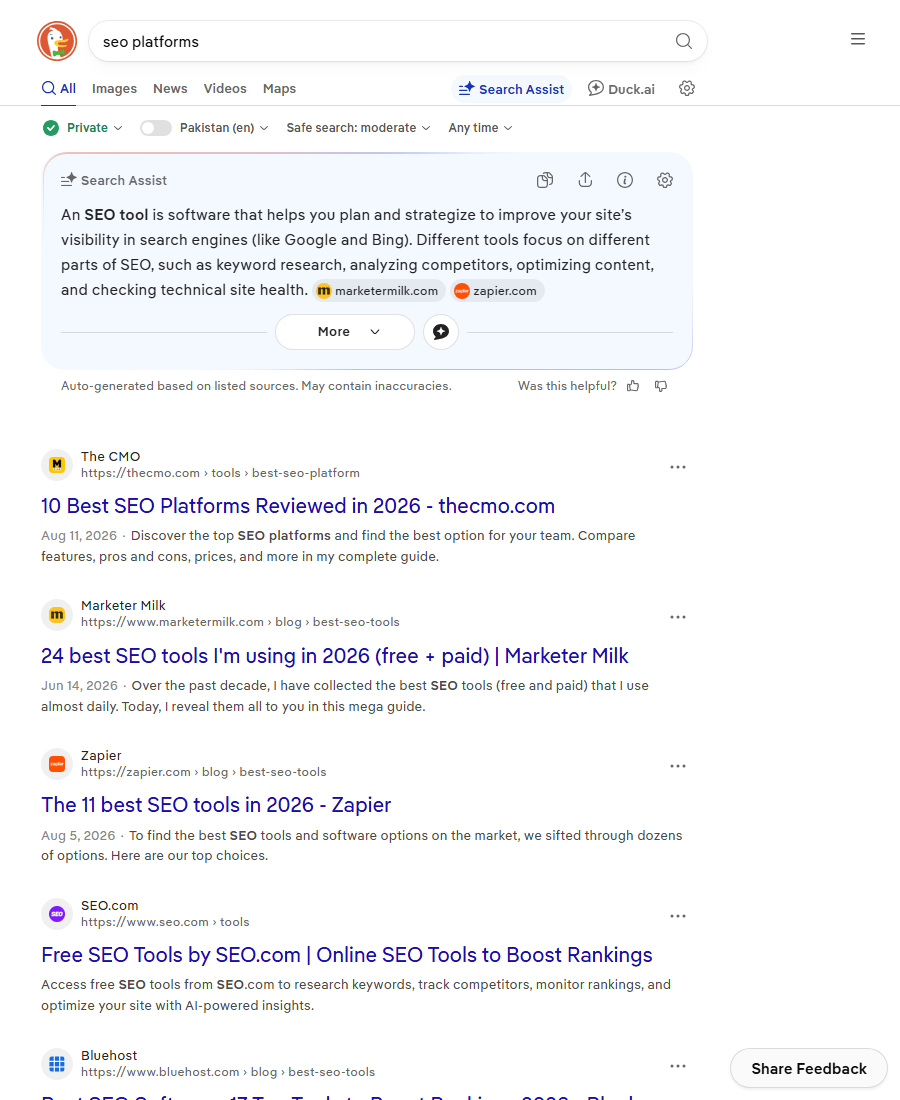
We use “SEO platform” for a product that covers at least four jobs in one login: keyword research, competitor and backlink data, site audit, and rank tracking. Single-job products such as a rank tracker, a crawler or a content editor are point tools. The results for this search blur the two.
How we score SEO platforms: by job, weighted
Weight each job by how much of your team’s week it takes. These are our default weights for a B2B SaaS marketing team:
| Job | Weight | What to test during the trial |
|---|---|---|
| Keyword research | 30 percent | Pull 50 terms for your core category. Count how many are relevant, and compare volumes against your own Search Console data. |
| Rank tracking | 25 percent | Track 100 keywords for 14 days and spot-check 10 of them by hand. |
| Site audit | 15 percent | Crawl your marketing site and count false positives in the top 20 issues. |
| Competitor and backlink data | 15 percent | Compare a competitor’s referring domains against what you already know about them. |
| Reporting | 10 percent | Build the one report your founder actually reads, and time how long it takes. |
| AI search visibility | 5 percent | Check whether prompt tracking is included, and how many prompts. |
Score each platform from 1 to 5 per job, multiply by the weight and add it up. It takes an afternoon, and it ends the “but this one has more features” conversation for good. Raise the AI search weight if a chunk of your buyers already research in ChatGPT or Perplexity. Our list of AI search visibility tools covers the dedicated options.
The SEO platforms SaaS teams shortlist most
Semrush
The broadest toolkit, and in our experience the strongest for keyword research breadth. Much of the newer functionality (content, local, AI visibility) is sold as add-ons, and extra users cost more on top of the plan, so the base price is rarely what a team ends up paying. Its pricing page would not load cleanly for this post, so check current numbers directly. If cost is the sticking point, our Semrush alternatives list covers where cheaper options hold up.
Ahrefs
The best backlink data in our experience, a clean interface, and rank tracking limits tied to the plan. At the time of writing, Standard costs $249 a month with 20 projects, 2,000 tracked keywords and 2 years of history. Advanced is $449 a month with 50 projects, 5,000 tracked keywords and 5 years of history. Lite includes 750 tracked keywords and 6 months of history. Our head-to-head is in Ahrefs vs Semrush for SaaS teams.
SE Ranking
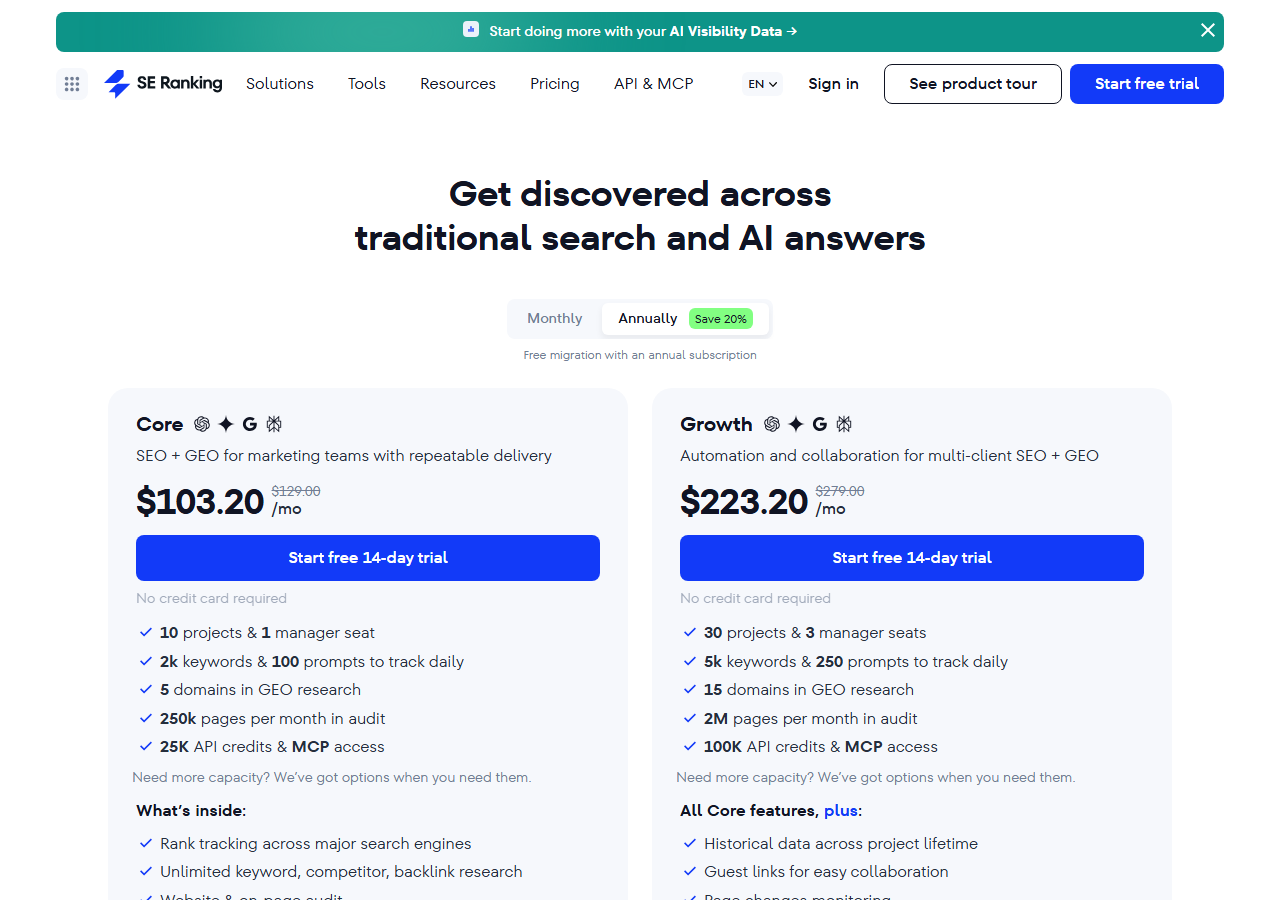
The value pick, and the vendor whose pricing page is clearest about seats. Core is $129 a month, or $103.20 a month billed annually, with 10 projects, 1 manager seat, 2,000 tracked keywords and 100 AI prompts tracked daily. Growth is $279 a month ($223.20 billed annually) with 30 projects, 3 manager seats and 5,000 keywords. Its keyword database is smaller than the two above, which matters more to content teams than to teams that mostly track and audit.
Moz Pro
A sensible choice for teams already comfortable with its interface and Domain Authority metric. Its keyword and link data sets were smaller than Ahrefs and Semrush in our testing, so we mostly recommend it to teams that already use it rather than to new buyers. Check the current plan limits on the Moz site before renewing.
Enterprise suites: Conductor, BrightEdge, seoClarity, Botify
These are sold on annual contracts with custom pricing. You are paying for crawl scale in the millions of URLs, log file analysis, workflows and permissions across many teams, and account support. For a SaaS marketing site under 5,000 URLs they are overkill. For a product with large programmatic sections or a big help center they start to make sense, and our enterprise SaaS SEO guide covers when that line gets crossed.
Worked example: what SEO platforms cost a 3-person team for a year
Tallyfox is a fictional B2B analytics SaaS with a head of content, an SEO lead and a freelance writer who needs occasional keyword access. The marketing site has 60 pages and 150 blog posts, and about 800 keywords are worth tracking.
| Option | Setup | Cost for 12 months | Seats covered | What is missing |
|---|---|---|---|---|
| A | SE Ranking Growth, billed annually | $2,678 | 3 manager seats | Smaller keyword database |
| B | Ahrefs Standard, billed monthly | $2,988 for the first user | 1, extra users billed on top | Access for the other two people |
| C | SE Ranking Core billed annually, plus Search Console, GA4 and the free version of Screaming Frog | $1,238 | 1 seat on the paid tool | Deeper competitor data; the free crawler caps at 500 URLs, so exclude images and scripts |
For Tallyfox, option C covers roughly 80 percent of what the team does week to week. Option A is what we would pick if two people need daily access. Option B only wins if content research is the core of the job, and in that case budget for a second seat from the start.
Do you need a paid SEO platform at all?
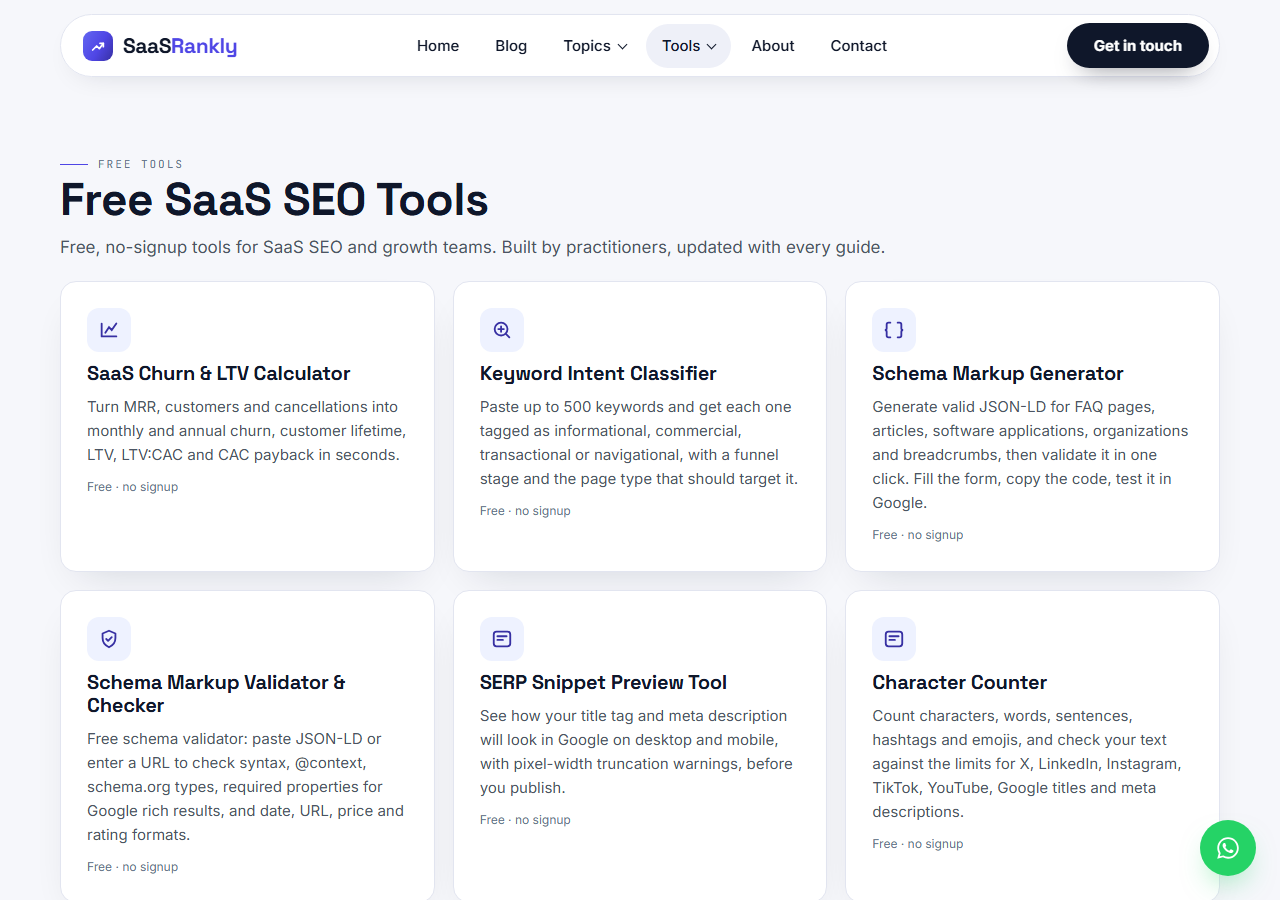
Not on day one. Several jobs that platforms bundle, such as tagging keyword intent, validating schema, checking a sitemap and previewing a title in the results, are free elsewhere, including on our own free SEO tools page.
If rank tracking is the only paid job you really need, a dedicated tracker is usually cheaper than a platform. We compared the options in best rank tracker tools.
Questions to ask before signing an SEO platforms contract
- How many users are included, and what does each additional user cost per month?
- Are tracked keywords counted per project or across the whole account?
- How often do rankings update on this plan, daily or every few days?
- Is AI search or prompt tracking included, or is it a paid add-on?
- Can we export raw data by CSV and API without moving to a higher tier?
- What happens to our ranking history if we downgrade or cancel?
- Is the listed price monthly, or does it assume annual billing?
Question 6 is the one people forget. Ranking history is the one thing you cannot rebuild after you switch, so export it before any downgrade.
Quick recap: SEO platforms
- SEO platforms combine keyword research, backlink data, site audit and rank tracking in one login.
- Score SEO platforms by weighted job, not by feature count.
- Seats and tracked keyword limits decide the real bill more than the headline price.
- SE Ranking is the value pick for small teams; Ahrefs and Semrush win on data depth.
- Enterprise suites only make sense at tens of thousands of URLs.
- Export your ranking history before you switch or downgrade.
FAQ
What is the best SEO platform for a small SaaS company?
For most teams of one to five people, SE Ranking gives the most seats and tracked keywords per dollar. If content research is the main job and budget allows, Ahrefs or Semrush give deeper keyword and competitor data. A solo founder can go a long way on Search Console and free tools first.
Are all-in-one SEO platforms worth it?
They are worth it when more than one person uses at least three of the jobs every week. If only rank tracking gets used after the first month, a dedicated tracker plus free tools costs less.
What is the difference between an SEO platform and an SEO tool?
A platform covers several jobs in one product: research, backlinks, audit and tracking. A tool does one job, like crawling a site or tracking rankings. Platforms are convenient; point tools are often better at their single job.
How much do SEO platforms cost per month?
At the time of writing, mid-market plans range from about $100 to $450 a month for one account, with extra users and add-ons on top. Enterprise suites use custom annual contracts and cost far more.
Do SEO platforms track AI search visibility?
Increasingly, yes. SE Ranking includes a set number of tracked AI prompts on its plans, and other major platforms sell AI visibility features, sometimes as add-ons. Check how many prompts are included and which AI engines are covered.
Can I switch SEO platforms without losing data?
You keep anything you export. Keyword lists and site audits are easy to rebuild, but ranking history stays with the old vendor unless you export it first. Export everything before your last billing date, and run both tools in parallel for two weeks if the budget allows.