Contextual link building means earning links that sit inside the body of a relevant article, surrounded by sentences about the same subject, instead of in a footer, a sidebar or a list of “resources”. That placement is why these links carry weight. It is also why they are the first thing a reviewer at Google looks at when a site gets flagged, because a link that looks editorial but was bought is exactly what the link spam policy describes.
We run link programmes for B2B SaaS sites, and most of the outreach we inherit from previous agencies fails the same test: the link is in the body, technically, but the paragraph around it was written to hold the link. This post is about the other kind. We will cover what makes a contextual link real, a simple scoring sheet we use before we accept any placement, a worked example from a fictional SaaS company, and the myths that still get repeated in 2026.
What contextual link building actually means
Strip away the jargon and there are three conditions. The page linking to you is about something your buyer cares about. The paragraph that contains the link is about the specific thing your page covers. And the link would still make sense to a reader if nobody had paid, asked or traded for it.
The third condition is the one people skip, and it is the heart of contextual link building. A guest post about “10 productivity tips” with a link to your invoicing software on the words “best invoicing tool” passes the first two tests on a generous day. It fails the third one instantly. No human editor would put that link there on their own.
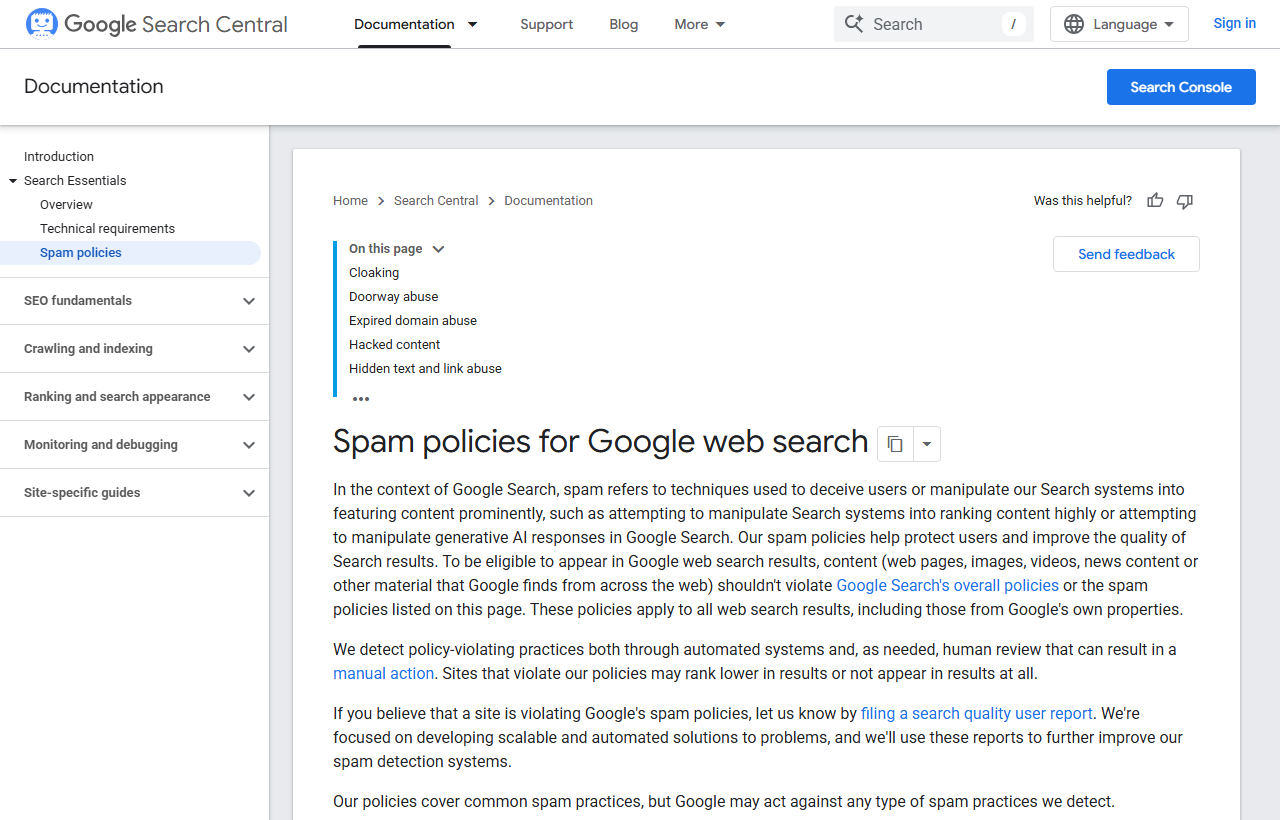
Google is fairly direct about this. Its spam policies on link schemes list paid links that pass ranking credit, excessive link exchanges, large-scale guest posting campaigns with keyword-rich anchors, and links “inserted” into existing articles for payment. Every one of those can look contextual on the page. That is the whole problem with contextual link building done at scale.
So contextual link building is not a tactic you pick instead of the risky ones. It is a standard you hold every tactic to. Guest posts, digital PR, resource mentions and partner content can all produce contextual links. They can all produce spam too.
Myth vs fact: five things we still hear on sales calls
| Myth | What we actually see |
|---|---|
| Any link in the body is a contextual link. | Position is the easy part. Relevance of the paragraph, and whether a reader would click, matter far more. A body link on an off-topic page is just a body link. |
| Exact-match anchors are what make it contextual. | Exact-match anchors are the loudest spam signal there is. The context comes from the surrounding sentences, not the anchor. |
| High DR sites are always safe. | Some of the highest-DR sites we see sell “contributor” placements in bulk. Google has devalued whole sections of big publishers for this. |
| Niche edits are the same as contextual links. | A niche edit is a link inserted into an old article, usually for money. Google names this practice in its spam policy. Some are fine; most are not. |
| You need 50 links a month to move anything. | For most SaaS sites we work on, 4 to 8 good contextual links a month to the right pages outperform 50 marginal ones. We will show the numbers below. |
The niche edit row causes the most arguments. Our view: if you asked a site owner to update an old article because your resource is genuinely better than what they link to now, and they said yes without money changing hands, that is an editorial decision. If a marketplace sells you “insertion into an aged post, DR 60, 150 USD”, that is a paid link with extra steps.
The scorecard we use before accepting a placement
Every prospective link gets scored on six questions before anyone writes a word. It is the filter behind all of our contextual link building work. It takes about three minutes per prospect once you are used to it, and it has saved us from far more bad links than any metric in a tool.
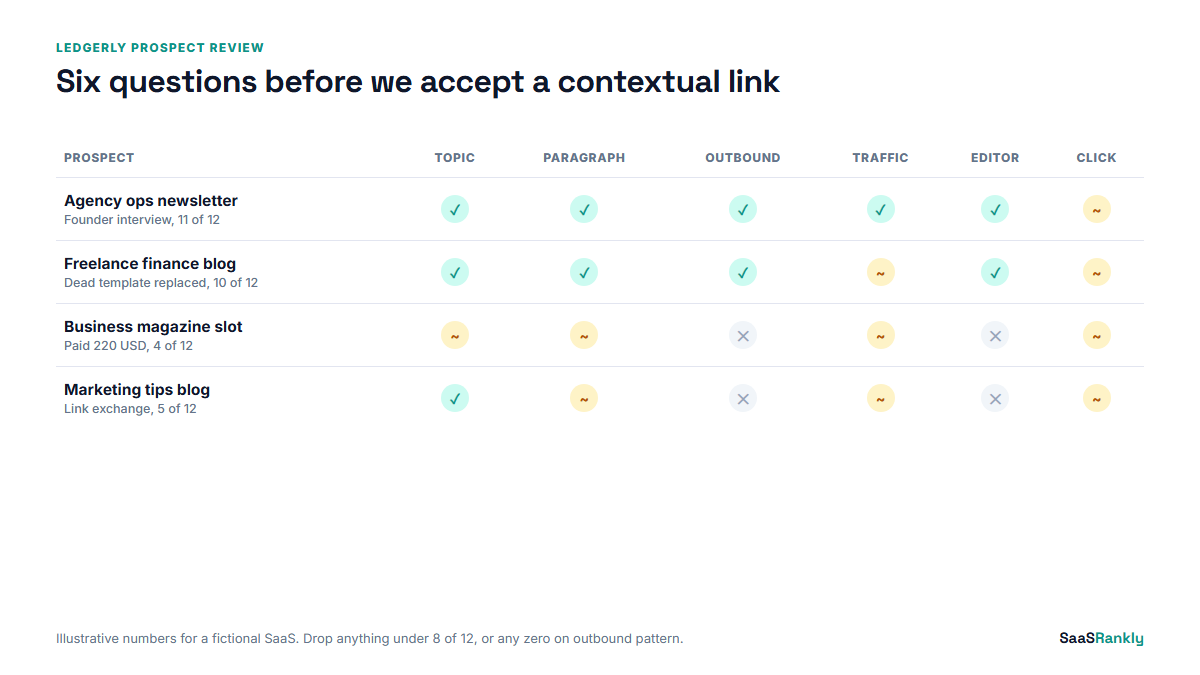
- Topic match. Would your ideal buyer read this site for work? Not “is it in the marketing niche”, but would a finance lead at a 50-person company actually read it.
- Paragraph match. Is there, or could there naturally be, a paragraph where your page is the next logical thing to read?
- Outbound pattern. Open five recent articles. If every one has two or three commercial links to unrelated companies, the site sells links. Walk away.
- Traffic reality. Does the site get organic traffic from topics it covers, not from one viral post in 2021? A traffic estimate that has fallen 80 percent in a year is a warning.
- Editorial control. Did an editor push back on anything? Sites that publish whatever you send are sites Google has usually already discounted.
- Click likelihood. Would a reader click the link? If you cannot imagine a single person clicking, the link has no job.
We score each question 0, 1 or 2. Anything under 8 out of 12 gets dropped. Anything that scores 0 on outbound pattern gets dropped regardless of the total, because link sellers tend to score well on everything else by design.
It is worth pairing this with the questions in our guide to what makes a website backlink worth having, which goes deeper on the domain side. The scorecard above is about the page and the paragraph.
Worked example: Ledgerly, a fictional invoicing SaaS
Ledgerly (fictional) sells invoicing software to small agencies, at around 29 USD a month. Its content team had a strong guide on late payment fees and a free invoice template page. Both ranked on page two. Here is what a quarter of contextual link building looked like for them, prospect by prospect. The numbers are illustrative, but the shape matches what we see on real accounts.
| Source | How it was earned | Linked page | Anchor | Score (of 12) | Decision |
|---|---|---|---|---|---|
| Agency operations newsletter archive | Founder interview | Late payment fees guide | “a clear breakdown of late fees” | 11 | Accepted |
| Freelance finance blog | Outreach: their old post linked a dead template | Invoice template | “this free invoice template” | 10 | Accepted |
| Accounting software review site | Data from Ledgerly’s payment-time survey | Survey page | “median payment time of 34 days” | 10 | Accepted |
| General business magazine | Paid “contributor” slot, 220 USD | Homepage | “best invoicing software” | 4 | Rejected |
| Marketing tips blog | Link exchange offer | Pricing page | “invoicing tool” | 5 | Rejected |
| Agency owners forum guide | Answered a thread, moderator added to wiki | Late payment fees guide | “Ledgerly’s late fee guide” | 9 | Accepted |
Four accepted links in a quarter does not look like much on a contextual link building report. What happened next is the point. The late payment fees guide moved from position 14 to position 6 for its main term over about ten weeks, and the invoice template page moved from 18 to 9. Trials attributed to those two pages went from roughly 11 a month to 26. Two rejected links would have cost 220 USD and a small amount of risk. Neither would have been on a page a buyer reads.
Notice also that none of the accepted links point at the homepage or pricing page. Contextual links go where the context is. If your content is about late fees, the link lands on the late fees guide, and internal links carry that value on to the commercial pages. We explain how that internal flow works in our on-page SEO checklist.
Where contextual link building opportunities actually come from
After a few years of this, the sources that produce contextual links without payment fall into a short list. We rank them roughly by how often they work for SaaS companies under 5 million USD ARR.
- Original data. A survey of 200 customers, anonymised product usage numbers, a pricing index. Writers link to numbers they cannot get elsewhere. This is where most of our best links come from, and it overlaps heavily with digital PR for SaaS.
- Replacing dead or outdated links. Find articles in your niche that link to a tool that shut down or a report from 2019. Offer your current resource. Reply rates we see sit around 8 to 12 percent, which is high for cold outreach.
- Expert quotes. Journalist request platforms still work if the founder answers fast and says something specific. Generic quotes get cut.
- Integration and partner content. If you integrate with a tool, co-write a how-to with them. Both sides have a real reason to link.
- Improved versions of popular content. The skyscraper technique still produces links, but only when the new version is meaningfully better, not just longer.
What is missing from this contextual link building list: guest post marketplaces, private blog networks and “link insertion” services. Those are where you get links fast, and where you get the risk we describe in tiered link building, which is the same idea with more layers to hide it.
Anchors, placement and the parts that look like spam
In contextual link building, even a genuinely earned link can look manipulative if the anchor is wrong. The rule we follow is simple: the anchor describes what the reader will find, in the words the writer would naturally use. Usually that means a partial phrase or the brand name.
| Anchor type | Example | Share we aim for |
|---|---|---|
| Branded | “Ledgerly” | 30 to 40 percent |
| Descriptive phrase | “a clear breakdown of late fees” | 30 to 40 percent |
| Naked URL or generic | “this guide”, “ledgerly.example” | 15 to 20 percent |
| Partial match | “late payment fee guide” | 10 percent or less |
| Exact match | “late payment fees” | Rare, only when the writer chose it |
Placement matters less than people think. A link in paragraph two is not magically better than one in paragraph nine. What matters is that the paragraph is about your subject. We would take a link in the middle of a relevant section over a link in the intro of a loosely related one every time.
One more thing on attributes. If a link was paid for in any way, including free product given in exchange for a review, Google asks for rel="sponsored", as its guidance on qualifying outbound links explains. A sponsored contextual link can still send referral traffic and build awareness. It just should not be the backbone of a ranking plan.
How to measure whether contextual link building is working
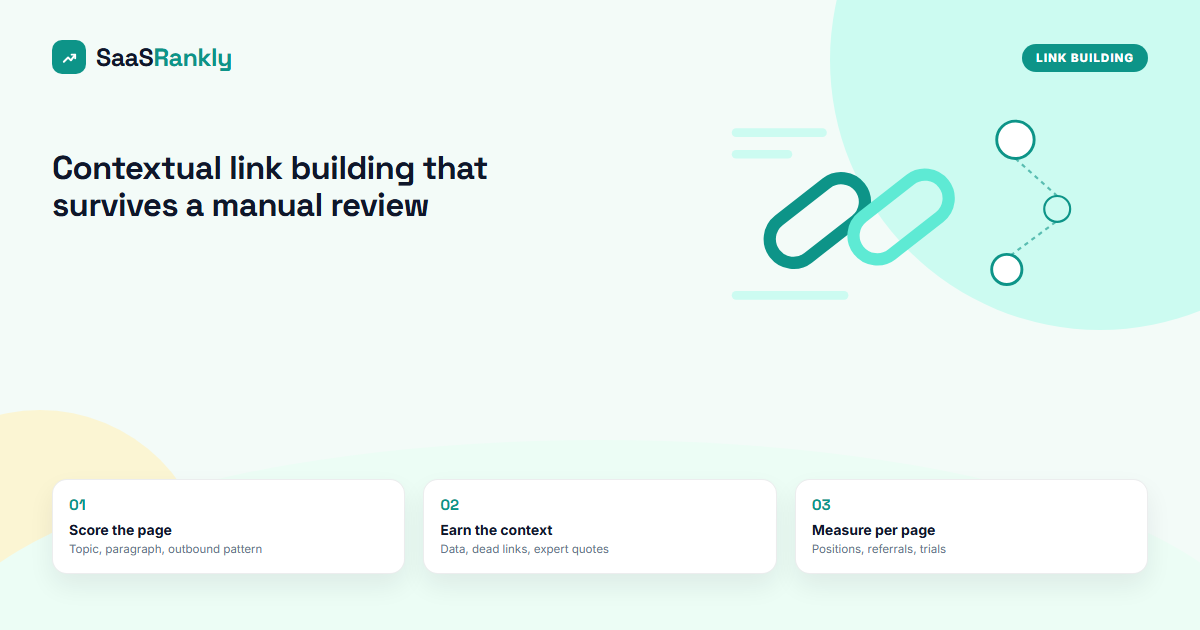
Link counts are the least useful number on a contextual link building report. We track three things for each linked page, monthly:
- Position for the page’s main term and two secondary terms, from Search Console rather than a tracker, averaged over 28 days.
- Referral sessions from the linking domains in GA4. A contextual link that sends zero visits in six months is either buried or on a site nobody reads.
- Trials or demo requests from the linked page and from the pages it links to internally.
If you want an alert when a link you earned disappears or changes to nofollow, our post on backlink monitoring covers the free and paid ways to do it. Links drop more often than you would expect, even in careful contextual link building: we see around 5 to 10 percent of earned links change or vanish within a year.
Quick recap: contextual link building
- Contextual link building means links inside relevant paragraphs that a reader would click and an editor would add without being paid.
- Body placement alone does not make a link contextual; paid insertions and guest post farms look contextual too.
- Score every prospect on topic, paragraph, outbound pattern, traffic, editorial control and click likelihood before outreach.
- Original data, dead link replacement, expert quotes and partner content produce most unpaid contextual links.
- Keep anchors mostly branded or descriptive, and point links at the content page the context is about.
- Measure positions, referral visits and trials per linked page, not the number of links.
FAQ
What is contextual link building in SEO?
It is the practice of earning links placed inside the main text of a relevant article, where the surrounding sentences discuss the same topic as the page being linked. The context tells search engines and readers why the link exists.
Are contextual links better than other backlinks?
Usually, yes. A link inside a relevant paragraph tends to pass more value and get more clicks than a footer, sidebar or directory link. But a contextual link on an irrelevant or link-selling site is worth little and can add risk.
Is buying contextual links safe?
No. Google’s spam policies treat paid links that pass ranking credit as link spam, whatever their position on the page. If you pay for a placement, mark it rel="sponsored" and treat it as advertising.
How many contextual links does a SaaS site need per month?
There is no fixed number. For most early-stage SaaS sites, four to eight strong links a month aimed at specific content pages move rankings more than dozens of weak ones. Quality and target page matter more than volume.
What anchor text should contextual links use?
Mostly branded or descriptive phrases chosen by the writer. Keep exact-match anchors rare. A natural anchor profile is one of the clearest signs that links were earned rather than placed.
Are niche edits the same as contextual link building?
Not quite. A niche edit adds a link to an existing article. If the site owner adds it because your resource is genuinely better, that is fine. If it was sold as a service, it is a paid link, which Google names in its spam policy.