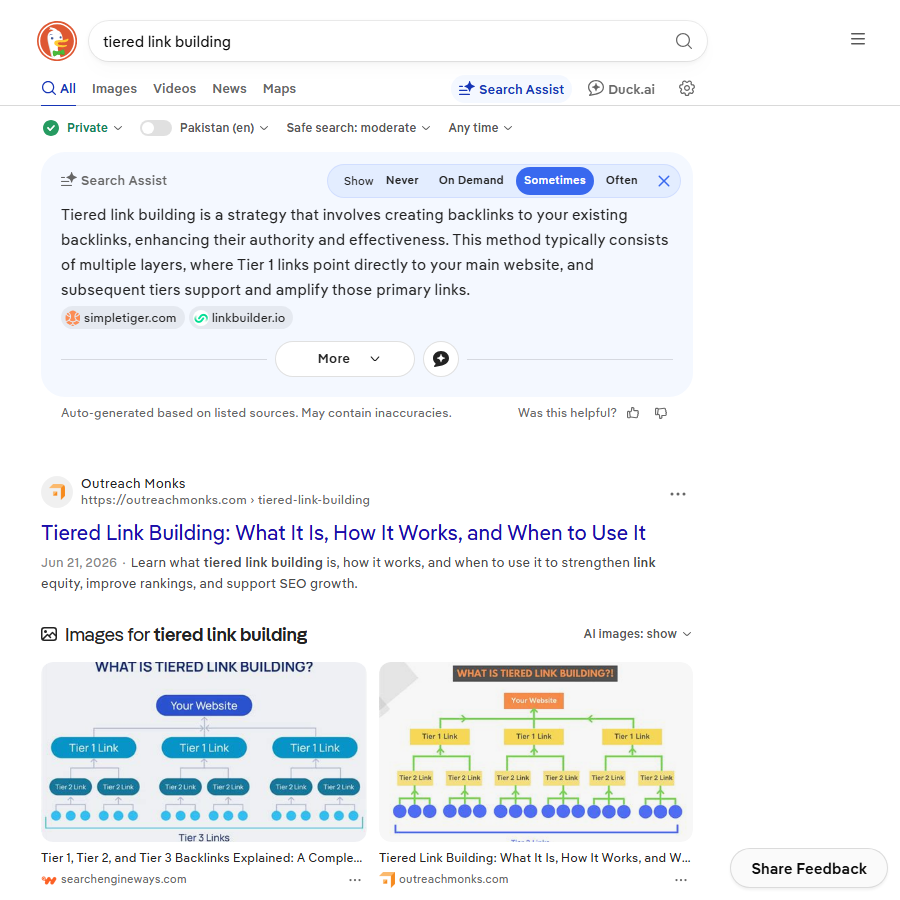
Tiered link building is one of the few SEO tactics that still gets sold with a diagram. Tier 1 links point at your money page, tier 2 links point at the tier 1 links, tier 3 points at tier 2, and the whole pyramid is supposed to push authority upward. The diagram is clean. The risk sits in the part the diagram leaves out.
This is not an argument that link building is dead, or that tiered link building never moves anything. It is an argument that the tiers below the first one are a liability you are buying, and almost nobody prices them.
What tiered link building actually is
Strip the marketing off tiered link building and the structure is simple.
| Tier | Points at | Typical source | Who controls it |
|---|---|---|---|
| Tier 1 | Your page | Guest posts, niche edits, digital PR | You, mostly |
| Tier 2 | Tier 1 links | Web 2.0 posts, bookmarks, directories, PBN pages | Nobody you can call |
| Tier 3 | Tier 2 links | Automated profile and comment spam | A script |
The theory is that tier 2 makes tier 1 stronger, so tier 1 passes more value to you. The theory is not absurd. Links to a page do affect how much that page can pass on. The problem is what the tiers look like in practice, which is nothing like the diagram.
The risk nobody prices in
You do not control tier 2, and tier 2 is the part Google reads
When you buy a tiered package you are handing someone else the right to decide which sites link to the pages that link to you. Those tier 2 properties are shared. The same blog network pushes tier 2 links at a payday loan site on Monday and at your SaaS on Tuesday.
Your tier 1 link now lives on a page whose backlink profile you did not choose and cannot audit. If that profile gets devalued, your tier 1 link goes with it, and you paid for the tier 1 link.
Tiered link building cleanup outlasts the campaign
Here is the asymmetry. Building the pyramid takes a month. Unwinding it takes far longer, because tier 2 and tier 3 links are not yours to remove. You cannot email a script. The only lever you have is disavow, and disavowing a tier 2 link does nothing for you anyway, since it points at someone else’s page.
So you end up in the worst spot available: a tier 1 link you paid for, sitting on a page you cannot clean, and no mechanism to separate yourself from it.
It is optimised for a ranking factor you cannot see
Tiered link building assumes authority flows in measurable amounts through a chain of pages. Every vendor selling it will show you a tool metric moving. Those metrics are the vendor’s model of the web, not Google’s. A tier 2 campaign that moves a third-party authority score by 8 points has demonstrated exactly one thing: that the third-party tool noticed.
We made this point about difficulty scores in our keyword difficulty tool breakdown and it applies twice over here. If the only evidence a tactic works is a number invented by the company selling you the tactic, you do not have evidence.
When does tiered link building look like it worked?
Honesty matters here, because plenty of people have run it and seen rankings move. Three explanations, in order of how often we think they apply:
- The tier 1 links did the work. Someone bought 10 decent guest posts and 4,000 tier 2 links. The 10 guest posts moved the needle. The pyramid took the credit.
- The site was in a weak niche. In a SERP where the incumbents have almost no links, any link moves things. That is a statement about the SERP, not about tiers.
- It worked and then stopped. The most common version. Six good months, then a broad core update, and the site never recovers to where it was.
The third one is the one worth planning around. The question is not “can this work” but “what does the downside look like and how long does it last”.
A worked comparison, illustrative
Made-up numbers, realistic shape. Two budgets of the same size, one quarter, for a SaaS with a new domain.
| Tiered package | Slow route | |
|---|---|---|
| What you get | 15 tier 1 placements, roughly 5,000 tier 2 and 3 links | 4 to 6 placements you chose by hand |
| Time to first link | Days | Four to eight weeks of outreach |
| Link quality you can verify | Tier 1 only, and only at purchase | All of it |
| Exit cost if it goes wrong | Unremovable, disavow only, months of uncertainty | Email the site, ask for removal |
| What it looks like in 18 months | A profile you would not show an acquirer | A profile you would |
That last row decides it for most SaaS companies. If there is any chance of due diligence in your future, an unauditable backlink profile is a problem that arrives at the worst possible moment.
What we do instead
None of this is exotic. It is slower than tiered link building and it survives.
- Fewer, chosen links. Four placements you picked beat 15 you were assigned. Our approach is in SaaS link building.
- Link to pages that can convert the authority. A link at a page sitting on position 40 is wasted. Position 8 to 25 is where a link changes the outcome.
- Build things worth linking to. Free tools, original data, a genuinely better comparison page. This is slower to start and it compounds.
- Internal links first. Free, entirely under your control, and most sites have not finished the job. See why backlinks matter for where external links fit next to that.
- Digital PR when budget allows. Expensive per link, but the links are real and nobody can take them away. We covered it in digital PR for SaaS, and the monitoring side in backlink monitoring.
If you have already bought tiers
Not a disaster, and not a reason to panic-disavow. In order:
- Stop the campaign. Do not add more tiers to fix the tiers.
- List your tier 1 placements. These are yours. Judge each one as a link: real site, real traffic, relevant, would you want it if it were free?
- Keep the good ones, ask for removal on the obvious junk. Actual emails to actual site owners.
- Leave the tier 2 and 3 alone. They point at other people’s pages. Disavowing them achieves nothing for you.
- Start building the real profile alongside. Dilution is a legitimate strategy. A profile that is 80 percent earned in two years reads very differently from one that is 20 percent earned.
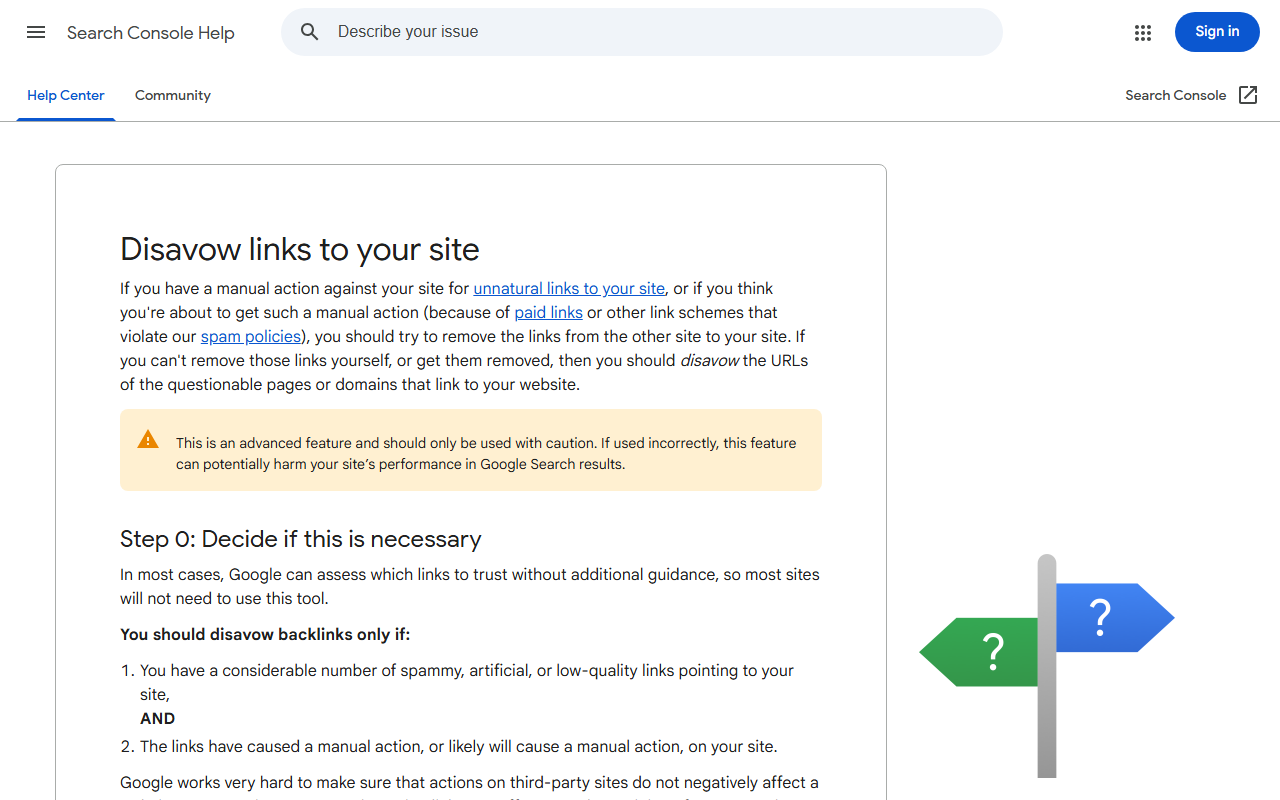
Only reach for disavow if you have a manual action in Search Console telling you to. Without one, most disavow files do more harm than good, usually because somebody pasted in domains that were sending real value.
Quick recap: tiered link building
- Tier 1 is the only link you control and the only one doing measurable work.
- Tier 2 puts your paid link on a page whose backlink profile someone else decides.
- The cleanup is not available to you, because you cannot remove links pointing at other people’s pages.
- Evidence it works usually comes from a vendor’s own authority metric, which is not evidence.
- When it appears to work, the tier 1 links are normally the reason.
- If you already bought it, stop, keep the good tier 1 placements, and dilute over time rather than panic-disavowing.
FAQ
What is tiered link building?
A structure where tier 1 links point at your page, tier 2 links point at those tier 1 pages, and sometimes a tier 3 points at tier 2. The idea is to strengthen your tier 1 links so they pass more value. The catch is that you own tier 1 and rent everything below it.
Is tiered link building against Google’s guidelines?
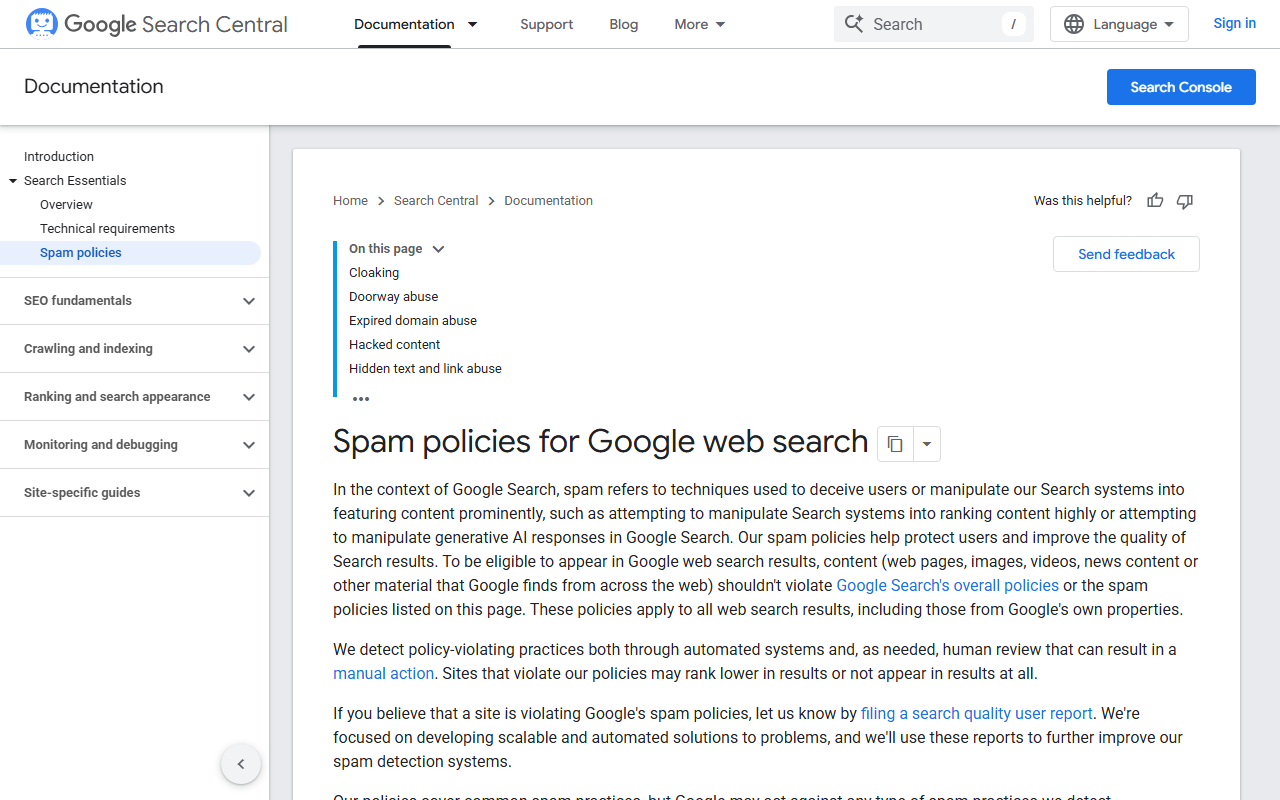
Buying or automating links to manipulate rankings is covered by the link spam policy regardless of which tier they sit in. Tier 2 being one hop removed is not a defence, because the policy is written around intent and scale rather than distance from your domain.
Does tiered link building still work in 2026?
It can move rankings in weak SERPs, and in most of those cases the tier 1 links are doing the work on their own. The honest framing is that you are buying a short-term gain with an unquantified long-term liability, and the liability tends to arrive with a core update.
What is the difference between tier 1 and tier 2 links?
Tier 1 points directly at your site, so you chose it, you can see it, and you can ask for its removal. Tier 2 points at the tier 1 page, so you did not choose it, you often cannot see the full list, and you have no removal route at all.
Can I disavow tier 2 links?
You can add them to a disavow file, but it does nothing useful. Disavow tells Google to ignore links pointing at your site. Tier 2 links point at someone else’s page, so they are outside what the file covers.
What should I do instead of tiered link building?
Fewer links you actually chose, pointed at pages already ranking in positions 8 to 25 where a link changes the result. Finish your internal linking first because it is free, and build something worth citing so links arrive without a purchase order.
Both of Google’s relevant pages are short and worth reading in full: the spam policies including link spam and the disavow links documentation. Read the second one before you buy anything, not after.