A website backlink is a link from a page on another site to a page on yours. That is the whole definition. The useful question is which of those links actually help, because most of the backlinks a young SaaS site picks up in its first year do nothing at all, and a handful of them quietly do most of the work.
This post is about telling the two apart. We look at the seven signals we check before we chase a website backlink, a scored example of four candidate links, the myths that waste the most outreach time, and a ten-minute vetting routine you can run on any link offer that lands in your inbox.
What a website backlink actually passes
Google treats a link as two things at once. It is a path a crawler can follow to discover your page, and it is a vote that a real editor thought your page was worth pointing at. The first part is mechanical. The second part is where the value sits, and it depends almost entirely on the page the link comes from.
Three things travel along a followed link:
- Discovery. Googlebot finds your URL faster when a crawled page links to it. On a new domain this alone can cut days off indexing.
- Relevance context. The anchor text and the words around the link tell Google what your page is about.
- Authority. Some share of the linking page’s standing flows to yours. How much depends on how strong that page is and how many other links it carries.
Not every link is meant to pass that third item. Google lets site owners label links with rel values, and those labels change how a website backlink is treated.
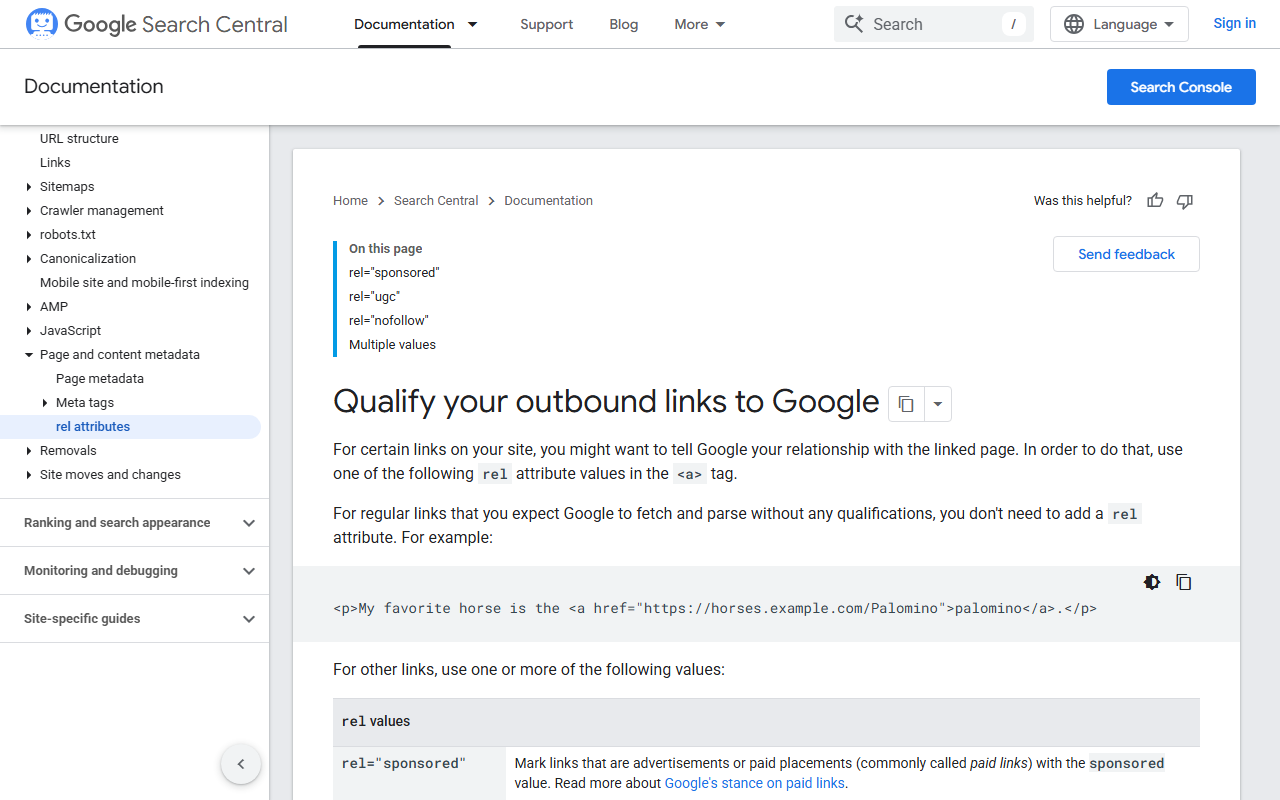
In practice this means a sponsored or nofollow link is a hint, not a guarantee of nothing. Google says it may still use them. But you should not pay for one expecting it to move rankings, and you should never ask a publisher to strip the sponsored label off a paid placement. That is exactly the pattern the spam team looks for. The placements that hold up under that kind of review look very different, and our guide to contextual link building shows the checks we run before accepting one.
Seven signals that make a website backlink worth having
Every tool gives you a single authority score. We find the score useful for sorting a long list and almost useless for deciding on one link. These are the checks we actually make, in the order we make them.
| Signal | What to look at | Pass | Fail |
|---|---|---|---|
| 1. Topical fit | Does the linking page cover a subject your buyer cares about? | A post on SaaS onboarding linking to your onboarding guide | A casino blog linking to your CRM |
| 2. Real organic traffic | Estimated search traffic to the site and to the exact page | Site gets steady visits from dozens of related queries | High authority score, near-zero traffic |
| 3. Editorial placement | Is the link inside a sentence that makes sense without it? | Body copy, cited as a source | Footer, sidebar, “partners” list |
| 4. Page is indexed | Search site: plus the exact URL |
Page shows up | Not indexed, so the link passes nothing |
| 5. Outbound link count | How many other external links sit on the same page | A handful, all relevant | 40 plus unrelated outbound links |
| 6. Link attribute | Followed, nofollow, sponsored or ugc | Followed and earned | Paid but unlabelled |
| 7. Trend of the site | Traffic direction over the last 6 to 12 months | Flat or growing | Fell off a cliff after a core or spam update |
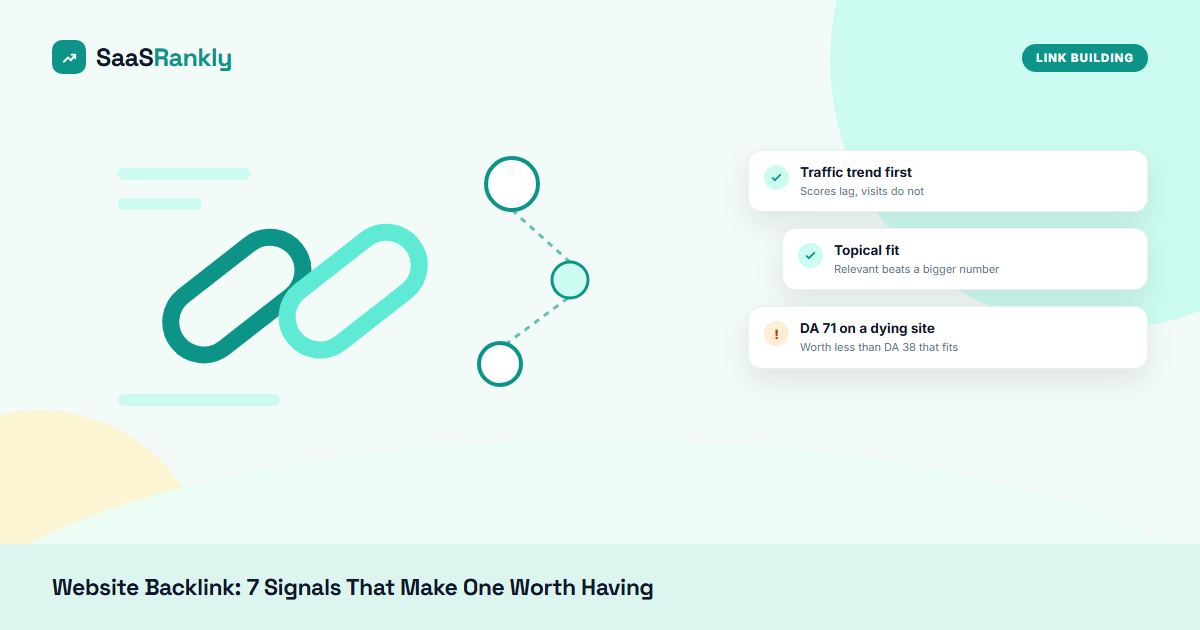
Signals 2 and 7 catch the most bad deals. A site can keep a high authority number for months after Google stops trusting it, because authority metrics count links pointing at the site, and those links do not disappear when rankings do. Traffic moves first. If you only check one thing, check the traffic trend.
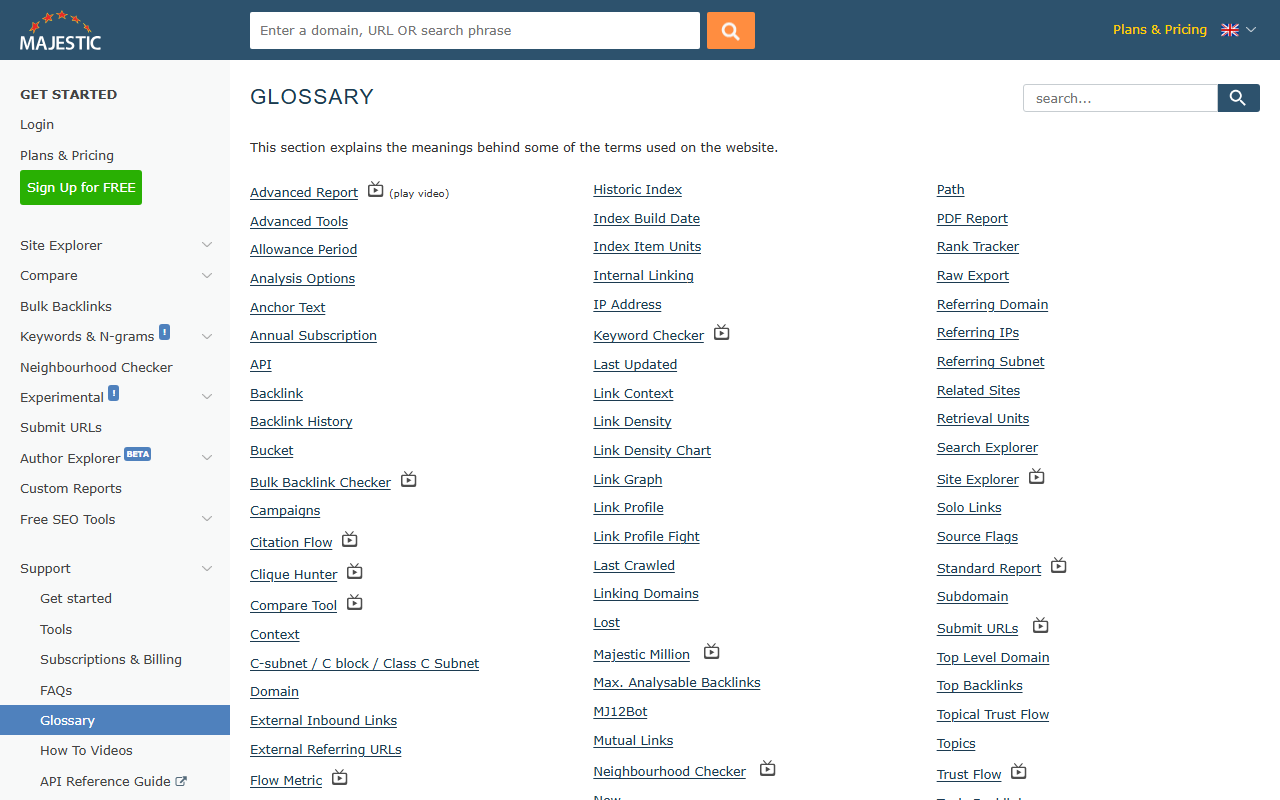
The metric names differ between tools, which confuses a lot of people new to this. Majestic calls its two main scores Trust Flow and Citation Flow, Ahrefs uses Domain Rating and URL Rating, Moz uses Domain Authority. None of them is a Google number.
A scored example: four website backlink offers
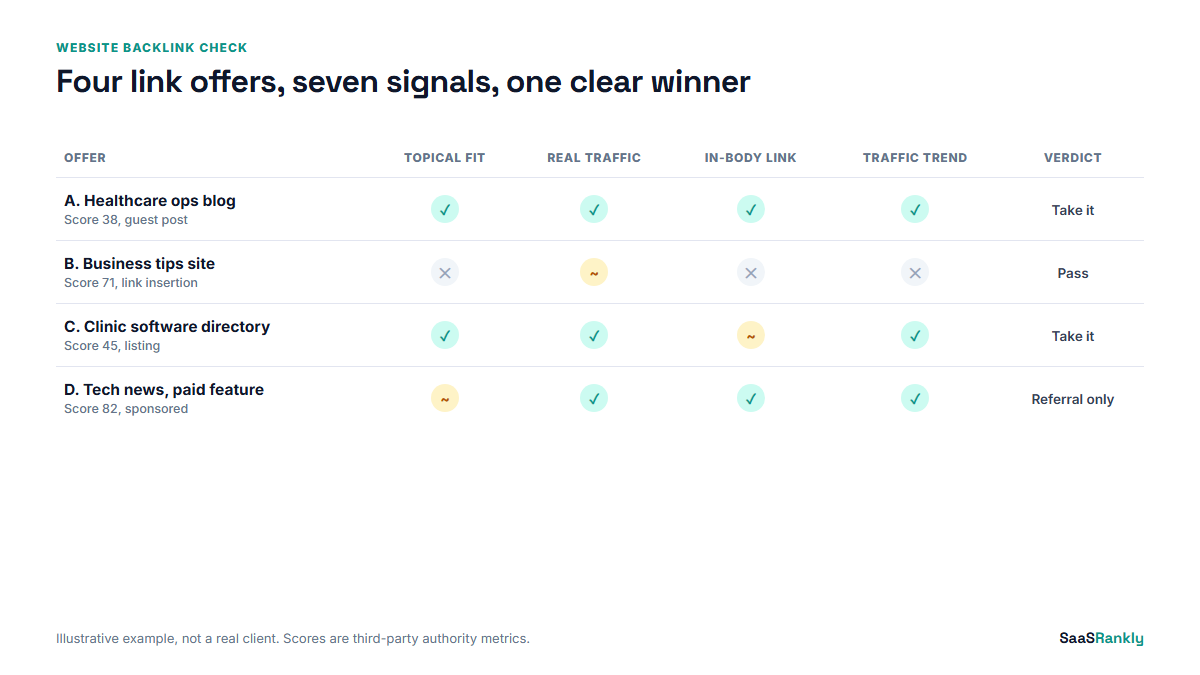
Here is an illustrative example, not a real client. Picture a small SaaS that sells scheduling software for clinics. In one week it gets four offers of a website backlink. We run each one through the seven signals.
| Offer | Authority score | Monthly organic traffic (est.) | Topical fit | Placement | Verdict |
|---|---|---|---|---|---|
| A. Healthcare ops blog, guest post | 38 | 12,000 | Strong | In body, one link | Take it |
| B. General “business tips” site, link insertion | 71 | 900 and falling | Weak | Old post with 30 outbound links | Pass |
| C. Clinic software directory listing | 45 | 3,500 | Strong | Listing page | Take it, low effort |
| D. Tech news site, paid feature | 82 | 250,000 | Medium | Marked sponsored | Only for referral traffic |
Offer B is the one most founders would take on instinct, because 71 looks better than 38. It is the worst of the four. The traffic is falling, the post is a link farm in all but name, and a scheduling tool has no reason to be mentioned there. Offer A has half the score and is worth ten times as much, because a clinic manager might actually read that post and click.
Offer D is fine if you want the readers. Just be honest with yourself that the sponsored label means you are buying an audience, not rankings.
Myths about website backlinks that cost the most time
Myth: more referring domains always means better rankings
Fact: the count correlates with rankings in big studies because strong sites attract lots of links. It does not follow that adding 50 weak ones helps you. It is easy to find new SaaS domains with 300 referring domains and no page in the top 50, because almost all of those links came from directories and scraped sites nobody visits.
Myth: a nofollow website backlink is worthless
Fact: it will not pass much authority, but a nofollow link from a busy Reddit thread or a well-read newsletter can send buyers, get your brand named in AI answers, and lead to followed links later when writers see it. Judge those on traffic, not on the attribute.
Myth: you need backlinks before you publish anything
Fact: links point at pages. With nothing worth citing on the site, outreach has nothing to offer. Build three or four genuinely useful pages first, then earn links to those. We covered the order in our SaaS link building guide.
Myth: homepage links are the most valuable
Fact: for a SaaS site, a link to a specific guide or comparison page often does more, because that page is the one trying to rank for a query. Homepage links help brand queries, which you probably rank for already.
The ten-minute vetting routine for any website backlink
When an offer arrives, this is the routine. It takes about ten minutes and it kills most bad deals in the first three steps.
- Open the exact page, not the homepage. Read the paragraph the link would sit in. If it reads like it was written around the link, stop.
- Check the traffic trend for the whole domain over 12 months in whatever tool you have. A drop of more than half after an update is a pass. Our Semrush alternatives post lists cheaper tools that show this.
- Count the outbound links on the page. Open the source and search for
href="http. More than 20 external links on a 1,500-word post is a warning. - Confirm the page is indexed. A link on a page Google has not indexed passes nothing.
- Look at who else they link to. If the other outbound links go to gambling, pills and crypto, your link is sitting in bad company.
- Ask about the attribute. If money changes hands, the link should be
sponsored. A publisher who offers to hide that is a publisher who will get penalised. - Decide what the link is for. Rankings, referral traffic or brand. Write it down. It stops you paying ranking prices for a referral link.
After a link goes live, add it to a tracking sheet. Links get removed or switched to nofollow more often than people expect, and our backlink monitoring routine catches that in about 20 minutes a week.
Where a website backlink fits in a SaaS SEO plan
Links are one input. For a young SaaS site they are rarely the first bottleneck. Our view, which we explain in more depth in why backlinks are important in SEO, is this rough order:
- Pages that match real buyer queries, indexed and technically clean.
- Search Console data showing which of those pages sit between positions 8 and 25.
- Links pointed at those specific pages, where a small push moves them onto page one.
Building links to a page stuck at position 60 rarely pays. The same link on a page at position 12 can be the difference between zero clicks and a steady trickle of trials. That is the single most useful habit we can suggest: pick the target page before you pick the link.
Stay away from schemes that promise a website backlink in bulk. Tiered networks, private blog networks and “DA 50 plus guaranteed” packages all carry risk that is hard to price, and we broke that down in the tiered link building post.
Quick recap: website backlink
- A website backlink is a link from another site’s page to yours, and its value depends on the linking page.
- Check traffic and traffic trend before authority score. Scores lag, traffic does not.
- Topical fit and in-body placement beat a higher number on an unrelated site.
- Sponsored and nofollow links are for audience and brand, not rankings.
- Point links at pages already sitting in positions 8 to 25.
- Track every live link, because removals and attribute changes happen quietly.
FAQ
What is a website backlink in simple words?
It is a clickable link on someone else’s website that points to a page on your website. Search engines read it as a sign that the other site found your page useful.
How many backlinks does a new SaaS website need?
There is no fixed number. For low-competition queries we often see pages rank with links from five to fifteen relevant sites. Check how many referring domains the current top five results have and aim for the lower end of that range with better quality.
Is a website backlink from a high DA site always good?
No. DA, DR and Trust Flow are third-party estimates. A high score on a site with falling traffic and dozens of unrelated outbound links can be worth less than a link from a small, relevant, growing blog.
Do nofollow backlinks help SEO at all?
Google treats nofollow as a hint and may use it. The main value is usually referral visits and brand mentions, which can lead to followed links later.
Can I buy a website backlink safely?
You can buy a placement for exposure if it is labelled rel="sponsored". Buying followed links to pass ranking signals breaks Google’s spam policies and carries real risk of a manual action.
How do I check if my website backlink is still live?
Keep a sheet of every link with the source URL, then recheck it monthly with a free backlink checker or a crawler. Our free SEO tools page lists a few that do the job.