For most informational and comparison queries in software categories, Google now answers first and lists results second. The AI Overview sits at the top with a handful of cited pages, and AI Mode goes further, replacing the results page with a conversation. For a SaaS site that means two things: the pages Google cites get a new kind of visibility, and everyone else loses clicks they used to get from position one. This guide covers how to be cited, how to measure it, and how to keep the traffic that matters.
This guide covers ai overviews visibility for SaaS teams: what it means, why it matters, and the practical steps to get it right.
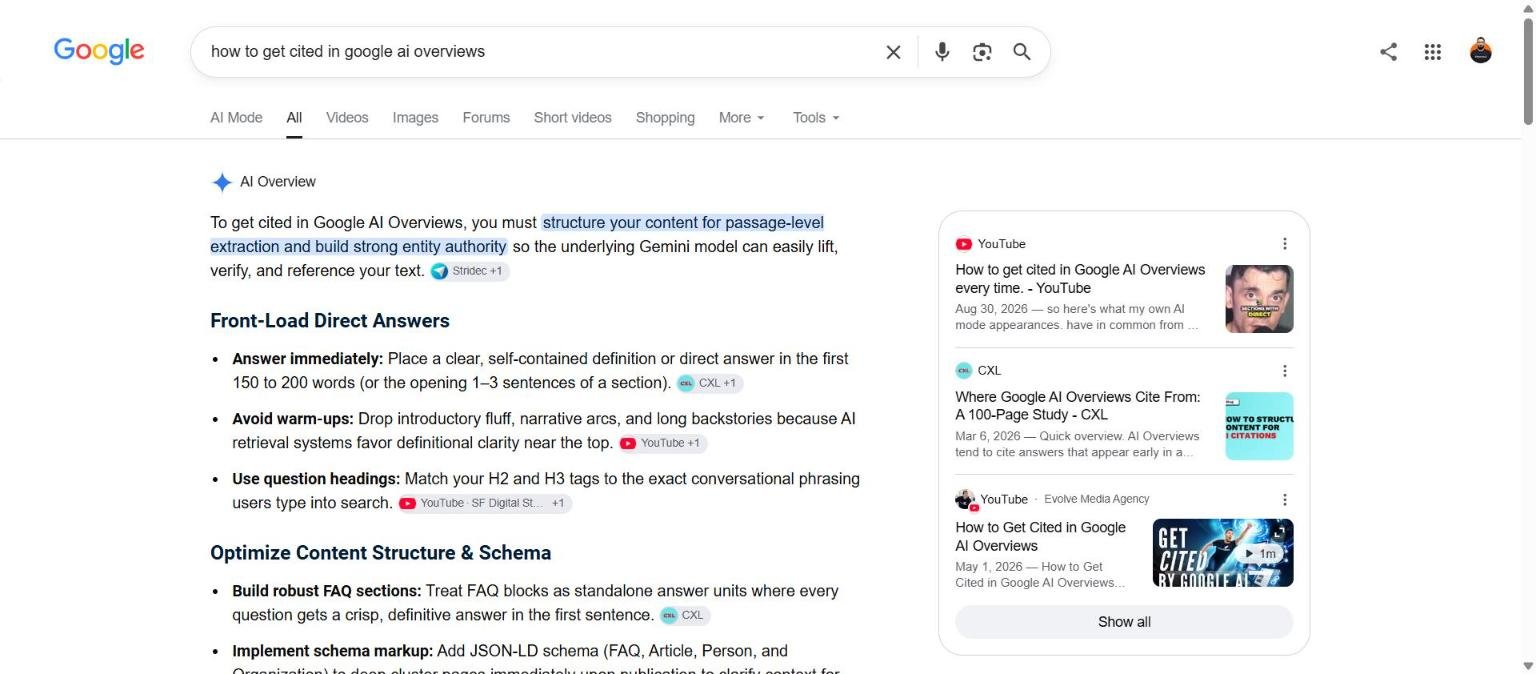
How Google chooses what to cite
Google has said AI Overviews are built from its normal ranking systems plus a generative layer that assembles an answer from retrieved pages. Independent studies through 2025 and 2026 consistently find that the large majority of cited URLs already rank in the top ten for the query or a close variant, with most estimates between 50 and 75 percent. Practically:
- Ranking is still the entry ticket. If you are on page three you will not be cited. Everything in SaaS SEO strategy still applies.
- Within the top ten, structure decides. Google lifts passages, not pages. The page whose relevant paragraph is clearest, shortest and most specific gets the chip.
- Multiple pages per answer. An Overview cites three to eight sources across its sections, so a page that answers one sub-question well can be cited even if it does not rank first overall.
Structuring SaaS pages for AI Overviews
Answer first, then explain
Open each section with the answer in one or two sentences, then the reasoning. “Yes, Notion supports two-factor authentication on all plans since 2023; here is how to enable it.” A model can lift that. It cannot lift a three-paragraph wind-up.
Use question H2s that match the query
Pull the questions from Search Console (queries containing how, what, which, can, does), from People Also Ask, and from your support inbox. Make each one an H2 with a direct answer underneath.
Put facts in tables
Pricing, plan limits, integration lists, comparison matrices. AI Overviews cite tables heavily for “how much”, “which plan” and “X vs Y” queries. This is also why comparison pages and integration pages do well in AI features.
Keep one topic per page and link the cluster
Google associates a page with a question more confidently when the page is about that question. A tight topic cluster with clear internal links outperforms one giant guide that tries to cover everything.
Mark it up and keep it fresh
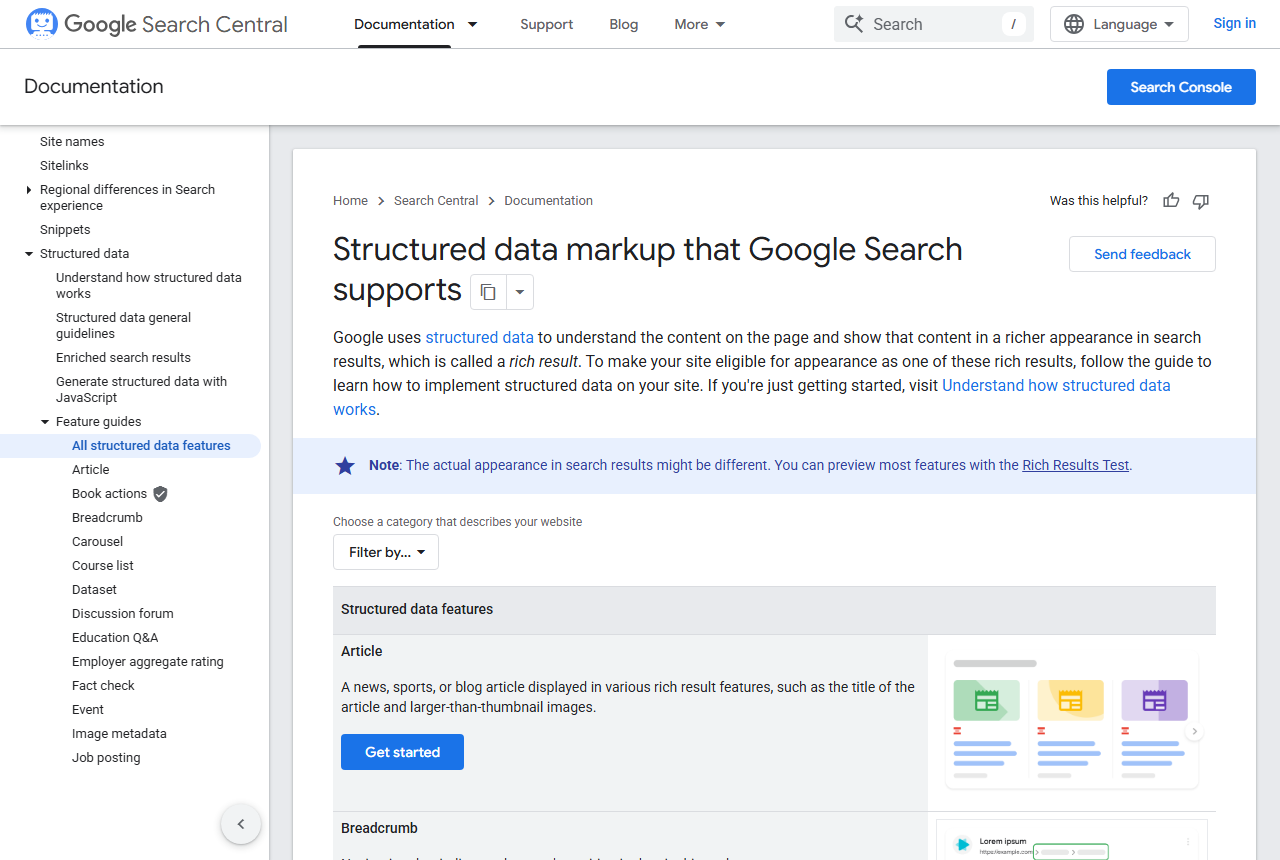
Article, FAQPage and SoftwareApplication schema help Google understand the page; validate it with the schema validator. Show a visible updated date and actually update the facts; Overviews prefer current sources for anything involving prices, versions or features.
Measuring AI Overviews visibility
Three sources, in order of trust.
- Search Console. Since June 2026 the Performance report includes a generative AI view showing impressions and clicks where your page appeared in an AI Overview or AI Mode, by page, query, country and device. This is the only first-party data. Look at it weekly, by page group, using the same regex filters as your GA4 and Search Console setup.
- Rank trackers with SERP feature data. Semrush, Ahrefs, SE Ranking and AccuRanker report whether an AI Overview appeared for each tracked keyword and whether you were cited. Use this to see competitors, which Search Console will not show. See the rank tracker comparison.
- Prompt-based AI visibility tools. Otterly, Peec and Profound run prompts and report AI Overview and AI Mode citations alongside ChatGPT and Perplexity. Useful for the cross-engine picture; see AI search visibility tools.
The click-through problem, and what to do about it
Ahrefs’ 2025 study of 300,000 keywords found the top organic result lost about a third of its click-through rate when an AI Overview appeared, and later studies point the same way. For informational SaaS content, expect fewer clicks even when rankings hold. The response is not to fight the Overview but to change what you optimise for. That gap between ranking well and actually being seen is what a visibility score tries to capture, and where it misleads, which we unpack in what SEO visibility really measures.
| Page type | What changes | What to do |
|---|---|---|
| Definitional and how-to content | Clicks fall most; the answer is in the Overview | Optimise to be cited, and measure brand impressions in the AI report rather than clicks. Move signup CTAs into the cited page, above the fold. |
| Comparison and alternatives pages | Clicks hold better; buyers want detail | Add the comparison table and a clear verdict near the top; these are cited and clicked. |
| Product, pricing, integration pages | Little change; transactional queries show fewer Overviews | Keep pushing these in your bottom-of-funnel keyword program. |
| Long-tail troubleshooting | Mixed; specific problems still earn clicks | Keep the exact error text and steps on the page; that specificity is what gets cited and clicked. |
Report signups from organic, not sessions. A page that loses 30 percent of clicks but keeps its signups because the remaining visitors are further down the funnel is fine. The SEO reporting dashboard post shows the layout.
AI Mode: the next step
AI Mode replaces the results page with a chat answer and inline links with short descriptions. The same pages that get cited in Overviews get cited in AI Mode, and Google reports both in the same Search Console view. Two differences: AI Mode runs several sub-queries per question (“query fan-out”), so pages that answer a narrow sub-question get pulled in more often, and links carry a one-line description written by the model, so your page’s first paragraph effectively becomes your snippet.
Frequently asked questions about AI Overviews visibility
Can I opt out of AI Overviews without leaving Google?
You can use nosnippet or max-snippet to limit what Google shows, which also limits Overview use of your text, but it reduces your normal snippets too. For most SaaS sites being cited is worth more than the control.
Do AI Overviews appear for SaaS queries?
For informational and comparison queries, most of the time. For pricing, login and brand navigational queries, rarely. Check your own keywords in a tracker with SERP feature data.
Does being cited in an AI Overview help rankings?
There is no evidence of a direct effect. It helps brand impressions and it sends some clicks; treat it as a separate channel in reporting.
How do I see which of my pages are cited?
Search Console’s generative AI performance view, filtered by page. Add a rank tracker to see the same for competitors.
Quick recap: Ai overviews visibility
Ai overviews visibility usually comes down to a short, repeatable checklist. Use this whenever ai overviews visibility comes up again:
- Diagnose ai overviews visibility by checking the relevant report first, not assumptions.
- Confirm the current setup is actually causing ai overviews visibility before you change anything.
- Re-check ai overviews visibility again after the fix ships, not before.
Treat ai overviews visibility as an ongoing signal rather than a one-time fix. For background on the platform rules behind this, see Google Search Central.