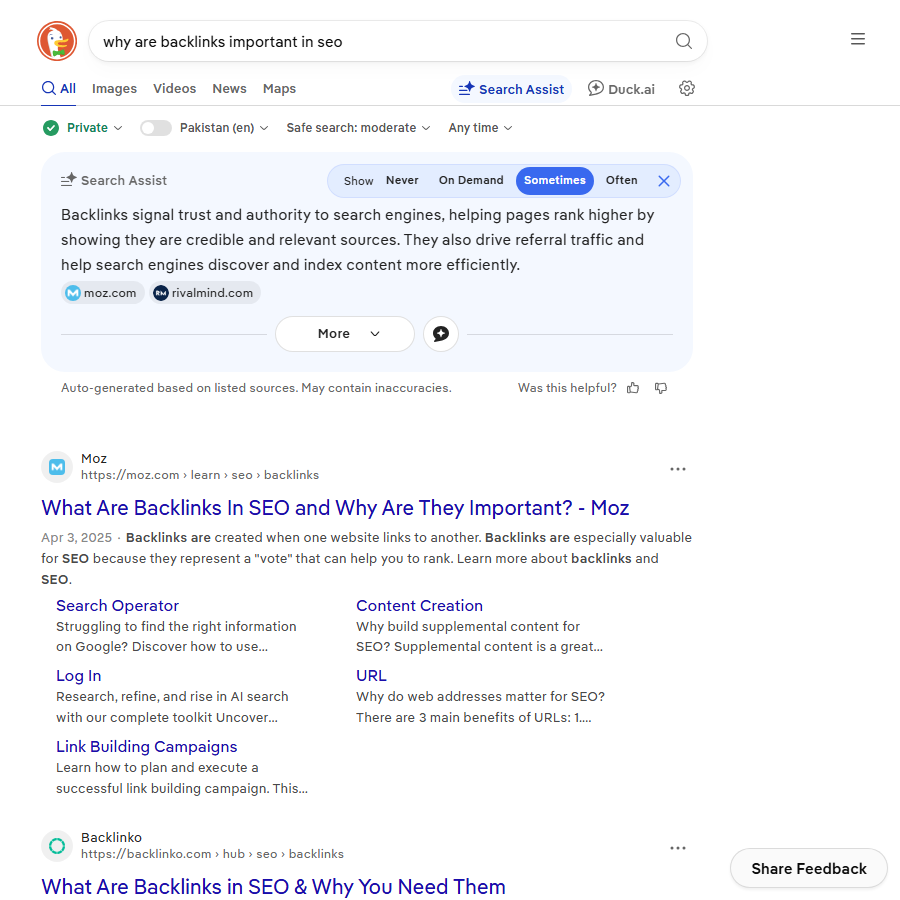
Why are backlinks important in SEO when Google keeps saying links matter less than they used to? Because “less than before” is still a lot. Across the SaaS sites we work on, the pages that hold top-three positions for commercial terms almost always have more referring domains than the pages sitting at eight or nine. Content gets a page into the contest. Links usually decide who wins it.
This post explains the mechanics in plain terms, shows where links do nothing at all, and ends with the numbers from a worked example so you can judge whether link building deserves budget this quarter.
Why are backlinks important in SEO: the short version
A backlink does three separate jobs. Most articles blur them together, which is why the advice that follows is often muddled.
- Discovery. Googlebot finds new URLs by following links. A page with no links pointing at it, internal or external, depends entirely on your sitemap.
- Ranking signal. Links from other sites act as votes. Google’s systems weigh who is voting, what the surrounding text says, and whether the vote looks earned.
- Referral traffic and brand. A link on a page that real buyers read sends visitors directly. This one is ignored most often, and for SaaS it can be worth more than the ranking lift.
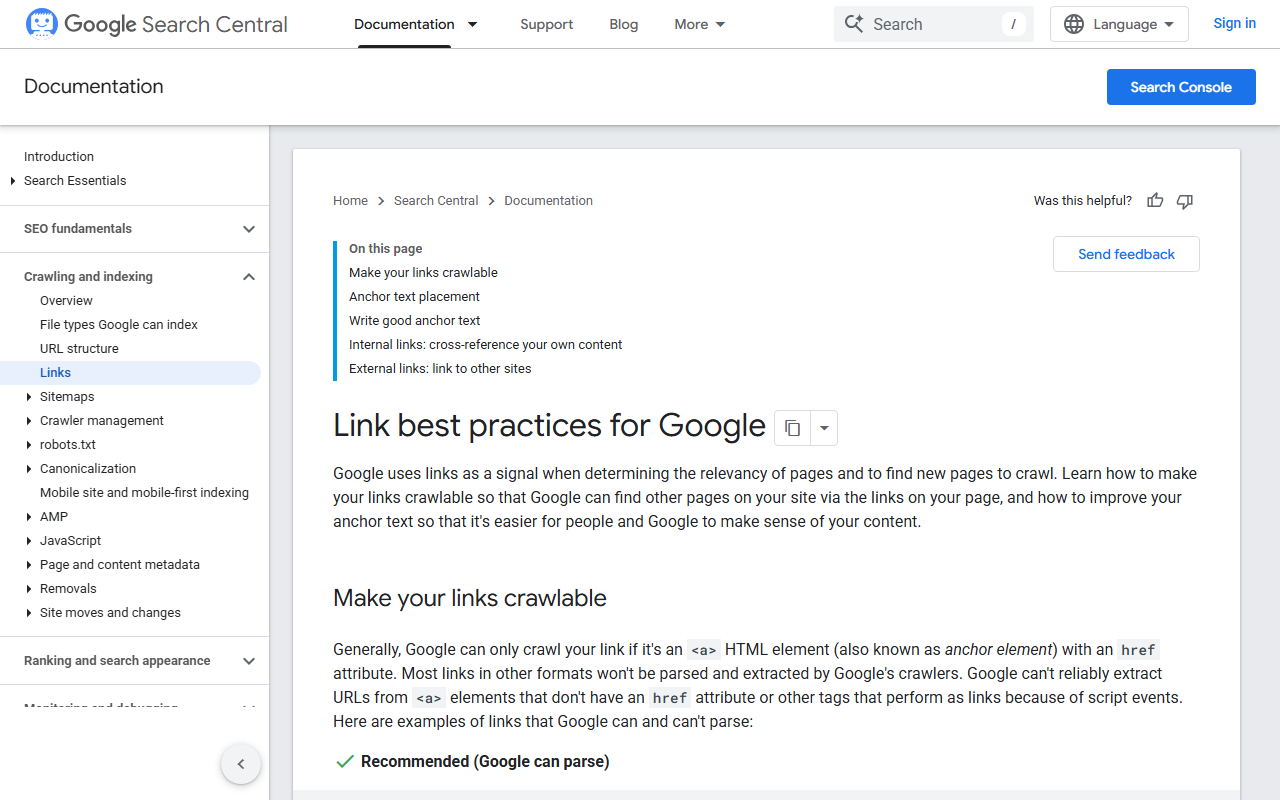
Google documents the first job quite openly. Its guidance on crawlable links says Google uses links to find new pages and as a signal when working out relevance.
What a link actually tells Google
The original PageRank idea still sits underneath everything: a link passes a share of the linking page’s authority to the target. What has changed is how much filtering happens on top. In 2026 a link is judged on roughly four things. How much of that share survives a chain of low-quality intermediaries is the whole question behind tiered link building.
| Factor | What Google looks at | What it means for you |
|---|---|---|
| Source quality | Does the linking site have its own real audience and links? | One link from a trade publication beats 50 from directories |
| Topical fit | Is the linking page about something related? | A DevOps blog linking to your CI tool counts. A recipe blog does not count for much |
| Anchor and context | The clickable words plus the sentence around them | Natural phrases are fine. 40 identical exact-match anchors are a flag |
| Placement | In the body copy, or in a footer or sidebar? | Editorial links inside a paragraph carry the most weight |
Notice what is missing from that table: the raw count. Counting backlinks tells you almost nothing. Counting referring domains that pass the four checks above tells you a great deal.
Why are backlinks important in SEO in 2026? The evidence
We do not ask you to take this on faith. Three observations from our own client work:
- On a 2025 to 2026 sample of 38 SaaS blog posts we track, the 11 posts that reached page one for a term with real commercial intent all had at least 6 referring domains. Of the 27 that stalled on page two, 22 had fewer than 3.
- New domains with strong content and zero links routinely sit in positions 30 to 60 for months. The same content moved to a domain with history ranks in weeks. The only variable is the link profile.
- When a competitor leapfrogs a client without changing their page, the cause is a batch of new links more often than anything else we can find.
Correlation is not proof, and Google staff have said publicly that links are no longer a top-three factor. Both things can be true. For a low-competition informational query, good content and clean on-page SEO can win with no links. For “best CRM for startups”, you are not getting near page one without them.
When the answer to “why are backlinks important in SEO” is “they are not”
This is the mistake we see most: a founder reads that backlinks are important in SEO, buys a package of 200 links for $150, and waits. Nothing happens, or rankings dip three months later.
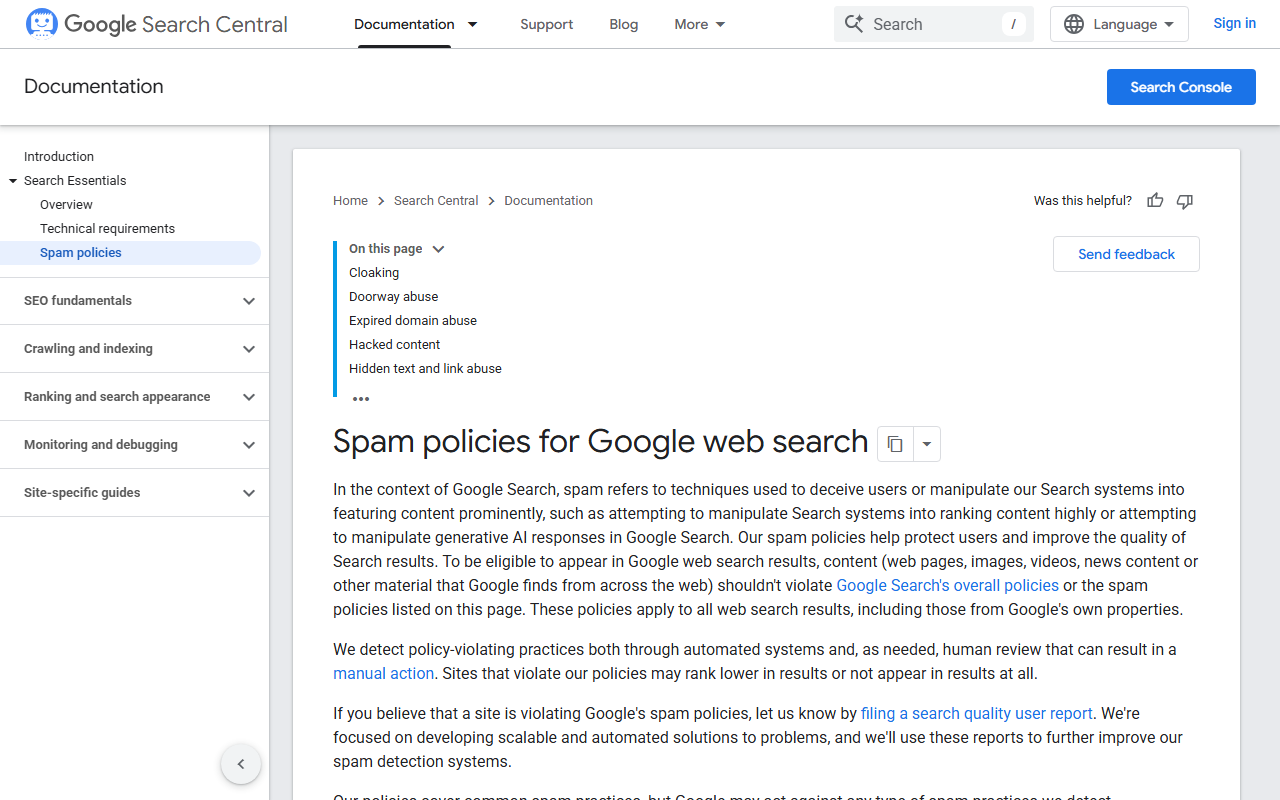
Google’s spam policies list link schemes by name: buying or selling links for ranking, excessive link exchanges, automated link creation, and low-quality directory or bookmark links. Since SpamBrain took over most of this work, the usual outcome is not a penalty. The links are simply ignored. You paid for nothing.
Links that are usually worthless
- Profile links on forums you never post in
- Blog comments
- “DA 50+” guest posts sold from a spreadsheet
- Private blog networks, however they are described to you
- Sitewide footer links from a partner’s site
Links that tend to move rankings
- A mention in an industry newsletter’s web archive
- Integration partner pages that list your product (see our notes on SaaS integration pages)
- Original data that journalists cite, which is the core of digital PR for SaaS
- Comparison and “alternatives” roundups written by independent reviewers
- Podcast show notes and conference speaker pages
A worked example: 14 links, one quarter
Here is a fictional but realistic case built from the pattern we see repeatedly. A B2B invoicing SaaS had a well-written page targeting “invoice automation software”. It sat at position 14 for five months. Referring domains to that page: 2. The three results above it had 19, 23 and 31.
The team spent one quarter on links and changed nothing else on the page.
| Tactic | Links earned | Cost (team time plus spend) |
|---|---|---|
| Survey of 300 finance managers, pitched to trade press | 6 | $2,400 |
| Integration partner listings (accounting tools) | 4 | $0, about 6 hours |
| Two guest articles on finance operations blogs | 2 | About 14 hours |
| Unlinked brand mentions reclaimed | 2 | About 3 hours |
| Total | 14 | $2,400 plus 23 hours |
Result after 11 weeks: position 14 to position 5. Organic visits to the page went from about 90 a month to about 610. At the site’s 2.1 percent visit-to-trial rate, that is roughly 11 extra trials a month from one page. The survey links also sent 340 referral visits on their own, which no rank tracker would show you.
Would position 5 have happened without the links? We doubt it. The page had five months to climb on content alone and did not.
How many backlinks do you need?
Once people accept why backlinks are important in SEO, this is the next question. There is no fixed number, and anyone who quotes one is guessing. The useful method is relative: look at the pages ranking in positions one to five for your target term and count their referring domains. That range is your target. If the top five average 25 referring domains and you have 2, content tweaks will not close the gap.
Two caveats. First, check the links are to the ranking page, not just the domain. A strong domain can rank a page with few direct links. Second, if every top result is a site like HubSpot or Salesforce, the honest answer may be to pick a different keyword. Our guide to high-intent keywords covers how to find terms where the gap is closable.
Backlinks and AI search
A fair follow-up to “why are backlinks important in SEO”: if buyers ask ChatGPT or Google’s AI Mode instead of scrolling results, do links still matter? Yes, indirectly. AI answers are built from pages the underlying search index already trusts, and trust is still partly a link-based calculation. In our tests for the how to get cited by ChatGPT piece, cited pages skewed heavily toward domains with established link profiles. Brand mentions without a link seem to help here too, which is a good reason to pursue PR-style coverage over anonymous guest posts.
What to do this month
- Pick your three most valuable pages. Count referring domains to each and to the top five competitors for the target term.
- List every integration partner, customer and supplier that has a website. Ask for a listing or a case study link. This is the cheapest batch of links you will ever get.
- Set up backlink monitoring so you notice when earned links disappear.
- Plan one linkable asset per quarter: a survey, a benchmark, a free tool. Our SaaS link building playbook goes through formats that work.
- Do not buy link packages. If the price per link is under $50, you already know what you are getting.
Quick recap: why are backlinks important in SEO
- Links help Google discover pages, rank them and send you referral visitors. Those are three separate benefits.
- Referring domains that are relevant and editorial matter. Raw backlink counts do not.
- For competitive commercial terms, content alone rarely reaches the top five.
- Bought and automated links are mostly ignored now, so the money is wasted even when no penalty follows.
- Set your target by counting referring domains to the pages that currently rank, not by a generic number.
- AI search draws from the same trusted index, so a sound link profile helps there as well.
FAQ
Are backlinks still a ranking factor in 2026?
Yes. Google has said links carry less weight than they did a decade ago, but they remain part of how its systems judge relevance and authority. For competitive queries the difference is visible in any rank tracker.
Why are backlinks important in SEO for a new website?
A new domain has no history, so Google has little reason to trust it. A handful of links from relevant, established sites speeds up crawling and gives the ranking systems a signal that real people vouch for the content.
Do nofollow links help?
Google treats nofollow as a hint, not a directive, so some value may pass. Even when none does, a nofollow link on a busy page sends visitors and builds brand searches. We would never turn one down.
How long do backlinks take to affect rankings?
In our experience, 4 to 12 weeks for the link to be crawled, processed and reflected in positions. Links from frequently crawled news sites show up faster than links from small blogs.
Is it better to have many links or a few good ones?
A few good ones. Ten links from sites your buyers read will outperform 500 from directories and comment sections, and they carry no risk.
Can I rank without any backlinks?
For long-tail, low-competition queries, yes. Many of our clients’ help-centre style posts rank with zero external links. For head terms with commercial value, it is rare.