Off-page SEO is everything that happens away from your website that affects how search engines judge it: backlinks, brand mentions, reviews, directory and partner listings, and what people say about you in communities. Most SaaS teams hear “off-page SEO” and think “buy links”. That is the part we would do last, and for most early-stage products, not at all.
This post ranks nine off-page signals by how much they move a SaaS site against how much effort they take, shows what Google says about paid links, and lays out a 90-day plan for a team with no link budget.
Off-page SEO signals ranked by impact and effort
Scores are out of 5, based on what we have seen move rankings and AI citations for B2B SaaS sites. Impact is our judgement, not a number Google publishes.
| Signal | Impact | Effort | Cash cost | Time to see an effect | Our call |
|---|---|---|---|---|---|
| Integration partner listings and app directories | 4 | 2 | None | 1 to 2 months | Do first |
| Review profiles (G2, Capterra, TrustRadius) | 4 | 2 | Free tiers exist | 1 to 3 months | Do first |
| Data studies other sites cite | 5 | 4 | Low | 2 to 6 months | One per quarter |
| Founder podcasts and interviews | 3 | 2 | None | 1 to 3 months | Ongoing |
| Genuine guest posts on relevant sites | 3 | 4 | None | 2 to 4 months | 2 or 3 a quarter |
| Community answers (Reddit, Slack groups, forums) | 2 for rankings, 4 for AI answers | 3 | None | Varies | Only with real answers |
| Unlinked brand mention reclaim | 3 | 1 | None | 1 to 2 months | Monthly |
| Social profiles and posting | 1 | 2 | None | Indirect | Claim profiles, do not expect rankings |
| Paid link placements | 2 to 4 | 1 | High | 1 to 3 months | Avoid, or mark as sponsored |
The top two rows are the cheapest off-page SEO wins a SaaS company has, and most teams we audit have not done them. An integration listing on a partner’s marketplace is a relevant link from a strong domain that also sends buyers who already use the partner product. Our post on SaaS integration pages covers the landing page side of that.
What Google says about off-page SEO and paid links
Google’s position has not changed in years: links should be earned, and any link you paid for, in cash or in kind, should be marked. Its documentation on qualifying outbound links is short and specific about it.
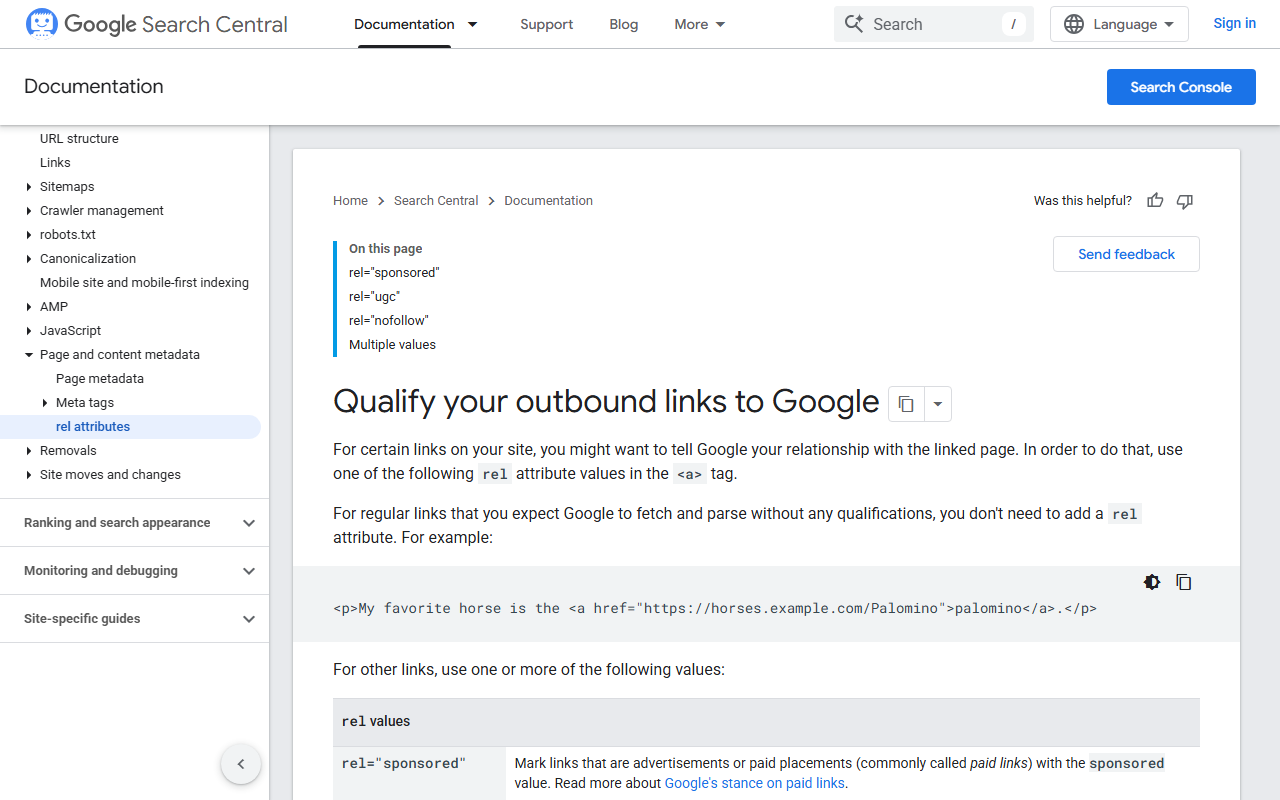
In practice, most paid placements are sold without the sponsored tag, because the buyer wants the ranking credit. That is the risk you are pricing in. The penalty is rarely a dramatic manual action. What we see more often is that the links simply get ignored, so the money buys nothing and there is no way to tell which ones counted.
Our view: for a SaaS site under about 18 months old, put the link budget into a data study or into writing that people want to cite, and let the placements follow. The skyscraper technique is the classic version of this idea, and it only pays off when the new page is genuinely better, not just longer.
Reviews and mentions: the off-page SEO SaaS teams skip
Search any established SaaS brand name plus “reviews” and look at who owns the results.
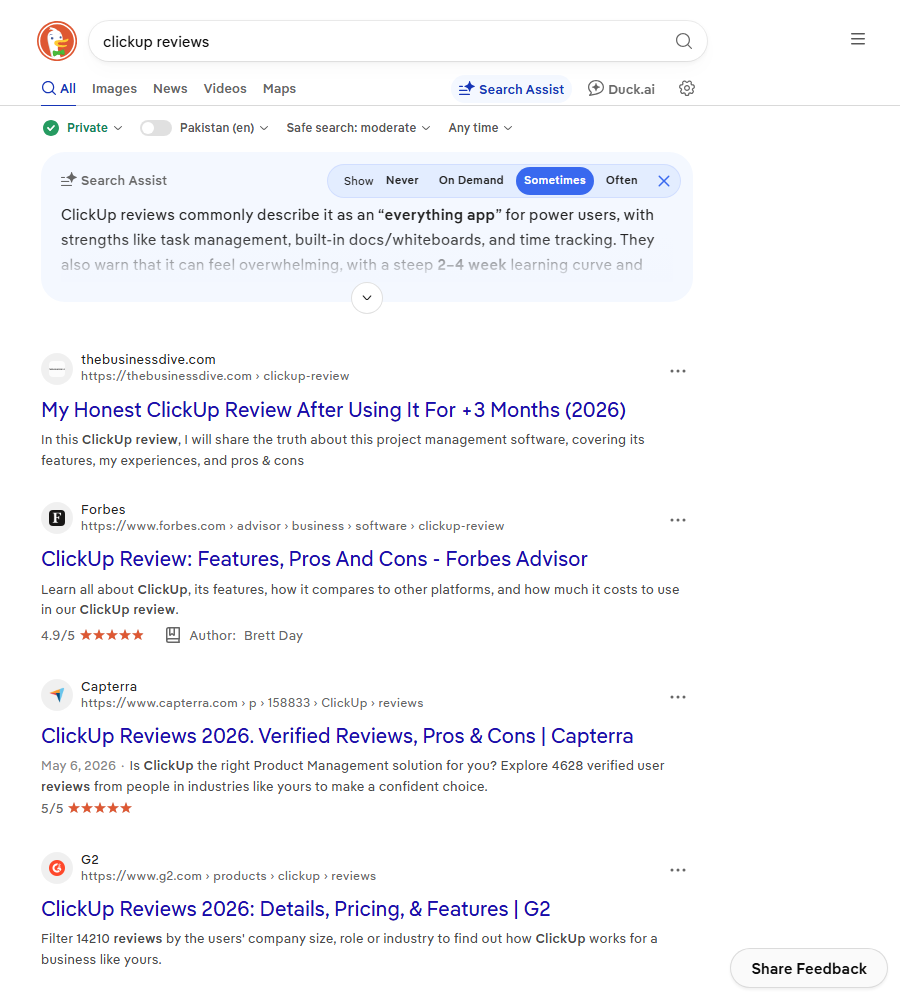
Buyers search this way right before they pay, and AI assistants pull from the same review sites when someone asks “is X any good”. A thin profile with four reviews from 2022 costs you at the exact moment the buyer is deciding.
What works for review profiles:
- Ask for reviews inside the product right after a success moment, such as the first report exported or the fifth teammate invited, not on a timer.
- Reply to every negative review within a week, with specifics. Readers weigh the reply as much as the complaint.
- Keep the category, pricing and screenshots on each profile current. Outdated pricing is the most common error we see.
Brand mentions without a link still help you get cited by AI assistants, which read the web differently from a link graph. We cover that in how to get your SaaS cited by ChatGPT. For the classic side, a monthly search for your brand name on sites that mention you without a link, followed by a polite email, converts better than any cold outreach we have run.
A 90-day off-page SEO plan for a SaaS with no link budget
Formlark is a fictional form builder with 14 integrations, 300 paying customers and one marketer. Here is the plan we would hand them, with realistic outcomes for a product that size.
| Weeks | Work | Hours | Expected outcome |
|---|---|---|---|
| 1 to 2 | Claim or update listings on the marketplaces of all 14 integration partners | 10 | 8 to 10 live listings, most with a link |
| 2 to 4 | Set up G2 and Capterra profiles, add an in-app review prompt after the tenth form response | 8 | 25 to 40 new reviews by day 90 |
| 3 to 6 | Find 30 unlinked brand mentions and ask for a link | 6 | 6 to 9 links added |
| 4 to 10 | Publish one data study: form completion rates by field count, from anonymised product data | 30 | 10 to 20 citing domains within 3 months if pitched well |
| 6 to 12 | Founder on 4 podcasts in the no-code and ops space | 8 | 4 links from show notes, some direct signups |
| 8 to 12 | Two guest posts on sites the audience reads, pitched with an original angle | 16 | 2 relevant editorial links |
Total: about 78 hours across a quarter and no cash for links. The data study is the only item that can produce links at scale, which is why it gets the most hours. For more outreach tactics, see digital PR for SaaS and our list of SaaS link building tactics.
Green, amber and red off-page SEO tactics
Green: do these
- Partner and marketplace listings you qualify for.
- Original data, tools or templates that other writers link to on their own.
- Podcast and interview appearances where you have something to say.
- Asking sites that already mention you to add a link.
Amber: fine with care
- Guest posts, if the site has a real audience and you would write the piece without the link.
- Sponsored content, with the link marked rel=”sponsored”.
- Community answers, as long as the answer stands on its own and the link is optional.
Red: skip
- Link packages sold by domain rating.
- Private blog networks and “niche edits” into old posts on unrelated sites.
- Link exchanges at scale (“I link you, you link me”) across dozens of sites.
- Paid directory submissions to hundreds of generic directories.
How to tell if off-page SEO is working
Do not watch domain rating. It is a third-party score, and moving it from 12 to 25 does not guarantee a single extra visitor. Watch these instead, monthly:
- New referring domains from relevant sites, tracked in a backlink monitoring tool.
- Average position of the pages those links point to, in Search Console.
- Branded search impressions, which rise when people hear about you elsewhere.
- Referral traffic and signups from listings, reviews and podcasts, in GA4.
- How often your brand appears in AI answers for your category prompts.
Point new links at pages sitting in positions 8 to 25. A link to a page ranking 60th rarely changes anything you can see. The same link to a page ranking 12th can be the push onto page one.
Quick recap: off-page SEO
- Off-page SEO covers backlinks, mentions, reviews, listings and community signals from other sites.
- Partner listings and review profiles are the cheapest wins, and most SaaS teams skip them.
- Google wants paid links marked rel=”sponsored”; unmarked ones are a policy risk and often ignored.
- One good data study a quarter earns more links than months of cold outreach.
- Brand mentions help with AI citations even without a link.
- Judge off-page SEO by relevant referring domains and positions, not domain rating.
FAQ
What is off-page SEO in simple terms?
It is how the rest of the web talks about your site. Links from other websites, mentions of your brand, reviews and listings all tell search engines whether your pages are trusted and worth ranking.
Is off-page SEO only about backlinks?
No. Backlinks are the biggest single part (we cover why backlinks are important in SEO in a separate post), but reviews, unlinked brand mentions, partner listings and community discussion all count, especially now that AI assistants build answers from what people say about a product across many sites.
How long does off-page SEO take to work?
New links usually take 1 to 3 months to show an effect on rankings, because Google has to recrawl the linking pages first. Review profiles and listings can send referral signups within weeks.
Is it safe to buy backlinks for a SaaS site?
Buying links that pass ranking credit breaks Google’s spam policies. The most common result is that the links get ignored and the money is wasted. If you pay for a placement, mark the link as sponsored and treat it as advertising.
Does social media count as off-page SEO?
Social links are nofollow and do not pass ranking credit directly. Social activity helps indirectly, by getting your content in front of people who might write about it or link to it later.
Should a new SaaS start with on-page or off-page SEO?
On-page and technical first. Links pointed at pages that are not indexed or do not match search intent do very little. Start the free off-page work, such as listings and reviews, in parallel, and hold any link spend until pages reach positions 8 to 25.