
Good content seo is not a writing skill, it is a loop: brief, draft, refresh, repeat. Teams that treat it as a writing skill publish a lot and rank for little, because the decisions that determine whether a page can rank were all made before anyone opened a document. Teams that treat it as a loop get compounding results from a smaller library. This post walks through all three stages with the artefacts we actually use, plus the refresh trigger list that most programmes never build.
Content SEO Starts With the Brief, Not the Draft
A brief that says “write 1,500 words about keyword clustering, tone: friendly” is not a brief. It is a word count with a mood. The brief is where content seo happens, because it is where you decide what the page is competing against and what it has to contain to win.
Ours fits on one screen and has seven fields. Here is the template, filled for a fictional example so the fields make sense.
| Field | Example entry | Why it is here |
|---|---|---|
| Target query | slack alternatives for regulated industries | One query, not a cluster. Clusters go in the plan, not the brief. |
| Intent, from the SERP | Commercial investigation. Eight of ten results are listicles with a comparison table. | Decided by looking, not by guessing |
| What page one already covers | Pricing, user caps, generic security bullets | You cannot out-rank by repeating this |
| What page one is missing | Nobody names the specific compliance certifications or shows a real retention policy screen | This is the reason the page exists |
| Proof the writer must gather | Certification list per tool, admin console screenshot, retention default | Turns an opinion piece into a source |
| Internal links in and out | Out: 4 named URLs. In: 2 posts that will link here. | Orphan pages index slowly |
| What the reader does next | Opens the security comparison table, then the trial page | Stops the page from ending in nothing |
The fourth row is the one that carries the weight. If you cannot fill in “what page one is missing”, stop and pick a different query, because you are about to produce the eleventh version of an article that already exists ten times. In our experience roughly one brief in four dies at that row, and every one of those is a saved week.
The keyword selection that feeds the brief is a separate job with its own method, covered in our SaaS keyword research guide and, for the commercial end, high-intent keywords.
The Draft Stage: What Content SEO Actually Asks For
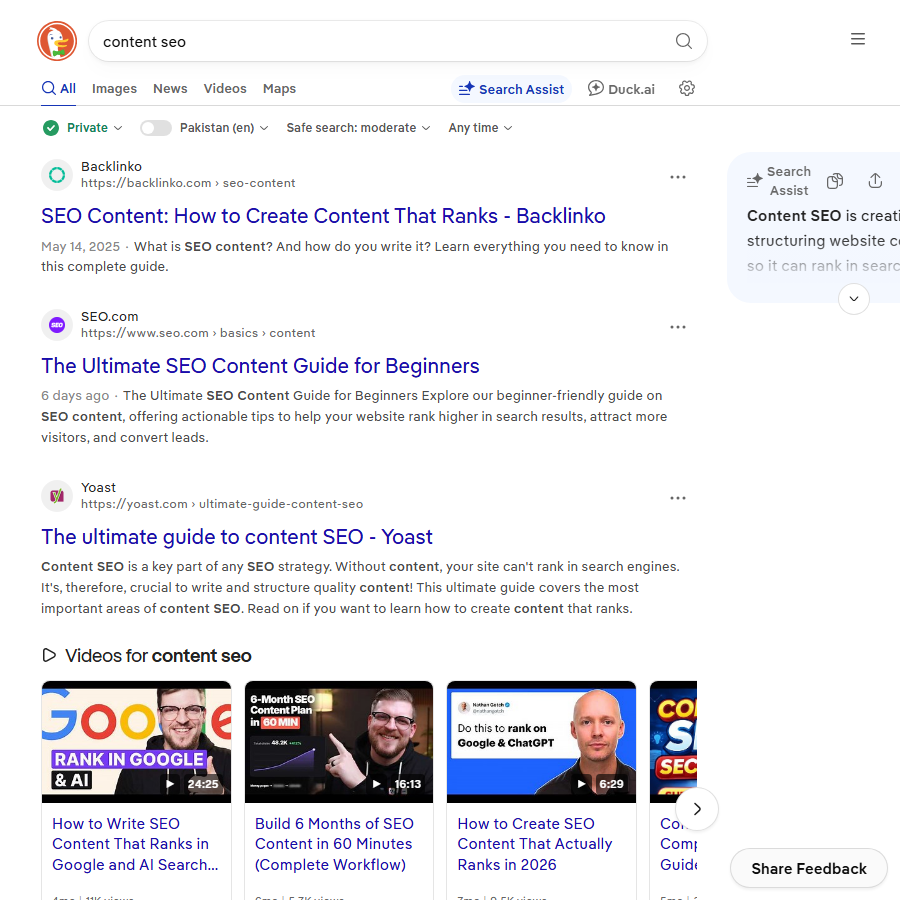
Very little of what people believe about on-page content seo survives contact with a live SERP. The draft stage has maybe six requirements that matter.
- The query appears in the title and the first 100 words. Not fifteen times. Once, naturally, where a reader would expect it.
- The first paragraph answers the question. If the reader has to scroll past a history of the industry, they leave, and their pogo-stick back to the results page is a signal you do not want to generate.
- Headings match the sub-questions people actually ask. Pull them from the People Also Ask box and from your own support tickets, which are better than any tool.
- Specifics, with dates attached. “Around $99 a month at the time of writing” beats “affordable” in every possible way, including for the AI systems that now quote pages.
- One thing nobody else has. A table you built, a screenshot of a real admin screen, a number you worked out. This is the only durable differentiator left.
- Links out to your own relevant pages, inside sentences. Four to six per page, placed where a reader would want them, not bolted on at the bottom.
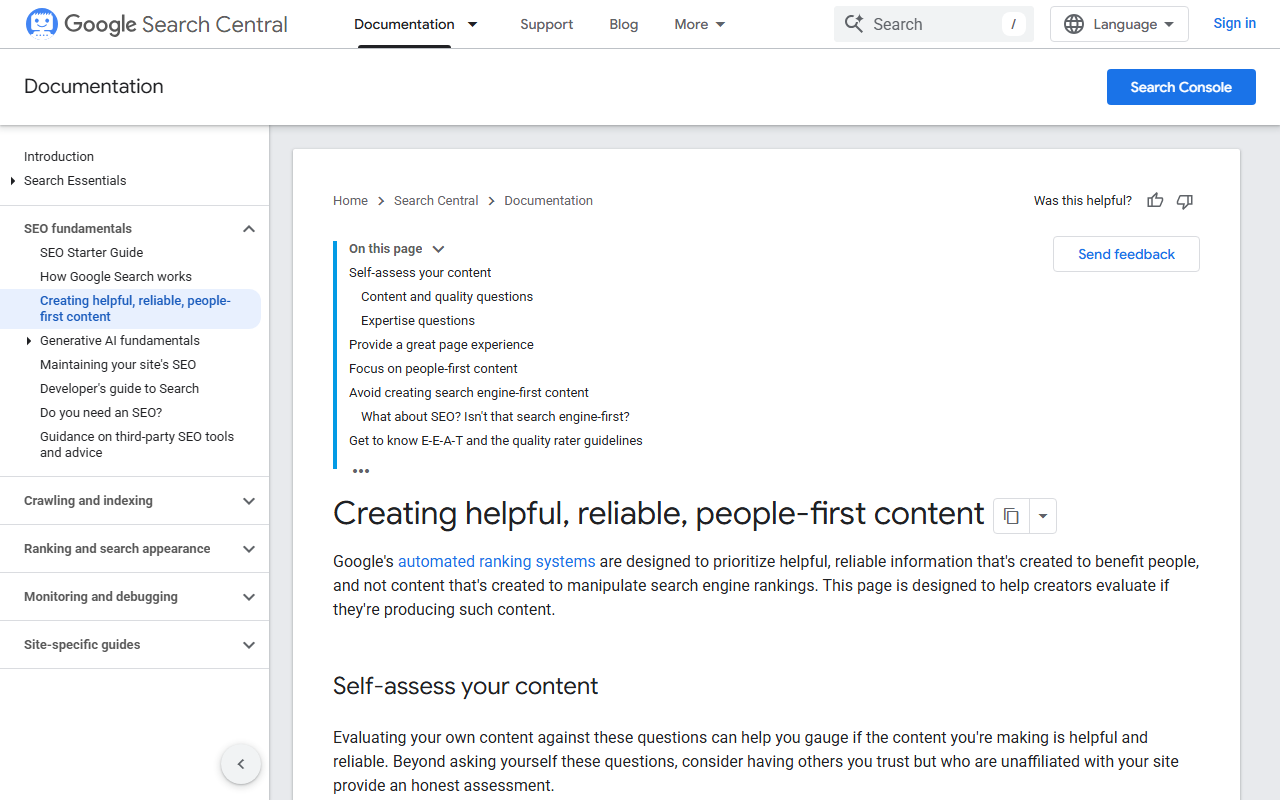
What is not on that list: keyword density targets, LSI term checklists, a minimum word count, and content grader scores. Those are proxies that occasionally correlate with quality and frequently cause writers to pad. The self-assessment questions in Google guidance on people-first content cover the same ground from the other direction and are worth pinning above a writer desk. The house style rules we use for the prose itself are in our post on SEO writing. Who the draft is credited to matters as well: a named author with real experience of the topic is the part of E-E-A-T SEO that a SaaS blog controls most directly.
On length, the only useful rule we have found is to match the shortest page on page one that fully answers the query, then add whatever your unique element needs. If the top result answers it in 700 words, your 3,000-word version is not more thorough, it is more tiring.
The Refresh Loop Most Content SEO Programmes Skip
Publishing is the middle of the process, not the end. A page that has been live for six months has data attached to it, and that data tells you exactly what to do. Most teams never look, because the content calendar only has a “new” column.
Build a refresh queue with five triggers. Check it monthly, spend a day on it, and it will usually outperform the day you would have spent writing something new.
| Trigger | Where you see it | Fix | Typical effort |
|---|---|---|---|
| Position 8 to 25 with real impressions | Search Console, page filter | Rewrite intro, add the missing section, add two internal links | 90 minutes |
| High impressions, low click-through | Search Console, query view | Title and meta description only. Nothing else. | 15 minutes |
| Ranking for a query the page does not address | Query list for that URL | Add a section, or split into a second page | 2 hours |
| Facts gone stale | Prices, versions, screenshots older than a year | Update numbers, re-take screenshots, change the date honestly | 30 minutes |
| Two pages competing for one query | Two URLs alternating in the same query | Merge, redirect the weaker one, consolidate the links | Half a day |
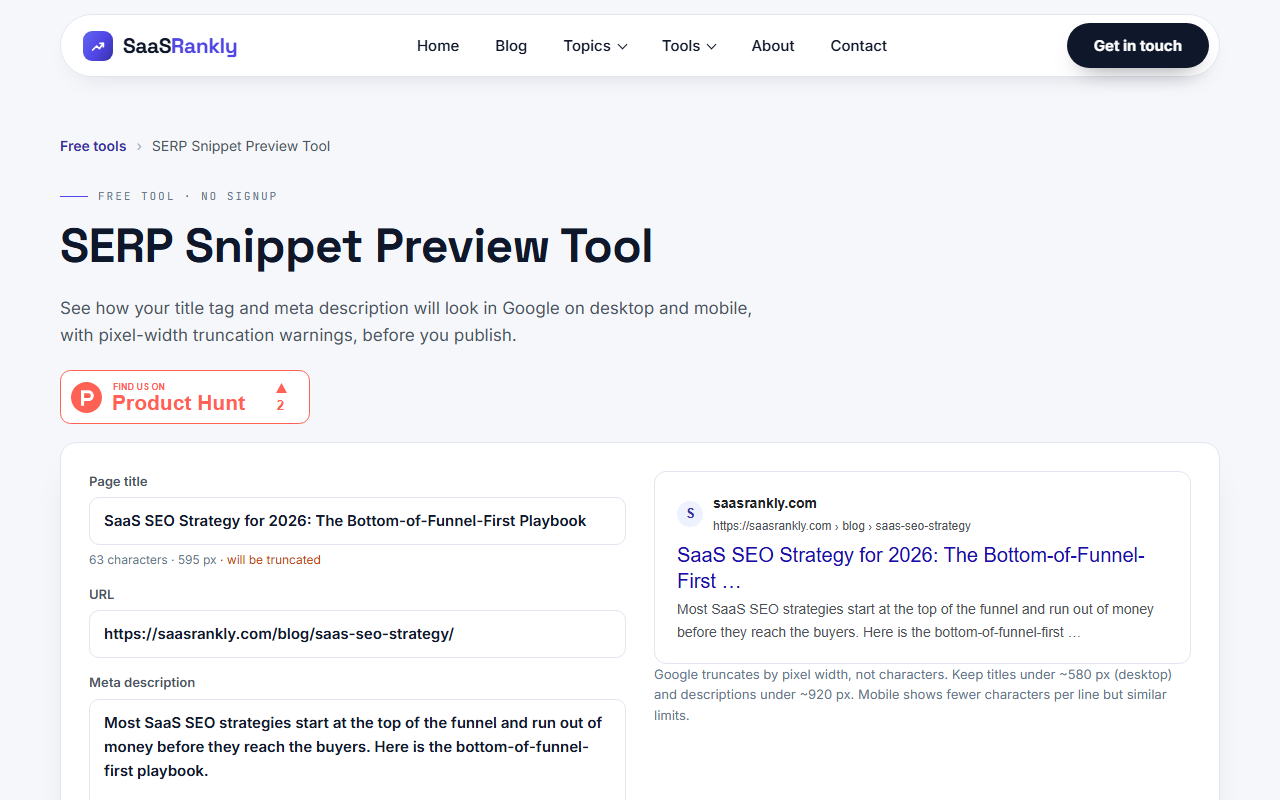
The second row is underrated. A page with 4,000 impressions and a 0.8 percent click-through rate is not a ranking problem, it is a headline problem, and it is fifteen minutes of work. We check the rewrite against a snippet preview before saving, because truncation at 580 pixels ruins more titles than bad copywriting does.
The last row is the expensive one and also the most common in libraries over about 80 posts. Two pages covering nearly the same ground will split links and impressions and neither will win. Merging feels like destroying work. It usually is not. The structural fix that prevents it happening again is proper clustering, which we wrote up in content strategy with topic clusters.
Content SEO Myths We Still Argue About
Four claims come up in almost every content seo discussion, and all four are wrong in the same way.
“Longer content ranks better.” Long pages correlate with rankings because thorough topics need more room, not because length is a factor. Padding a 900-word answer to 2,400 words makes it worse and measurably harder to read.
“Publish more and something will stick.” On a young domain this is actively harmful. Six posts a day on a three-month-old site reads as a content farm, and the crawl budget gets spent on pages nobody will ever visit. Slower and better wins here, and we changed our own publishing cadence for exactly this reason.
“AI writing kills content SEO.” The tool is not the problem. Invented numbers, fake experience and claims nobody verified are the problem, and a human writer in a hurry produces those too. Use whatever drafting tool you want, then check every factual claim and never present a made-up example as something you measured.
“You need to update posts every quarter for freshness.” Changing the date without changing the content is a trick, and a transparent one. Update when a trigger fires. An evergreen explainer that is still correct after two years needs nothing.
Running the Loop With a Small Team
Content seo at a two-person company looks different from content seo at a thirty-person one, and the small version is the one people ask about. One day a month for briefs, in a batch, because context switching between research and writing is the biggest hidden cost in content production. Then drafting through the month against those briefs. Then the refresh day, ideally the first Monday, before new work starts and eats the time.
Ratio of new to refresh: roughly three to one in the first year, moving toward one to one once you pass 60 or 70 pages. Past that point your existing library holds more upside than anything new you could write, because pages ranking at 12 need 90 minutes to reach page one while a new page needs four months to reach position 12. That trade gets more lopsided the older the site gets, and it is the main reason mature content seo programmes look so different from young ones. The broader channel context is in our SaaS content marketing overview.
Quick recap: content seo
- The brief decides whether a page can rank, so give it seven fields and one screen.
- Kill any brief where you cannot name what page one is missing.
- The draft needs six things, and keyword density is not one of them.
- Build a refresh queue with five triggers and work it monthly.
- High impressions with low clicks is a title fix, not a rewrite.
- Mature content seo shifts from three-to-one new versus refresh toward one-to-one.
FAQ
What is content seo in simple terms?
It is the practice of choosing, structuring and maintaining written pages so search engines can match them to real queries and readers get a genuine answer. It covers query selection, briefing, on-page structure and ongoing updates. Writing is one stage of four.
How is content SEO different from copywriting?
Copywriting persuades someone already on the page. Content SEO decides which page should exist, what question it answers, and how it connects to the rest of the site. A page can be beautifully written and still fail because it targets a query where Google only shows product pages.
How long should a content SEO post be?
As long as the shortest page on page one that fully answers the query, plus whatever your unique element needs. That lands most SaaS posts between 900 and 2,200 words. Treat any fixed target as a warning sign.
How often should I refresh existing content?
Check the refresh queue monthly and act on whatever triggered. Do not refresh on a calendar. A page that is still accurate and still ranking needs nothing, and changing the published date without changing the content fools nobody.
Does content SEO still work with AI answers in the results?
Yes, though the payoff shifts. Pages with specific numbers, named sources and clear structure get quoted by AI systems more often than vague overviews, and those citations send qualified traffic. What stops working is the thin summary post that added nothing, which was already losing before AI answers arrived.
How many internal links should a post have?
Four to six outbound internal links inside real sentences, plus at least two inbound links from older posts added on the day you publish. The inbound half is the part teams forget, and a post with no inbound links can sit unindexed for weeks. More detail on page-level targeting is in how many keywords per page.