In house SEO means the person or team doing your search work sits on your payroll, inside your company, instead of at an agency or on a freelance contract. For a SaaS business the question is rarely “in house or not” in the abstract. It is “at what stage does an in house SEO hire pay back, and what does that person need to be good at”. This post answers both, with a cost comparison and a hiring order we would follow.
In house SEO vs agency vs freelancer: the honest comparison
Each model is good at something different. The table below is how we frame it when a founder asks.
| Factor | In house SEO | Agency | Freelancer |
|---|---|---|---|
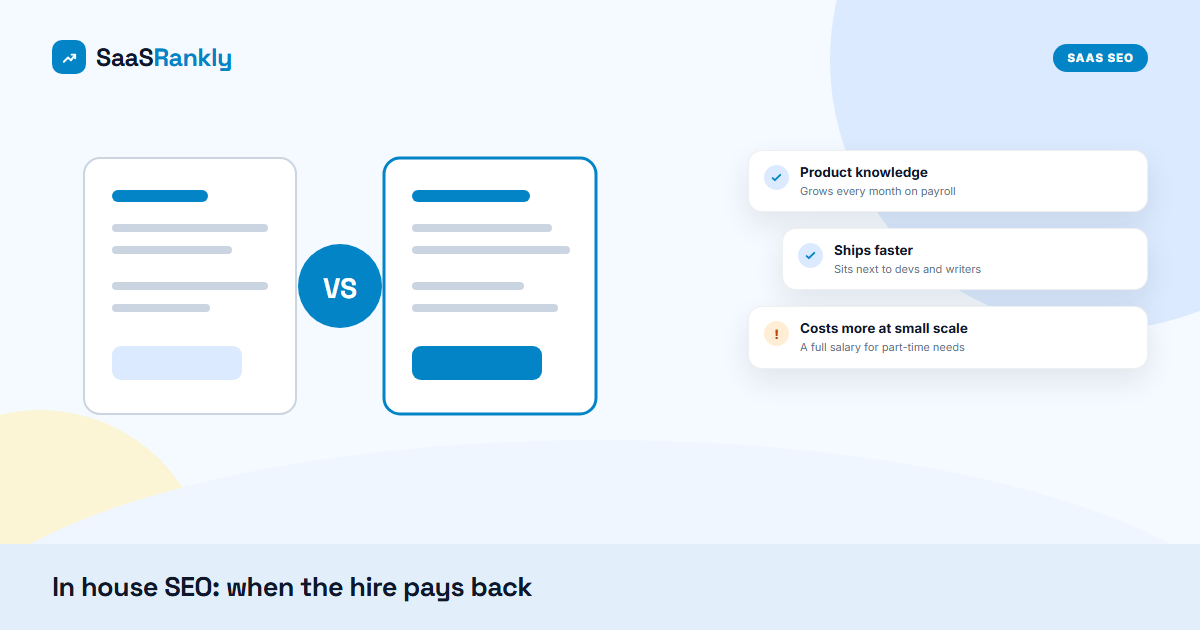
| Product knowledge | Deep, grows every month | Shallow unless the retainer is long | Varies |
| Speed to ship changes | Fast, sits next to devs and writers | Slow, every change is a ticket | Medium |
| Breadth of skills | One person rarely covers everything | Wide bench of specialists | Narrow but often deep |
| Cost at small scale | High, a full salary for part-time needs | Medium | Low |
| Cost at large scale | Lowest per unit of work | Highest | Hard to scale |
| Knowledge stays when they leave | Partly, if documented | Mostly leaves with the agency | Leaves |
The pattern: agencies and freelancers are cheaper when SEO is a side channel. In house SEO wins once organic search is a main acquisition channel and the backlog of work never runs out.
What an in house SEO actually costs
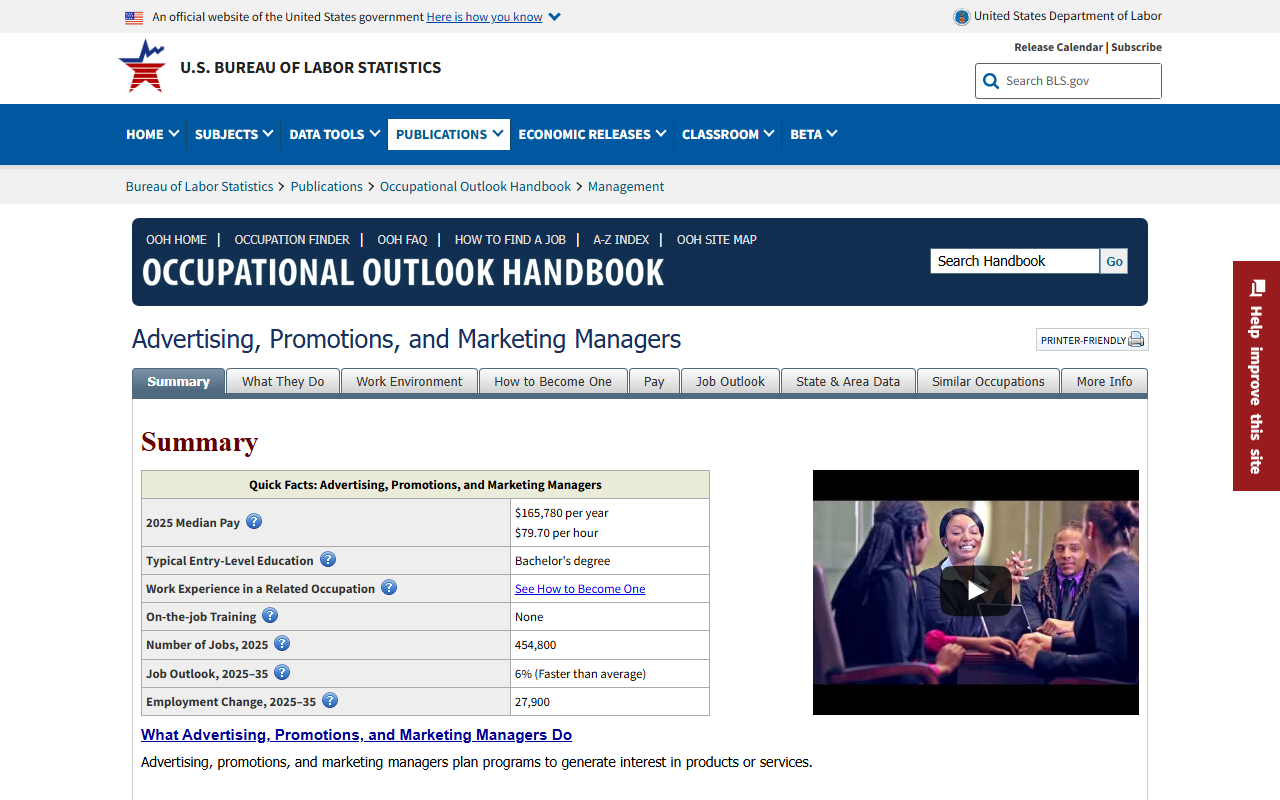
Salary is the obvious line, but it is not the whole number. At the time of writing, the US Bureau of Labor Statistics lists a 2025 median pay of about $165,780 a year for advertising, promotions and marketing managers. A hands-on SEO specialist usually earns well below a manager, and a head of SEO at a funded SaaS company can earn around that level or above it.
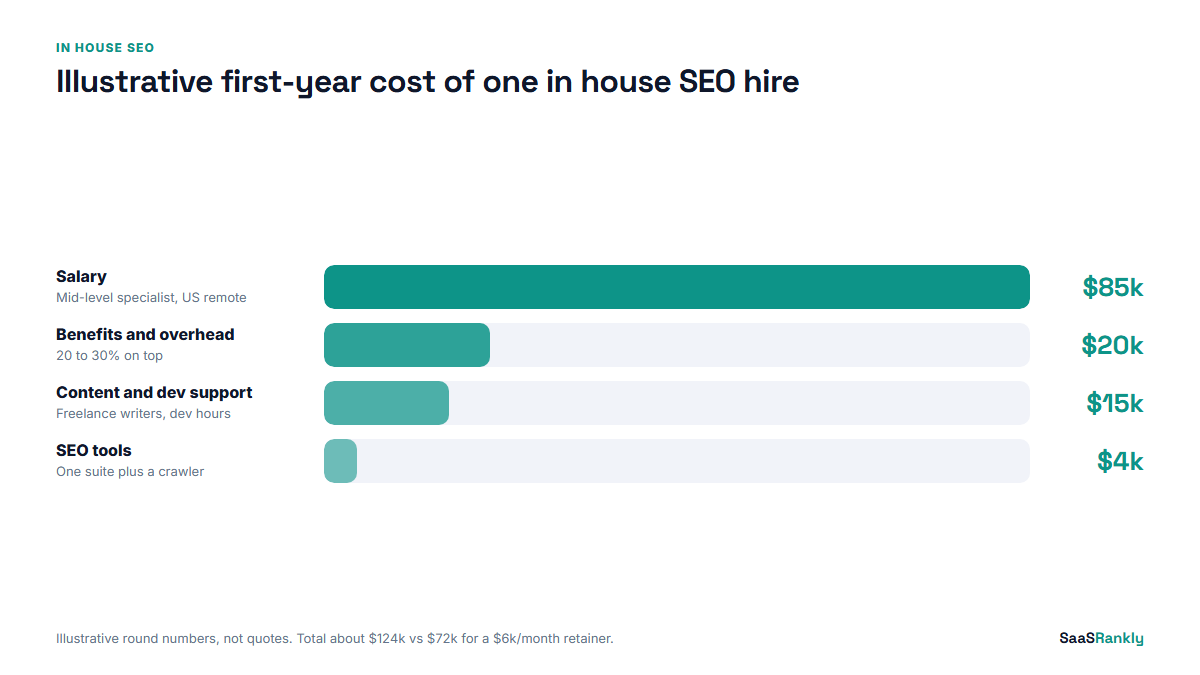
Here is an illustrative first-year budget for one mid-level in house SEO hire at a SaaS company. The figures are round examples to show the categories, not quotes.
| Line item | Illustrative yearly cost | Notes |
|---|---|---|
| Salary | $85,000 | Mid-level specialist, US remote |
| Benefits and payroll overhead | $20,000 | Often 20 to 30 pct on top of salary |
| SEO tools | $4,000 | One all-in-one suite plus a crawler |
| Content and dev support | $15,000 | Freelance writers, some dev hours |
| Ramp-up time | 2 to 3 months | Before output is at full speed |
| Total cash | about $124,000 | Compare with a $4,000 to $8,000 monthly agency retainer |
A $6,000 monthly agency retainer is $72,000 a year. On paper the agency is cheaper. In practice, the in house hire produces more shipped work per dollar once they know the product, because nothing waits in a client queue. Our guide to SEO ROI for SaaS shows how to model payback before you commit either way.
When to hire your first in house SEO
We look for three signals. Two out of three is usually enough.
- Organic already brings sign-ups. If search drives even 15 to 20 pct of trials with no dedicated person, there is room to grow it.
- The backlog is bigger than the retainer. The agency keeps saying “next month” for technical fixes, comparison pages and refreshes.
- SEO work needs product access. Programmatic pages, integration pages and docs SEO need someone who can sit with engineers. See programmatic SEO for SaaS for why.
If none of these are true yet, a freelancer or a small retainer is the better spend. Hiring a full-time in house SEO before there is a clear SaaS SEO strategy usually means paying a strategist to do tactical work.
The in house SEO skill mix, and the order to hire
One person cannot be strong at everything. The first hire should cover the gap that blocks growth today. This is the order we would follow for most B2B SaaS teams:
- SEO generalist with content strength. Keyword research, briefs, on-page, internal linking and reporting. This person also manages freelance writers.
- Technical SEO support, often part-time or borrowed from engineering: crawling, indexing, site speed, templates, schema.
- Content producer or editor, once the generalist is spending more time writing than planning.
- Link acquisition or digital PR, when the content base is strong enough to deserve links.
- Head of SEO, when there are three or more people and several product lines.
For larger products, the enterprise SaaS SEO guide covers how the team shape changes with many product areas.
Common in house SEO mistakes
Hiring a junior and expecting a strategy. A junior can execute a plan well. Asking them to write the plan from zero, alone, sets them up to fail.
No dev time. An in house SEO without any engineering hours becomes a report writer. Agree on a fixed slice of sprint capacity before the hire starts.
Measuring the wrong thing. Rankings for vanity terms are easy to show. Tie the role to organic sign-ups, demo requests and pages in the top 10 for buying-intent queries.
Tool sprawl. One suite and one crawler cover most needs. If budget is tight, our list of Semrush alternatives includes cheaper options.
A hybrid that works for many SaaS teams
The setup we see working most often at Series A and B: one in house SEO owns strategy, priorities and reporting, and buys specialist help by the project. A technical audit from a freelancer, a link campaign from a small agency, writers on a per-article rate. The in house person keeps the knowledge; outside help adds capacity without a second salary.
Quick recap: in house SEO
- In house SEO means a salaried person or team doing search work inside your company.
- Agencies and freelancers cost less when SEO is a side channel.
- In house SEO pays back once organic is a main channel and the backlog never ends.
- Budget for salary, overhead, tools, content help and 2 to 3 months of ramp-up.
- Hire a content-strong generalist first, then add technical and content capacity.
- Give the role dev time and measure it on sign-ups, not vanity rankings.
FAQ
What does an in house SEO do?
They plan and run search work for one company: keyword research, content briefs, on-page changes, technical fixes with engineers, internal linking, and reporting on organic results.
Is in house SEO better than an agency?
Neither is better in general. In house works when SEO is a core channel and needs product access. An agency works when you need a wide range of skills for a limited budget.
How much does an in house SEO cost?
Salary depends on level and location. Add roughly 20 to 30 pct for benefits and overhead, plus tools and content support. A mid-level hire in the US often lands above $100,000 a year all in.
When should a startup hire an in house SEO?
When organic search already drives a meaningful share of sign-ups, the agency backlog keeps growing, or the work needs close access to product and engineering.
Can one in house SEO handle everything?
Rarely. Most first hires cover content and on-page well and need outside help for technical SEO or link building.
What tools does an in house SEO need?
Google Search Console, GA4, one all-in-one suite and one site crawler cover most work. Add AI search tracking if AI answers matter in your market; see our list of AI SEO tools.