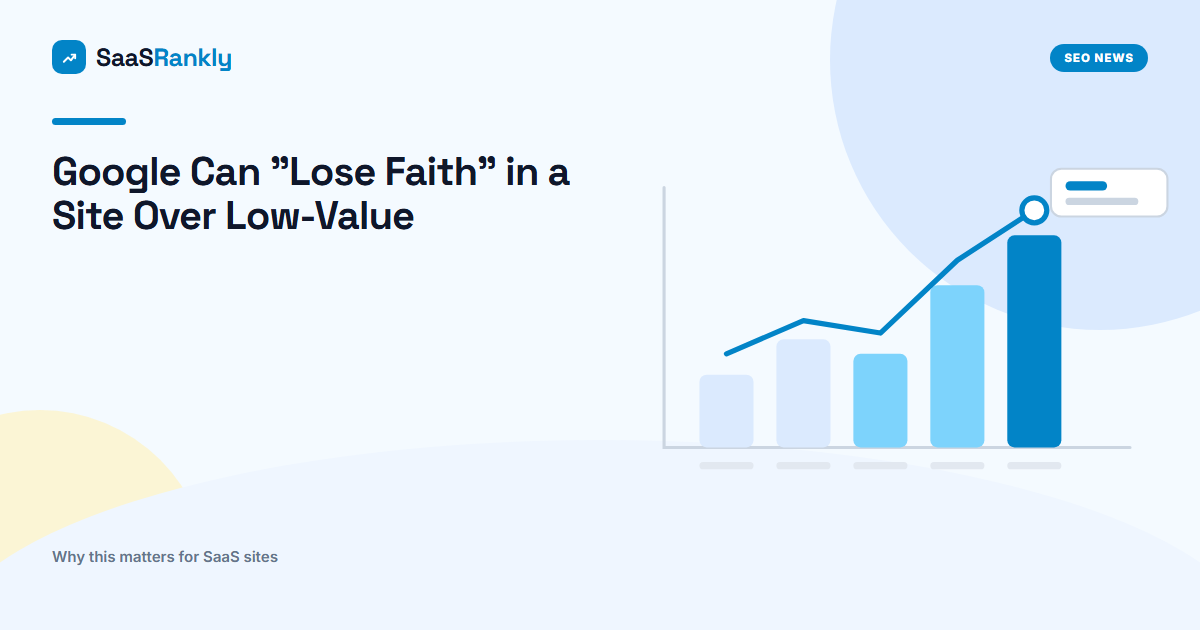
What happened: On 7 September 2026, Google’s John Mueller replied on Bluesky to a site owner who had generated a large set of pages by combining domain names, technologies and attributes. His answer: “Programmatic SEO like this often leads to a site that’s either spam, borderline spam, or low quality.” He added that once Google’s systems have seen a site produce that kind of content, they can lose confidence in the site’s ability to provide value, and that getting it back takes “time and significant effort”, on a timescale he compared to recovering from a spam or core update.
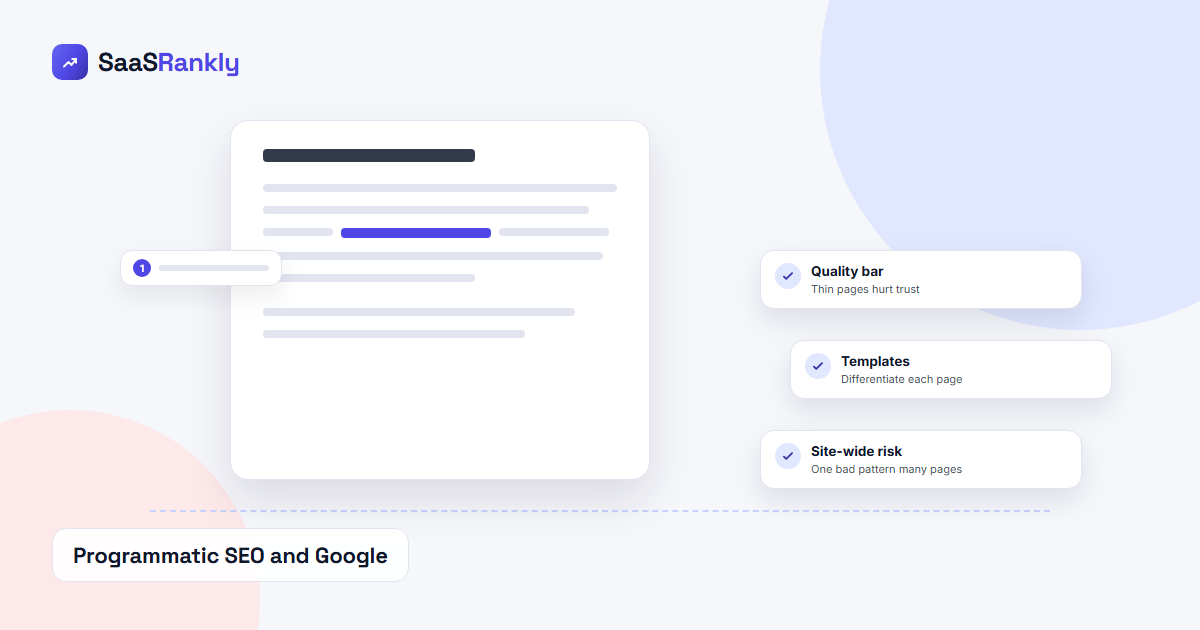
This guide covers programmatic seo google for SaaS teams: what it means, why it matters, and the practical steps to get it right.
Source: Search Engine Roundtable, 7 September 2026, reporting Mueller’s Bluesky post.
Why this matters for SaaS sites
SaaS is the industry that uses programmatic SEO most: integration pages (“X + Slack integration”), template libraries, glossary pages, “alternatives to” pages, city or industry landing pages. Most of it is legitimate and we recommend it in our programmatic SEO guide. Mueller’s comment is not a ban on the tactic. It is a reminder of two things that many SaaS teams get wrong.
- Trust is site-level, not page-level. If 4,000 thin integration pages sit next to 40 excellent guides, the thin pages do not just fail to rank on their own. They lower how much Google trusts the domain, and the guides feel it too. This lines up with what practitioners saw in the August 2026 spam update, where sites publishing machine-generated pages at volume dropped broadly.
- Recovery is slow. Deleting the pages is the start, not the fix. Mueller put the recovery on the same clock as a spam or core update, which in practice means the next one or two core updates, so three to six months.
The line between good and bad programmatic pages
| Ranks and holds | Gets a site flagged |
|---|---|
| Each page has data that only exists for that combination: setup steps, screenshots, real limits, pricing, a working example | Same paragraph with the entity name swapped in |
| Pages are created because there is search demand for the combination | Pages are created because the database had the rows |
| Thin combinations are noindexed or never published | Every combination is published and submitted in the sitemap |
| Internal links come from relevant hub pages | Pages are only reachable from a sitemap |
What to do this week
- Pull the “Crawled, currently not indexed” report in Search Console. If most URLs in it share one template, that template is the problem. Our indexing problems guide walks through the report.
- Sample 20 programmatic pages at random and read them. If you cannot say what a visitor learns on each one that they would not learn on the others, noindex the set until the template has unique data.
- Cut before you improve. A site with 300 useful programmatic pages outranks a site with 3,000 mixed ones. Remove the long tail first, then invest in the rest.
- Track by page group, not by URL. Tag programmatic pages separately in your rank tracker so you can see the group move independently of the blog.
We will update this post if Google publishes formal guidance. For the full playbook on doing programmatic SEO without triggering this, read Programmatic SEO for SaaS.
Quick recap: Programmatic seo google
Programmatic seo google usually comes down to a short, repeatable checklist. Use this whenever programmatic seo google comes up again:
- Diagnose programmatic seo google by checking the relevant report first, not assumptions.
- Confirm the current setup is actually causing programmatic seo google before you change anything.
- Re-check programmatic seo google again after the fix ships, not before.
Treat programmatic seo google as an ongoing signal rather than a one-time fix. For background on the platform rules behind this, see Google Search Central.